The Man Who Defied Physics: The Living Myth of Roberto Carlos
The Left Foot That Silenced the World
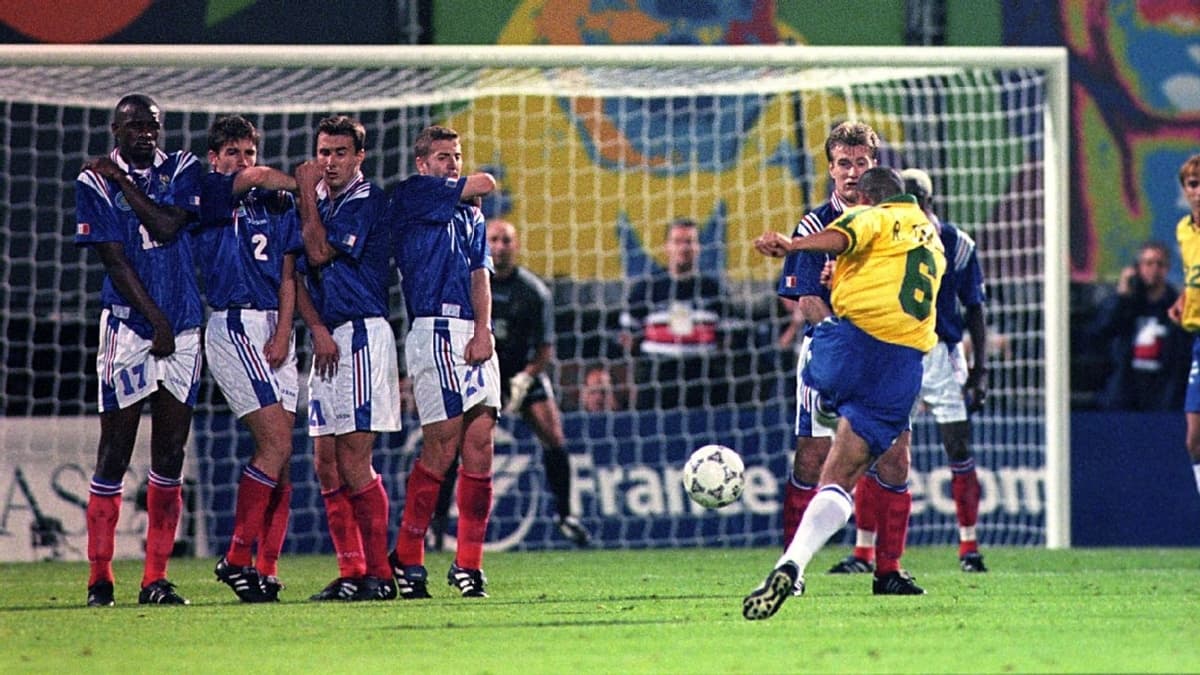
1997, Tournoi de France in Lyon.
From thirty-five meters out, with zero angle to work with, a missile steered far beyond the outside shoulder of the defensive wall—only to mock the laws of classical aerodynamics and violently suck itself into the netting at the final fraction of a second. Commentators were struck dumb; Fabien Barthez stood rooted to the earth, unable to twitch a muscle.
Witnesses recall an uncanny silence descending over the stands in the aftermath.
It was no longer mere sport; it was something beyond a football strike.
—It was the moment the myth of Roberto Carlos descended upon the earth.
Chapter 1: A Childhood of Unending Strides
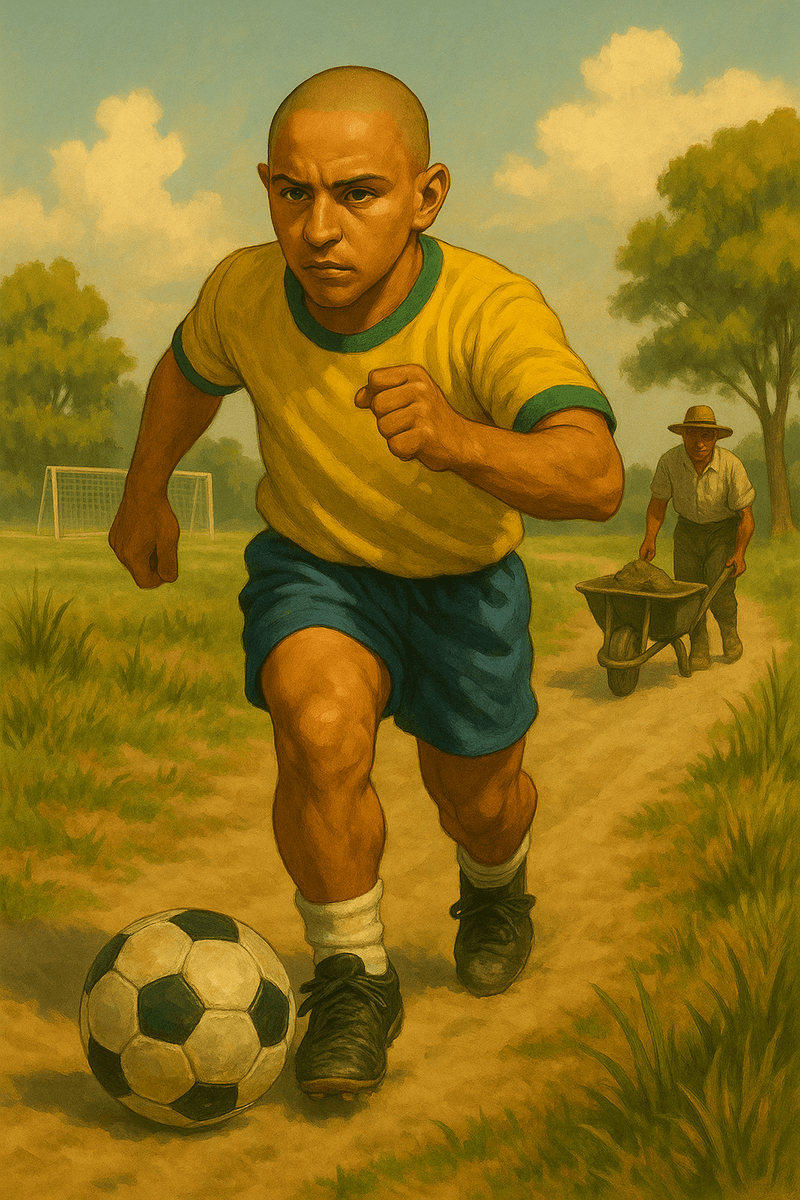
The crucible of Roberto Carlos was the agrarian dust of rural São Paulo—forged in poverty,
hard labor, and endless sweat.
From early boyhood, to help his father in the fields, he ran miles upon miles every day. He ran not for football drills, but to survive.
Those colossal thighs were sculpted purely through the daily race of living.
Not in a modern gym, but in the relentless rhythm of rural existence.
He ran further than anyone, held his ground harder than anyone, and refused to yield to anyone.
Every drop of that toil transformed into the terrifying power that would one day stun the globe.
Chapter 2: The Demolition Power of Steel Thighs
Chapter 2: The Demolition Power of Steel Thighs
The circumference of his thighs was officially recorded at 58 centimeters.
Those sculpted pistons were weapons from another dimension.
In his prime, he clocked sprint speeds surpassing forty meters in seconds, unleashing strikes recorded at over 169 km/h.
He electrified crowds with feats that belonged in graphic novels rather than mortal stadiums.
Yet this athletic majesty was never a mere gift of genetic providence.
In childhood, he ran endless distances day after day to assist his father’s farmwork.
He moved his legs not to chase leather, but to sustain life itself.
Muscle born of nature and the red earth, not chrome gym equipment.
And throughout his decorated career, he never rested upon that physical supremacy; he embodied an ethos of tireless running, fierce defending, and absolute self-sacrifice.
Roberto Carlos was never merely powerful.
Those legendary limbs were the direct extension of lifelong labor.
Chapter 3: Not a Free Kick, but Divine Retribution
🇧🇷ロナウジーニョさん
— Trivela 🇵🇹🇮🇹ファンタジスタ愛好家 (@Trivela_Futebol) December 8, 2024
🇩🇪カーンの裏をかいたあの有名なFKについて
🗣️
ロベカルが蹴る予定やってん。
そしたら皆それだけ警戒してんのに気づいてもうて、
あ…これわいいけるわ🤣と思ったから
やってもうた🤣
1番呆気にとられてるのは監督でもなく
ロベカル本人🤣 pic.twitter.com/PTYhx1Qa1A
His trademark was the long-distance free kick.
Reaching velocities of up to 169 km/h, the ball struck like a sledgehammer, tearing through the goalkeeper’s outstretched wrists.
The trajectory did not simply curve; it punched forward like a shockwave. That 1997 strike seemed to bend the very laws of gravity and air resistance to his command. Even after physicists dissected the arc through the "Magnus effect," to the mortal eye, it remained nothing short of a miracle.
The ultimate proof of his otherworldly stature is simple: even after science explained the physics, not a single soul has ever reproduced that trajectory since.
When an individual achieves what no other human can replicate, history ceases to call it technique—it calls it myth.
Chapter 4: The Resolve to Conquer
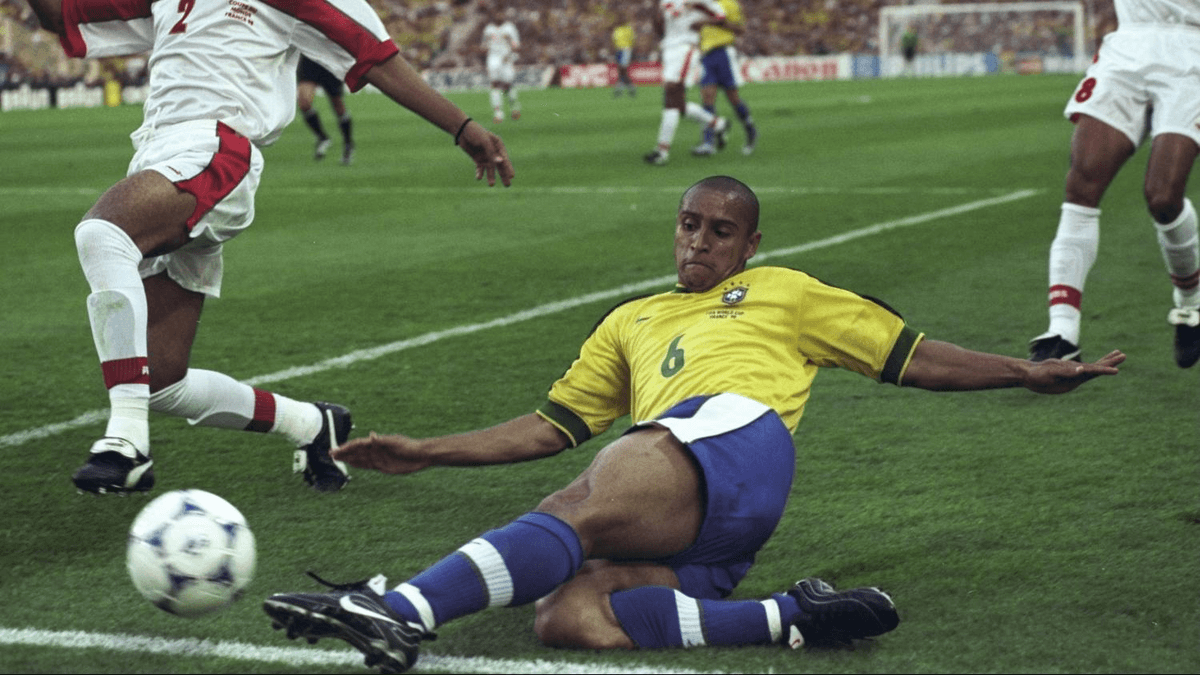
Because his free kicks were so theatrical and globally iconic, one often forgets what truly sustained him:
bottomless aerobic capacity, laser-precise switches of play, and ferocious defensive commitment.
He never unleashed that long, theatrical run-up for the sake of the cameras.
He devised that ritual solely and relentlessly to win football matches.
Chapter 5: Proven Majesty: The Essence Beneath the Free Kick
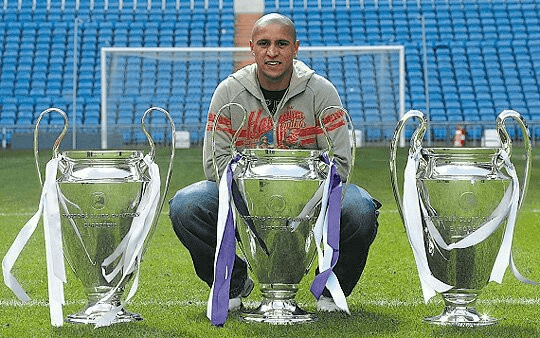
What makes Roberto Carlos an immortal is not merely his highlight reel.
He was never an entertainer who shirked the trenches.
-
Champion of the world with Brazil at the 2002 FIFA World Cup
-
Three-time UEFA Champions League winner with Real Madrid (1998, 2000, 2002)
-
Four-time champion of Spain’s La Liga
These crowns were no accident of circumstance.
That left foot was simultaneously an art form, a tactical siege engine, and a symbol of triumph.
Above all, remember his total completeness: impeccably timed passing, ninety minutes of nonstop high-octane running, and stubborn defensive tackling. Committing body and soul across both phases of the pitch was the true core of Roberto Carlos.
Behind the cinematic thunderbolts lay a blue-collar engine covered in mud.
He was the undisputed beating heart of the left flank.
Romance on the ball, realism on the scoreboard.
Only the rare figures who marry both live forever in the collective memory.
Epilogue: Beyond Legend, into Myth
🇧🇷ロベルト・カルロスさん
— Trivela 🇵🇹🇮🇹ファンタジスタ愛好家 (@Trivela_Futebol) October 21, 2024
どれだけ歳をとっても
未だ、物理の法則を無視し続ける。 pic.twitter.com/2oiWNlXQLz
Many players enter the history books.
Many are celebrated as legends.
Yet what constitutes a true myth?
It is those rare beings who, if only for a fraction of a second, touch territory forbidden to ordinary men.
The strikes of Roberto Carlos cannot be reduced to cold geometry or numerical velocity. They concentrated an entire boyhood of rural struggle, a physique chiseled by labor, and a desperate thirst for victory.
And at the conclusion of that long run-up,
the figure standing over the turf was no longer merely human.
It was the living myth known as Roberto Carlos.
Spoken of with quiet, reverent awe, this was no simple legend—it was a myth.
Roberto Carlos 🥶 pic.twitter.com/zuqUOzV3VV
— Football Star (@trantrinh12a4) December 22, 2023
Share this story