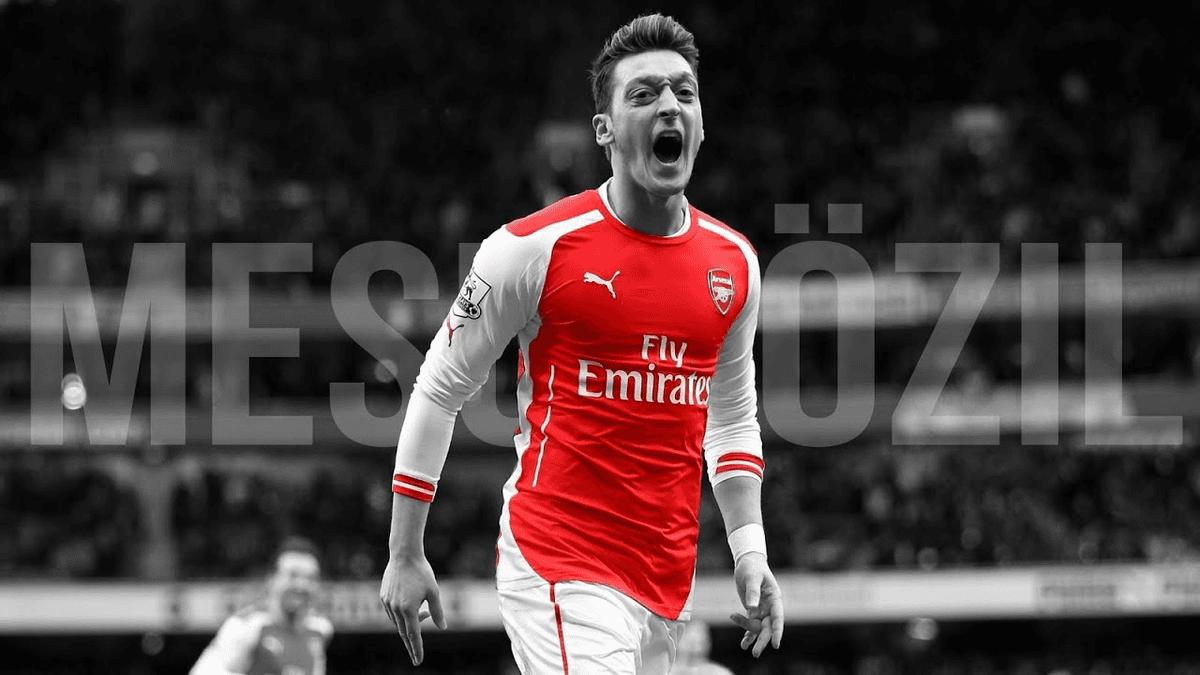
Mesut Özil
Once upon a time, the pass released from his left boot was a solitary beam of light carving through stubborn defensive lines.
Arriving on a trajectory and at a tempo no human mind could anticipate, it engineered goals out of thin air.
Supporters surrendered to that sorcery, crowning him the "King of Assists," the "Wizard of Oz."
Yet that magic vanished from the pitch far too early, and in deafening silence.
What truly hunted him into isolation?
Who, in truth, buried the poet of the pitch?
This is the chronicle of an unresolved grievance, and a profound question a wounded genius bequeathed to world football.
1. The Darling of an Era: The Aesthetic of the Final Ball
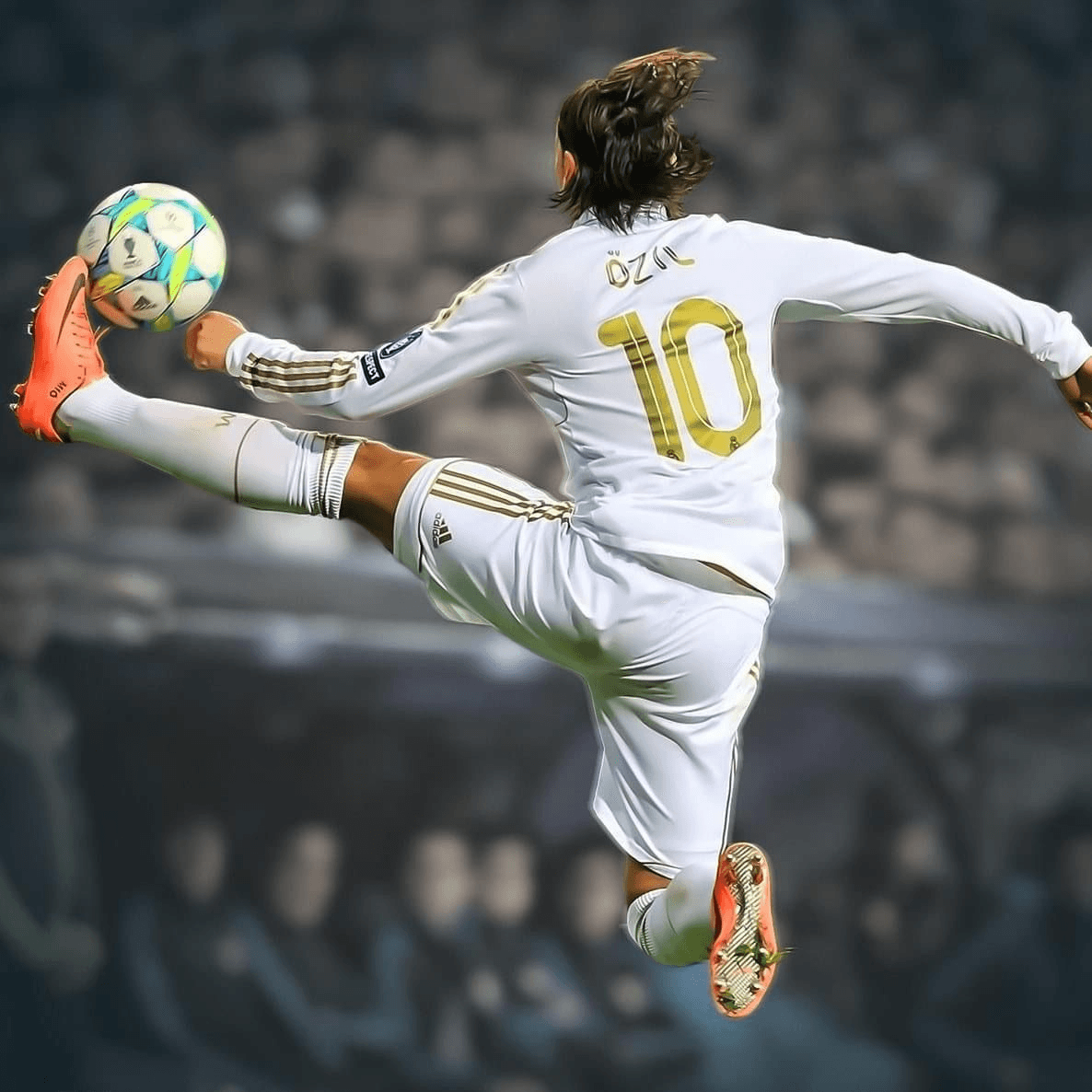
Conducting Real Madrid’s galaxy of superstars in his youth, and later ending Arsenal’s long silverware drought, Mesut Özil was a director of footballing dreams.
His supreme value was never measured in his own tally of goals, but in that transcendent final pass crafted solely to elevate his teammates into legends.
A panoramic vision that registered the next play—and the play after that—long before the ball ever kissed his boot.
A decision-making apparatus capable of calculating the purest geometric solution in a fraction of a heartbeat.
And that singular imagination that cushioned the ball into vacant turf: space where no defender stood, but into which a running teammate would arrive in perfect, breathless synchrony.
It was no longer mere tactical execution; it was fine art.
Cristiano Ronaldo once acknowledged:
“Özil was the player who made scoring goals easiest for me.”
And Arsenal supporters greeted his arrival in North London as if welcoming a returning sovereign. There was an era when the world loved his sublime poetry without condition, and every supporter yearned to be an accomplice to his enchantment.
2. The Genesis of the Fracture: A Photograph That Shook an Identity
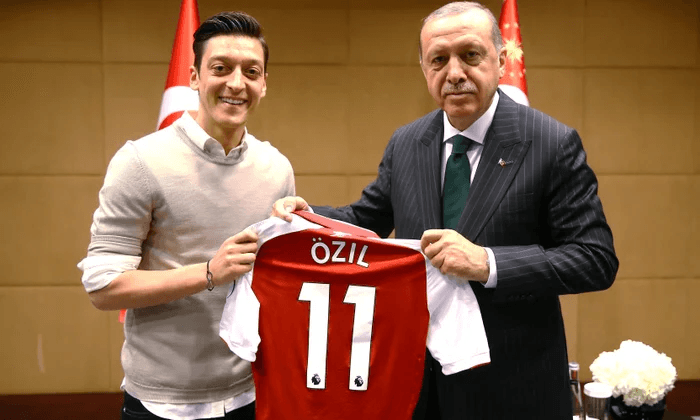
The turning point arrived in May 2018, on the eve of the World Cup in Russia, crystallized in a single still photograph.
Özil and İlkay Gündoğan, sons of the Turkish diaspora born in the Ruhr, met Turkish President Recep Tayyip Erdoğan in London, smiling alongside team jerseys.
Within hours, that image detonated a ferocious political firestorm across Germany.
Media outlets branded the meeting an overt political manifesto, openly casting doubt upon Özil’s loyalty to the Nationalmannschaft. The very heritage that had previously been lauded as the crown jewel of modern, multicultural Germany was transformed overnight into an open target for venom.
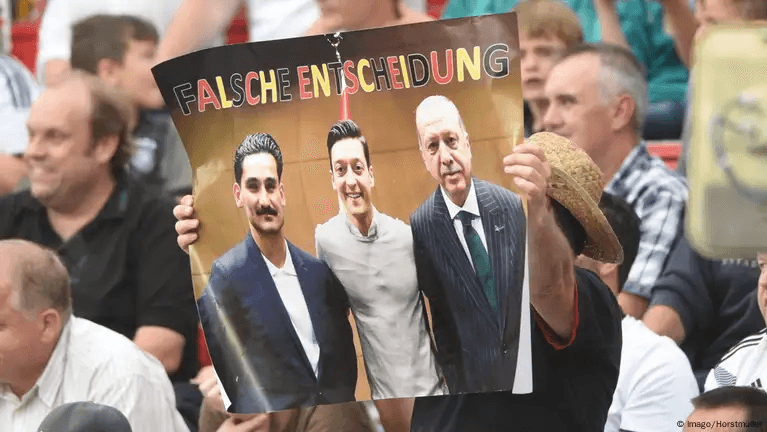
For the man himself, paying polite respect to the head of state of his ancestral homeland was an intuitive, uncalculated gesture of heritage.
Yet that personal reverence was mercilessly distorted through the corrosive prism of partisan politics, returning like a dagger thrust straight into the heart of his identity.
3. An Accusation from the Soul: “German When We Win, Immigrant When We Lose”
At the 2018 World Cup, Germany suffered a humiliating, historic group-stage exit.
And when the inquest began, it was Özil who was singled out for the most merciless crucifixion.
On July 22, 2018, he took to social media to announce his permanent retirement from international football.
He was merely 29 years of age.
Yet his farewell was no customary statement of sporting gratitude.
Structured across three extensive chapters, it was a searing, heart-wrenching indictment of systemic hypocrisy.
In particular, his direct naming of then-DFB President Reinhard Grindel sent shockwaves reverberating through European sporting institutions.
“In the eyes of Grindel and his supporters, I am German when we win, but I am an immigrant when we lose.
(...)
Is it because it is Turkey? Is it because I'm a Muslim? I was born and educated in Germany, so why don't people accept that I am German?
(...)
It is with a heavy heart and after much consideration that because of recent events, I will no longer be playing for Germany at international level whilst I have this feeling of racism and disrespect.”
This went far beyond one footballer stepping down from national duty. It was an existential challenge hurled at Western society.
A cry from the subterranean depths of the soul that had long been suppressed beneath the exquisite beauty of his football.
4. The Identity of the Invisible Enemy: A Malady Deep in Football’s Bones

Was the enemy that cornered Mesut Özil a single antagonistic official?
No; it was something far more pervasive, an insidious, atmospheric poison that suffocated the air around him.
4-1. The Impure Alliance Between Politics and Sport
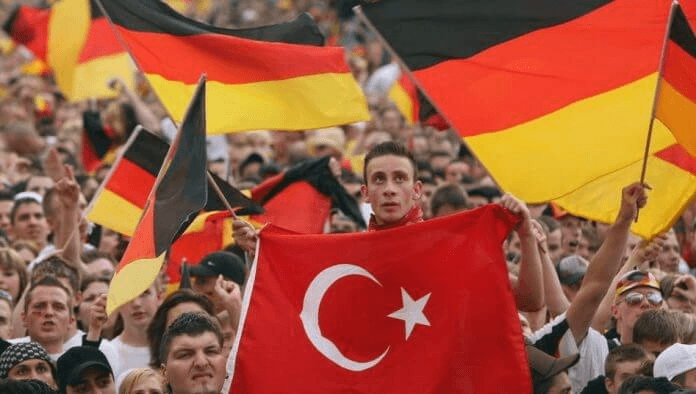
An elite athlete’s background is routinely instrumentalized by nation-states as a convenient PR symbol.
Lauded as the paragon of multicultural integration when banners fly high, Özil was instantly attacked for that very same heritage the moment political tensions flared.
The episode brutally exposed the fragile myth of sport’s neutrality, easily swallowed whenever political agendas dictate.
4-2. The Manufactured Narrative of the Tabloid Machine
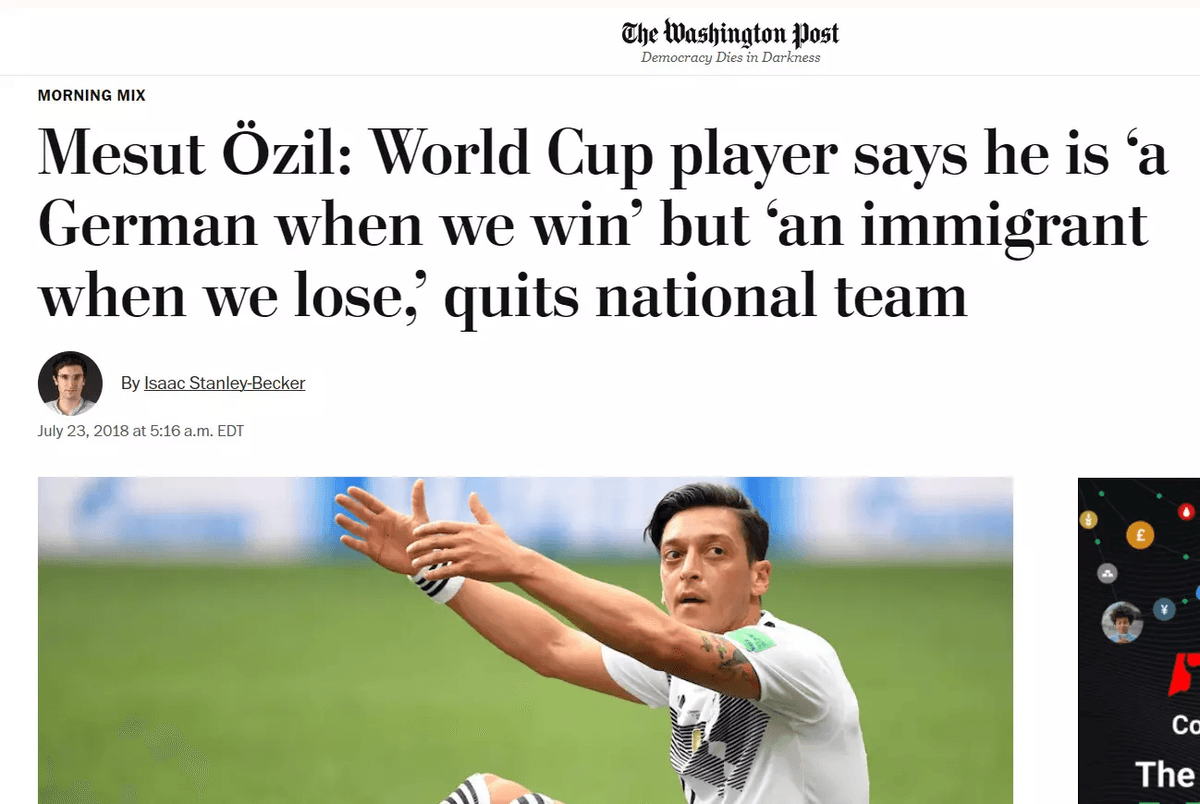
The media marketplace demands simplistic morality tales. Casting Özil as a petulant traitor or the solitary scapegoat simplified complex sociological tensions into sensational clickbait. Once assembled, the caricature became self-replicating, until the media’s phantom eclipsed the flesh-and-blood man. The press served as the supreme loudspeaker for the ambient hostility closing around him.
4-3. The Cowardice of the Institutional Shield
Sporting federations wear “#NoToRacism” armbands and print diversity slogans on matchday programmes. Yet when racism flared within their own walls, the DFB chose self-preservation over protecting its player, demanding that Özil shoulder the blame. When an institution cannot act as a shield for its vulnerable talent, its slogans are reduced to hollow corporate marketing.
5. In the Wake of Silence: The Poet Who Vanished
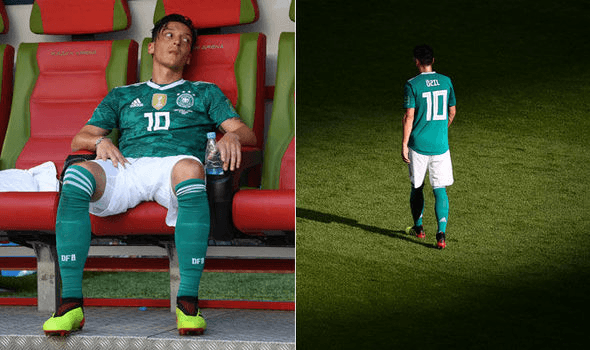
After walking away from the national team, Özil’s career traced a melancholy descent.
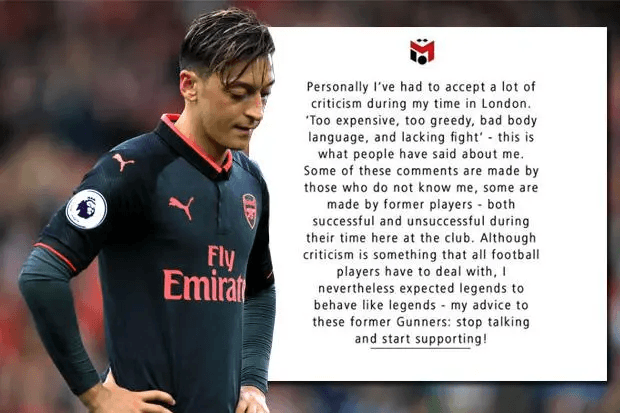
At Arsenal, amid shifting tactical orthodoxies, he was deemed an expensive luxury. Ostracized by managers Unai Emery and Mikel Arteta, his matchdays were reduced to freezing afternoons on the bench.
Even a pilgrimage to Fenerbahçe in Istanbul could not revive the old sorcery.
From his countenance on the pitch, that childlike rapture in the beauty of the ball had evaporated, replaced by the somber stillness of resignation.
Trapped in a solitude few could fathom, the springs of his creative genius dried up. In March 2023, at the age of 34, he hung up his boots.
There was no triumphant lap of honor, no standing ovation commensurate with what his art had given to the world.
The last true fantasista of his generation: Mesut Özil.
For those who lived for pure footballing beauty, his departure signaled the dawn of a colder, more mechanical age.
Conclusion: The Lessons We Must Dare to Learn
The tragedy of Mesut Özil is not the misfortune of an individual athlete.
If football is indeed a cultural treasure that moves the human heart, then it forces upon us an unavoidable reckoning: whom does this culture defend, and what values does it hold sacred?
We failed to shelter a generational artist from the toxic deluge of nationalism and prejudice.
When an athlete found the courage to speak truth to power, we left him to stand alone.
That collective failure does not belong solely to politicians or federations; it weighs upon all of us who consume this sport from the stands and behind our screens.
The poet of the pitch was not buried by global geopolitics.
He was buried by us—the footballing public.
To honor his quiet grievance requires that we fundamentally rethink what it means to be a supporter.
The memory of those gossamer passes, gliding across the grass, will never fade.
And true supporters exist not to crucify that beauty, but to stand as its guardians.
Cruelty is not passion. Cynicism is not insight.
If we truly love football, let us have the courage to protect its poets.