In the romantic annals of football, the number 10 has never been a mere digit on fabric.
It is the eternal emblem of creativity—the capacity to trace lines upon the grass that no textbook could predict—and the sovereign proof of an art that leaves spectators spellbound.
At Istanbul giants Fenerbahçe, there arrived a transcendent moment when this sacred baton was placed into new hands.
The master of time and geometry, Mesut Özil.
And following closely in his footsteps, the Turkish crown jewel: Arda Güler.
What unfolded between the two men was far richer than tactics or data; it was a deeply warm, profoundly human drama.
How a timid adolescent received a royal mantle and discovered within himself an invincible confidence.
This is the story of that exquisite succession.
1. Reverence and Silence: Passing a Living God in the Corridor

In 2021, on the training pitches of Fenerbahçe.
To 16-year-old Arda Güler, the grounds felt like an extension of a waking dream.
Standing right before his eyes was Mesut Özil—the magician who had redefined the spatial geometry of football at Real Madrid and Arsenal.
Yet even the most prodigious prodigy shrinks into an awestruck child in the presence of a living monument.
Güler later remembered that overwhelming gulf with disarming innocence:
“To wear the number 10 for Fenerbahçe… honestly, I never imagined such a thing could happen. That shirt belonged to Mesut Özil. He was the player I learned the most from in my life, but for the first three months, I didn't even have the courage to speak to him. I was that shy.”
Passing his idol in the training ground hallways, Özil would warmly call out, yet Güler was so gripped with nervousness that he could barely raise his eyes.
“When we crossed paths in the hallway and he’d say, ‘Hey, keep working hard out there,’ I could only stare straight ahead and whisper, ‘Yes.’ If he asked, ‘Arda, how are you doing?’ I could only manage, ‘Good, thank you.’”
That silence was never cold detachment. It was the physical trembling born of boundless veneration.
2. The Console That Melted the Ice
On the pitch, Özil wielded passes of surgical, icy precision; off it, he was gentle, perceptive, and genuinely affectionate toward emerging youth.
What finally unknotted the tension of a boy paralyzed by his hero’s shadow was not tactical instruction, but an intimate, unassuming gesture.
One afternoon, Özil invited Güler into his private quarters at the training complex.
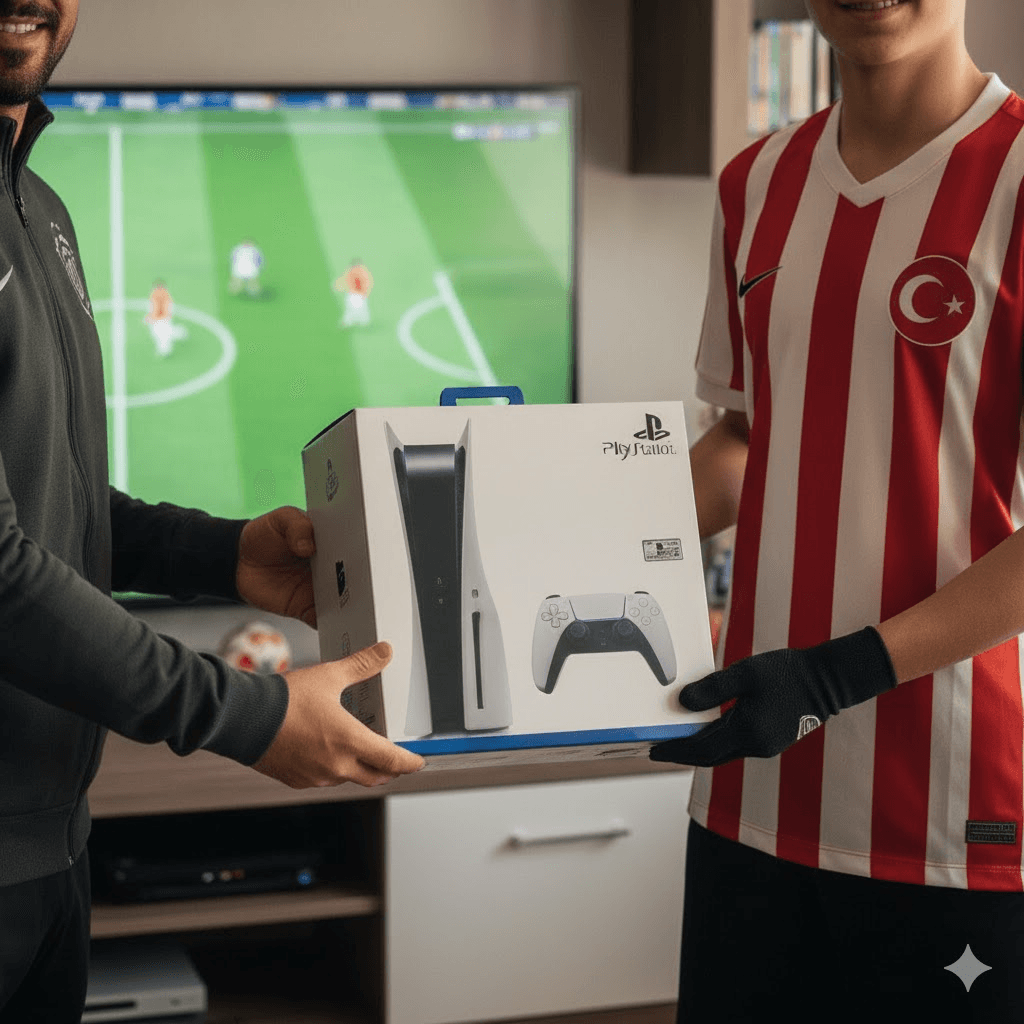
There sat a PlayStation console that Özil no longer used.
“Those who don't know Mesut might think he is somewhat aloof, but in truth, he was the one who built the bridge between us. For me to approach him was simply out of the question. One day, he invited me into his room at the facility. Sitting there was a PlayStation he wasn't using.”
Seeing the 17-year-old Güler’s eyes sparkle, Özil smiled warmly.
“Arda, you can take this home with you.”
“I said, ‘No, abi, please, I couldn't possibly accept it.’ I was so embarrassed. But he insisted: ‘Come on, take it with you.’ He was truly that kind.”
In that singular heartbeat, the relationship shifted from untouchable superstar and youth-team hopeful to mentor, brother, and confidant.
What Özil handed over was infinitely more precious than electronic hardware: it was the profound reassurance that Güler truly belonged in that room.
3. The Weight of the Crown: A Single Second at Seventeen
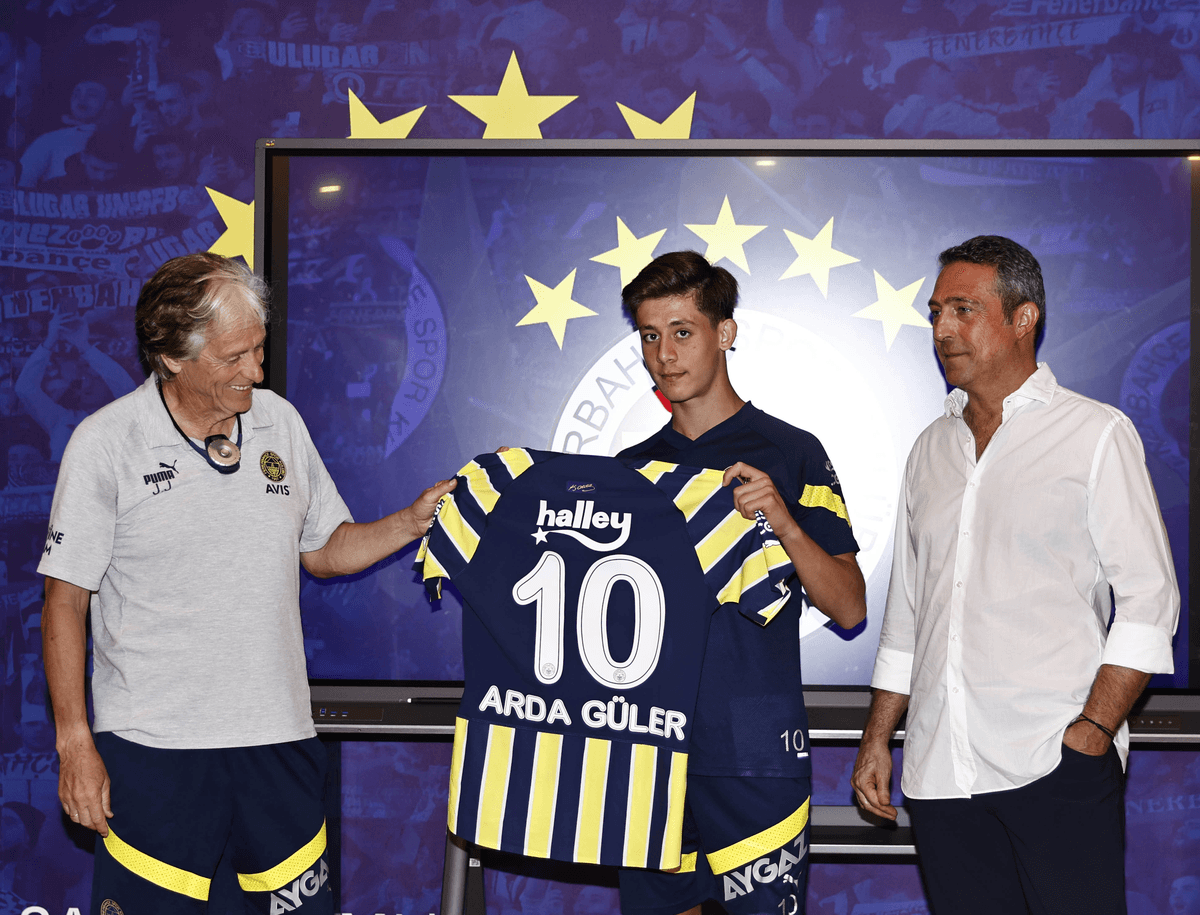
In 2022, the moment of farewell arrived.
Mesut Özil’s chapter at Fenerbahçe came to an end.
With the club’s iconic number 10 vacated, all eyes turned to who might dare inherit it.
Güler himself had never dared dream that the mantle would fall so swiftly upon his shoulders.
“I was only seventeen. Just as a prince cannot demand his own coronation, I was in no position to ask for the number 10.”
Yet the club hierarchy, trusting unconditionally in the brilliance Özil had nurtured, made their boldest decree:
“Arda, this shirt is yours… if you have the courage to carry its weight.”
“It did not take me a single second to decide. I said, ‘I’ll wear it.’”
A number soaked in monumental history, left behind by the player he worshipped most. Yet Güler did not hesitate for a heartbeat.
It was his silent pledge: he would honor the creative soul inherited from Özil by painting his own truth upon the turf.
4. Inheriting Creativity: The Sensation of Invincibility
The afternoon he stepped onto the pitch wearing the Fenerbahçe number 10 for the first time, what coursed through Güler’s veins was not stifling fear, but a strange, intoxicating feeling of omnipotence.
“When I pulled that shirt over my shoulders for the first time… words can hardly describe it. It wasn't merely following in the footsteps of Alex de Souza. It was carrying the creative hopes of every teammate and millions of supporters entirely upon my back. It was a privilege, an honor, and a dream made real.”
He possessed Özil’s vision. He possessed Özil’s fluid grace.
Yet fused alongside was Güler’s own electric, audacious fire.
“‘Fenerbahçe number 10, Arda Güler.’ It felt as monumental as lifting a major trophy in itself. In that jersey, I felt completely invincible.”
The crown had found its rightful heir. The seeds of creativity sown with quiet care by Özil had blossomed magnificently within Güler’s fertile soil.
5. Epilogue: The Fairy Tale Journeys to Madrid

Today, Güler wears the iconic white of Real Madrid—the very coliseum where Özil once cast his brightest spell over global football.
Clad in the same royal white as his mentor, he continues to pursue the absolute zenith of artistic imagination.
The bond between Özil and Güler remains unforgettable because it was never a mere technical transfer of ball skills.
A timid greeting in an empty hallway, an unplayed video game console, and an instant of fearless commitment to the number 10.
It was built layer upon layer from human tenderness and deep professional brotherhood.
The old king departed; a new sovereign arose.
Yet the royal bloodline of pure aesthetic beauty flows on unbroken.
The passing of creative genius.
It is, perhaps, the most lavish, romantic gift that football can ever offer our souls.