The Master of the Padlock: Helenio Herrera and the Architecture of Defensive Art
Is Defending Merely Drab and Tedious?
Is there joy in defending?
This inquiry has long divided those who give their hearts to football.
Compared to the pyrotechnics of a mazy dribble, an avalanche of goals, or fluid passing choreography, defending has routinely been dismissed as plain, uninspiring, and negative.
Yet is that truly the case?
Catenaccio: Italian for “the bolt” or “the padlock.”

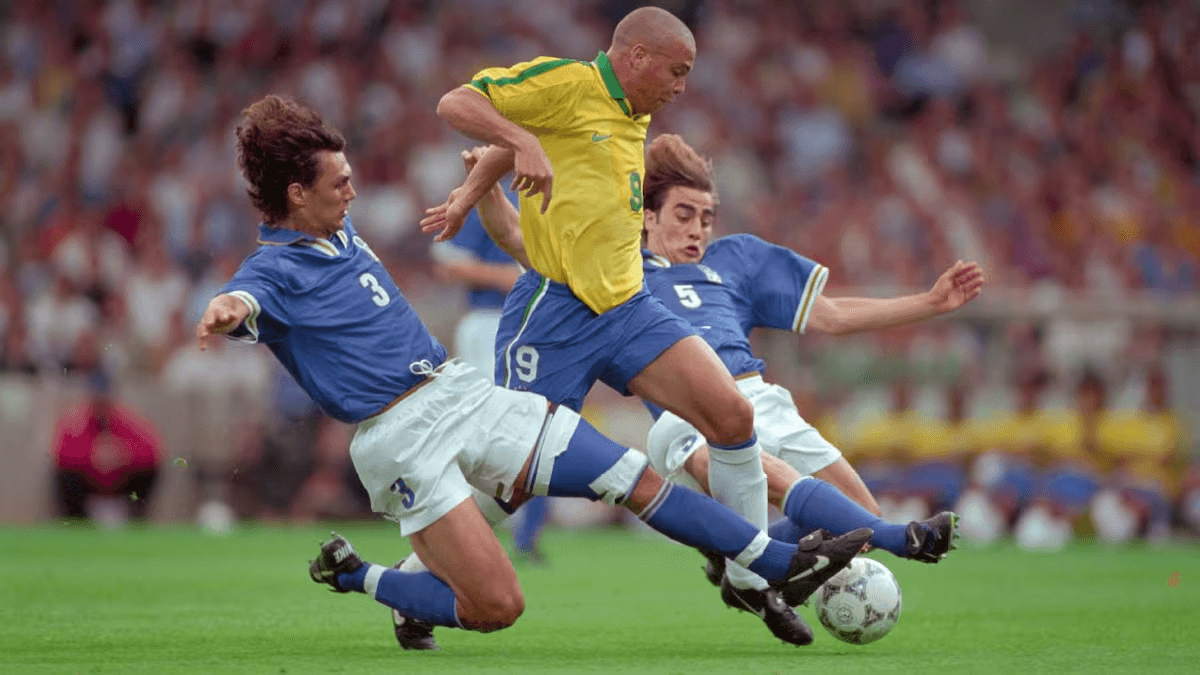
This was never a crude bunker retreat.
It was reading the adversary’s breath,
suffocating their space before it materialized,
denying even the faintest crack in the armor.
And then,
reclaiming the ball to explode vertically
into a devastating counter-thrust.
Here was architecture, intellect, and ruthless discipline.
Defending is not passive submission; it is an act of supreme will.
There was a visionary who codified this ethos into fine art.
His name was Helenio Herrera.
Who Was Helenio Herrera?
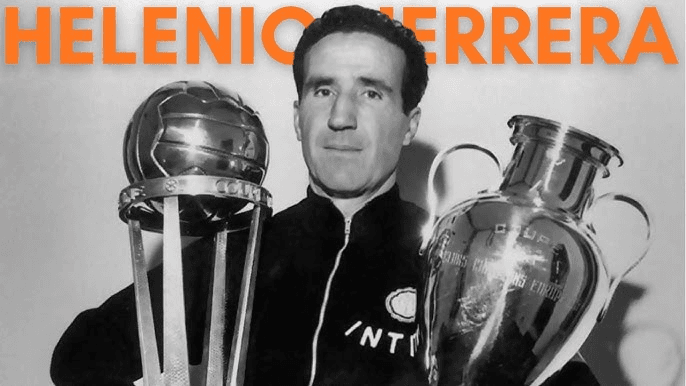
Born in Buenos Aires in 1910 and migrating to France as a boy, Herrera navigated an honest playing career before ascending to the bench.
He first forged his reputation as a tactical savant across France and Spain.
Yet his name was stamped indelibly into immortality when he took the reins of Inter Milan in 1958.
Herrera intruded into every facet of his players’ lives: conditioning, psychology, nutrition, and domestic habits, forging an unshakeable fighting brotherhood.
Scientific training methods, psychological conditioning, and granular match preparation—his revolutionary approach upended an era that relied merely on blind passion and grit.
His enduring signature was Catenaccio.
Inter and Modern Catenaccio
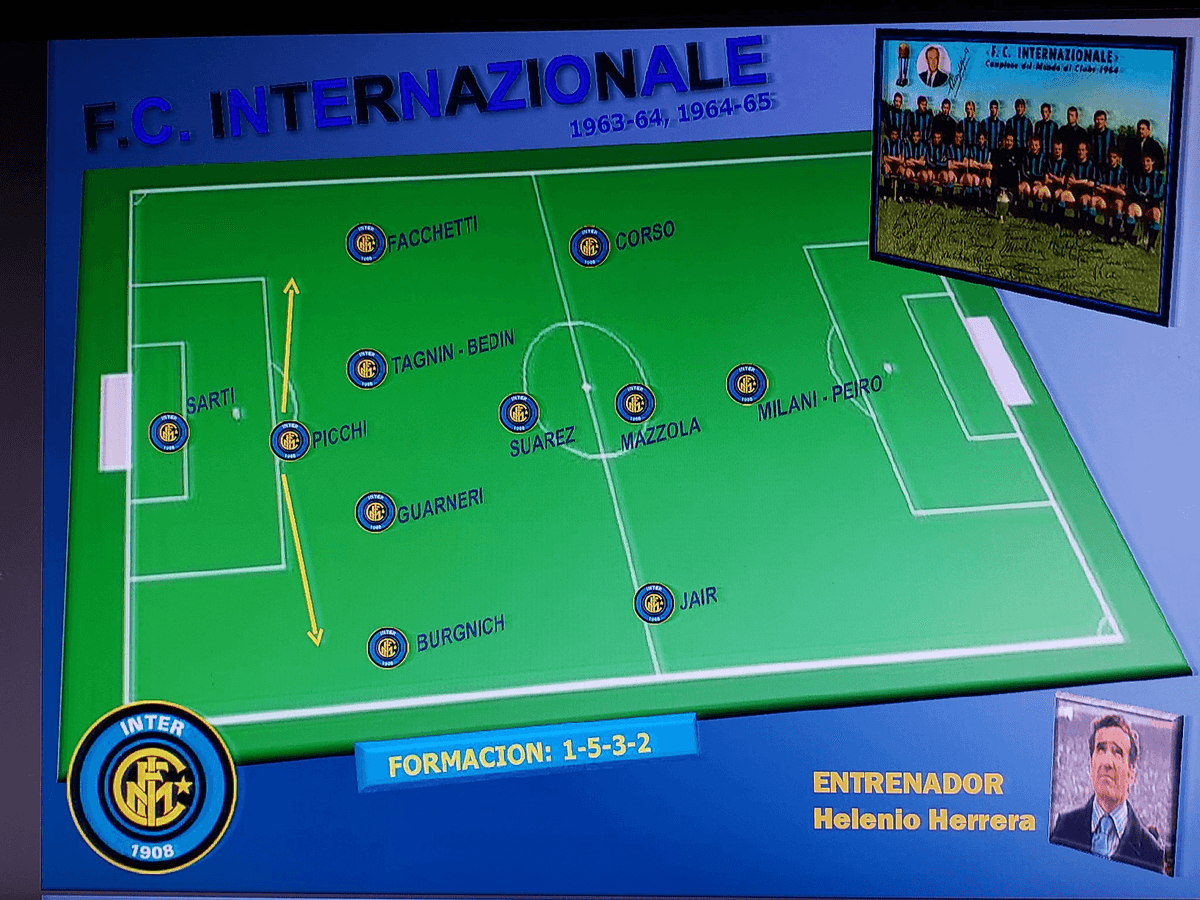
During the 1960s, Herrera’s side reigned supreme across the continent, immortalized as “La Grande Inter.”
On paper, they lined up in a 4-3-3.
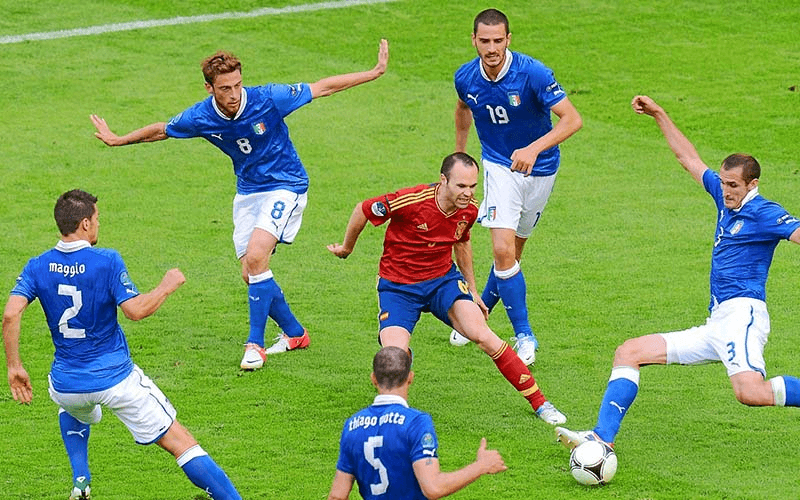
In practice, midfielders dropped deep to reinforce the defensive line while a dedicated libero (sweeper) roamed behind, creating a fluid, shape-shifting five-man backline.
Yet it was never a passive cage designed merely to survive.
-
Guiding opponents into calculated traps through intelligent positioning
-
Winning possession through synchronized pressing
-
Explosive, direct vertical thrust upon transition
Harmonizing these three movements, defending ceased to be a desperate act of interruption and became the art of orchestrating the entire match.
The majestic overlapping runs of Giacinto Facchetti,
the laser-guided distribution of Luis Suárez,
the incisive brilliance of Sandro Mazzola.
What they engineered was the purest form of disciplined attacking football.
The Defensive Philosophy Inherited by Maldini
“If I have to make a tackle, then I have already made a mistake.”
This famous maxim belongs to the greatest defender in Italian history: Paolo Maldini.
His defending was a masterclass in anticipation, serenity, and poise.
Rather than colliding bodies in frantic lunges, he surveyed geometry and snatched away time.
True defending is not merely halting an attacker.
To rob an opponent of all possible choices by one’s mere presence—that is where defending ascends to fine art.
Maldini was the direct spiritual descendant of Herrera: a poet of the tackle without ever needing to slide.
How Defensive Grace Summons the Fantasista

Here lies a fascinating paradox.
While Italy is globally renowned as the fortress of defense,
it simultaneously birthed the world's most romantic fantasisti.
Gianfranco Zola, Roberto Baggio, Alessandro Del Piero, Francesco Totti, Antonio Cassano... Mario Balotelli...
Why should this be?
Back to 2006, and of course it’s Alessandro Del Piero busting a gut to finish a stunning Italian counter-attack with aplomb. pic.twitter.com/3OX7R2HVTd
— These Football Times (@thesefootytimes) November 16, 2022
The answer is simple: because the structure was anchored by defensive mastery.
Precisely because the collective was impeccably organized and the defensive perimeter secure, the team could afford the magnificent luxury of an unbound, free-roaming artist on the pitch.
Only in the shadow of defense does freedom shine. Only where discipline reigns can creativity dance.
Herrera's Catenaccio was defending in service of attack.
And that is why the fantasisti who blossomed from its bedrock shone with such fragile, incandescent radiance.
Still Gazing upon the Beauty of the Lock
Though eras march forward and tactics continually mutate, the soul of football remains immutable.
Defend to win.
Attack to enchant.
Within that sacred equilibrium, the art of defending continues to be painted across the grass.
Beauty in the barricade, dreams in the attack.
The bolt forged by Helenio Herrera still clicks quietly shut, somewhere across the cathedral pitches of our world.
Catenaccio never dies.
For it is not a tactic; it is an article of faith.
Link
Share this story