Through the Storm, You Are Never Alone: The History of Anfield and the Hymn that Became Liverpool’s Soul
Anfield nights possess a red unlike any other in the world.
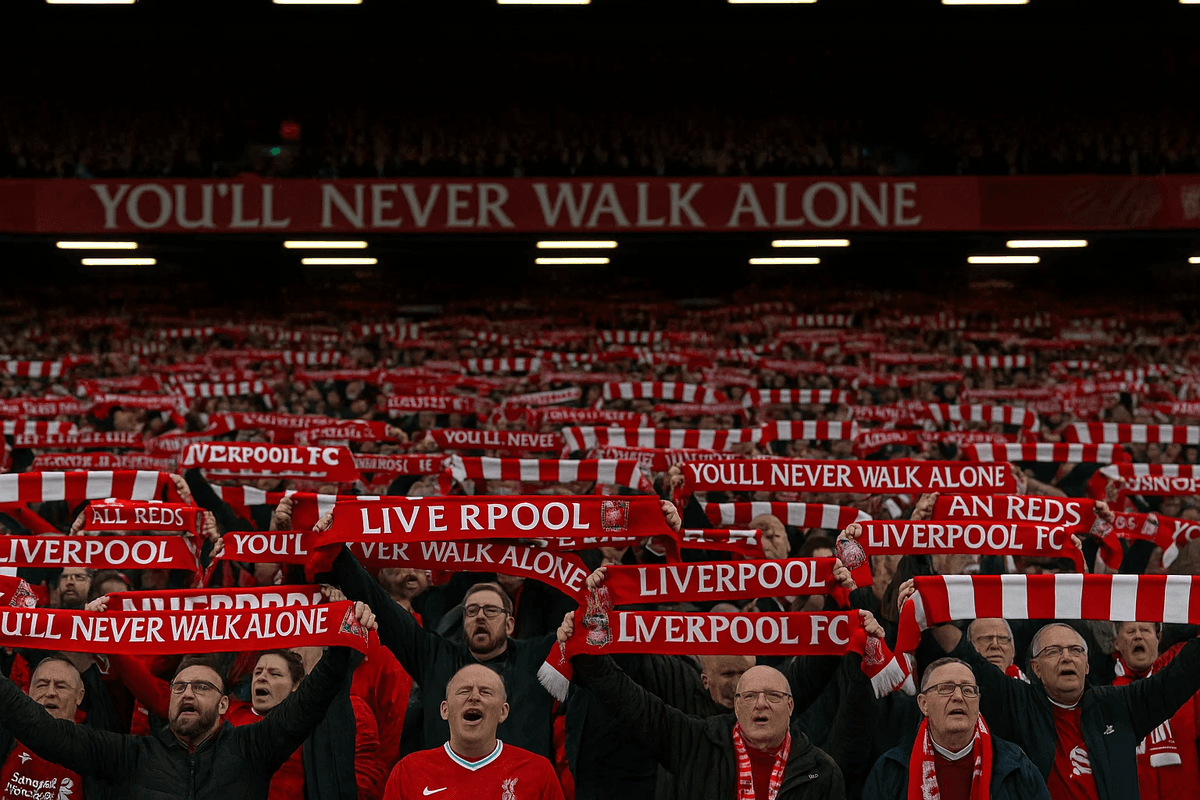
Moments before kickoff, as the floodlights dim or the dusky twilight settles over the stands, tens of thousands of supporters hoist their scarlet scarves toward the heavens in unison. Then, piercing through the trembling silence of fifty thousand holding their breath, that unmistakable melody begins to soar.
“When you walk through a storm, hold your head up high...”
The chorus rising from thousands of throats shakes the corrugated roofs of the stadium, sends shivers down the spines of the players standing on the grass, and tightens the chest of anyone watching across thousands of miles through a television screen.
Liverpool Football Club’s anthem, You’ll Never Walk Alone.
Nowhere in the global game is there a song so deeply revered, sung through so many tears, and so inextricably bound to the collective soul of a community. Why did a club born in a battered port city in the northwest of England choose this particular melody as its beating heart?
The answer lies in a miraculous musical accident, an unbearable civic tragedy, and an enduring testament of solidarity that transcends borders and rivalries alike.
A Prayer Born on Broadway
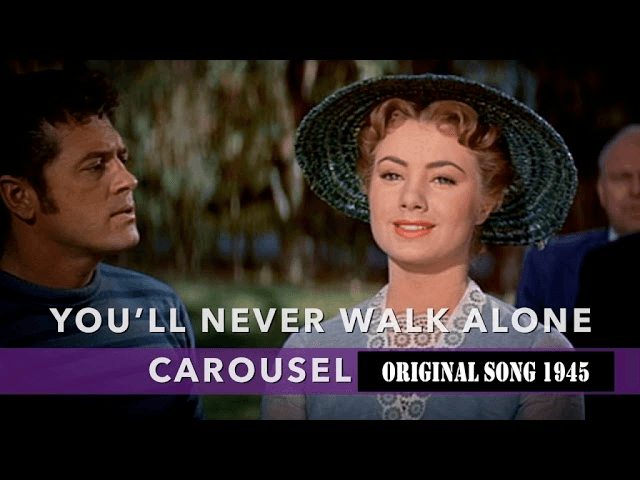
The song drew its first breath thousands of miles across the Atlantic, on the stage lights of New York City.
The year was 1945. As the cataclysm of the Second World War was finally drawing to a close, playwrights Richard Rodgers and Oscar Hammerstein II penned the piece for their Broadway musical Carousel.
Within the narrative, the hymn is addressed to those standing upon the precipice of despair. When the tragic protagonist Billy Bigelow dies, his grieving widow Julie and her cousin Nettie stand paralyzed by loss. To these women facing the abyss, the song speaks with gentle, unwavering resolve.
Do not fear the dark. For at the end of the storm, a golden sky awaits.
It was never conceived as a triumphal anthem for sporting glory. It was, from its very inception, an earnest hymn of consolation and prayer for human beings fighting against the brutal tempests of life.
The Merseybeat Breeze Meets the Cathedral of Anfield
What carried this Broadway prayer into the cathedral of English football was the cultural tidal wave sweeping through 1960s Liverpool.
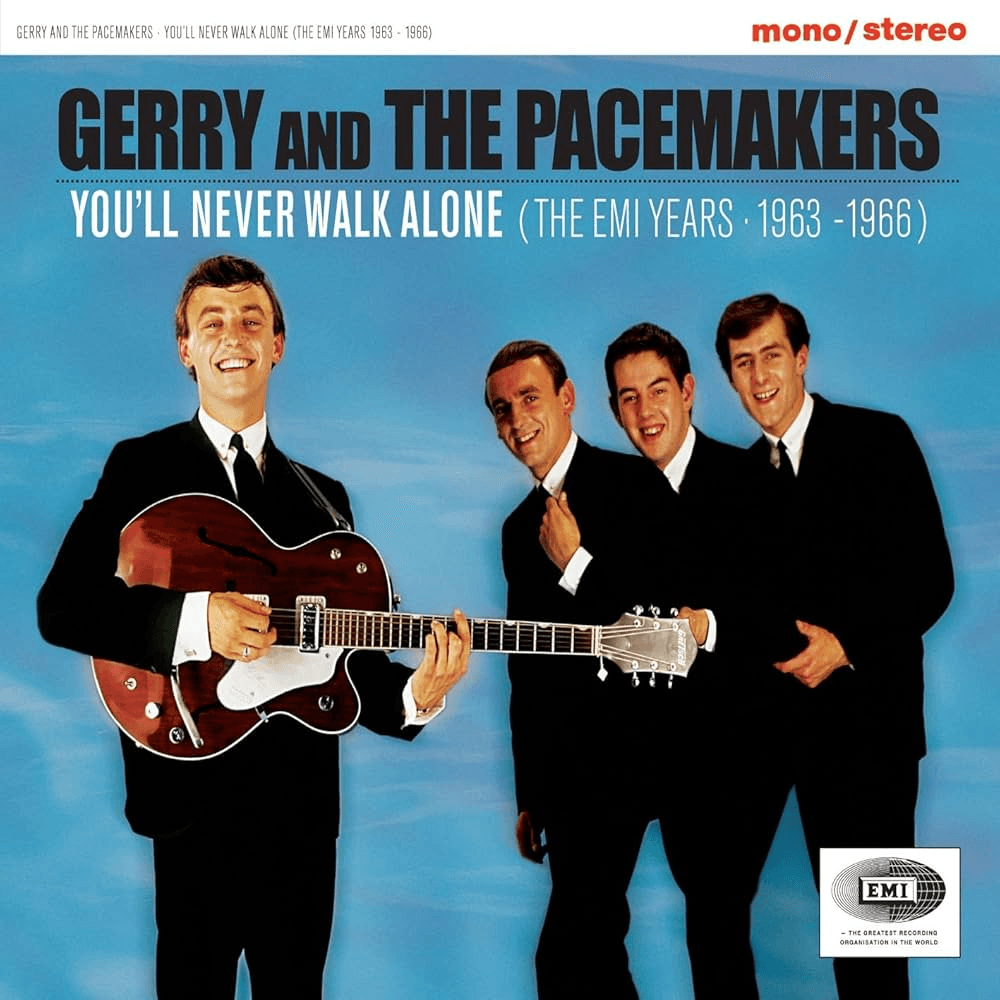
In 1963, Gerry and the Pacemakers—a local quartet who stood alongside The Beatles at the forefront of the Merseybeat phenomenon—recorded a soaring pop cover of the track. Driven by lead singer Gerry Marsden’s sweet yet impassioned tenor, the single rocketed to No. 1 on the UK Singles Chart.
Around that time, the stadium DJ at Anfield had begun playing the UK Top 10 hits in a pre-match countdown. While supporters were accustomed to singing along casually to the charts, the moment You’ll Never Walk Alone echoed through the tannoy, the atmosphere inside the ground transformed instantly.
Locking arms and raising their scarves, the Kop belted out the verses not as an idle pop tune, but as if giving voice to their own daily lives.
Weeks later, when the single dropped out of the charts and the DJ omitted it from the pre-match playlist, a thunderous roar erupted from the Kop:
“Where’s our song? Play our song!”
In that decisive moment, claimed entirely by the will of the supporters, the song became the spiritual spine of Liverpool FC, elevated into an eternal anthem.
The legendary manager Bill Shankly was deeply moved by the song’s emotional gravitas. Handed a copy of the record directly by Gerry Marsden, Shankly remarked with characteristic reverence:
“Gerry, my son. I have given them a football team, but you have given them a song.”
When the Shankly Gates were erected at Anfield in 1982, those very words were cast in iron across the crest:
“YOU’LL NEVER WALK ALONE.”
An Unshakable Emblem of Solidarity Through Tragedy

Yet what truly transformed this song from a cherished terrace chant into a sacred testament—for both the club and the wider city of Liverpool—was an unimaginable disaster.
April 15, 1989. The Hillsborough disaster.
Penned behind brutal perimeter fencing, gross systemic negligence allowed a catastrophic crush to unfold on the terraces. In an instant, 97 men, women, and children were unlawfully robbed of their lives (a toll that later rose to 98). Compounding the agony, police authorities and tabloid media systematically orchestrated a shameful cover-up, unjustly smearing the victims and survivors as violent hooligans. For decades, while a proud working-class city was subjected to contempt and vilification, the bereaved families waged a lonely, heroic crusade for truth and justice.
Throughout that agonizing campaign, what sustained their spirits above all else was You’ll Never Walk Alone.
At memorial services, inside packed stadiums, and on the steps of courthouses, they sang to gather their wounded souls together and whisper to one another:
No matter how dark the tempest, you will never walk alone. We shall walk side by side.
In those crucibles of grief, the song ceased being mere sport. It became the living embodiment of unbreakable solidarity, dignity, and a defiant will to live.
Echoes Beyond Anfield: Celtic and Borussia Dortmund
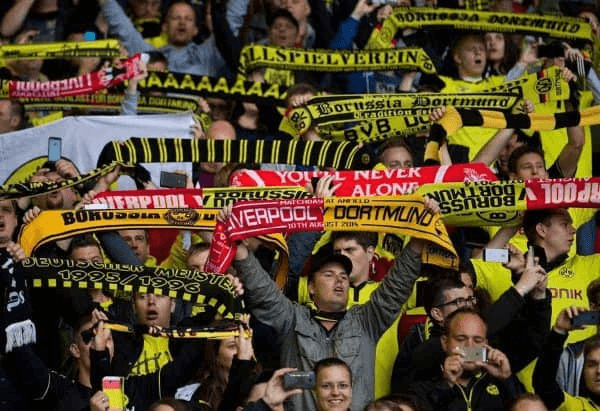
This hymn of the soul could not remain confined to the banks of the Mersey. Crossing seas and borders, it shook the terraces of football temples across Europe—most famously Celtic FC in Scotland and Borussia Dortmund in Germany.
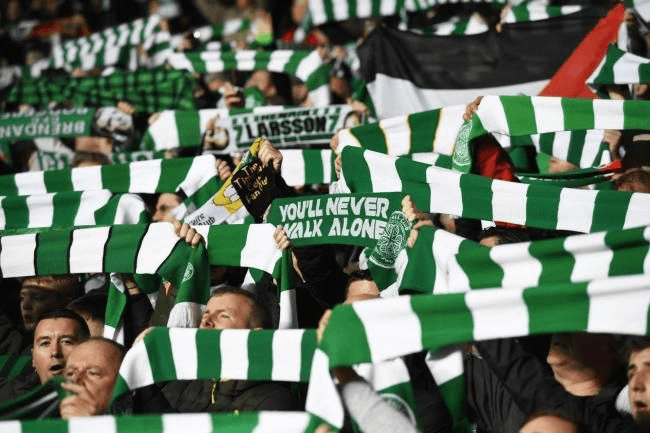
Celtic’s adoption of the anthem dates back to April 1966, during the European Cup Winners' Cup semi-final. Traveling supporters from Glasgow who journeyed to Anfield were spellbound by the reverberating rendition of You’ll Never Walk Alone filling the night air. They carried that profound impression back home to Celtic Park, where it soon established itself as an indispensable pre-match sacrament.
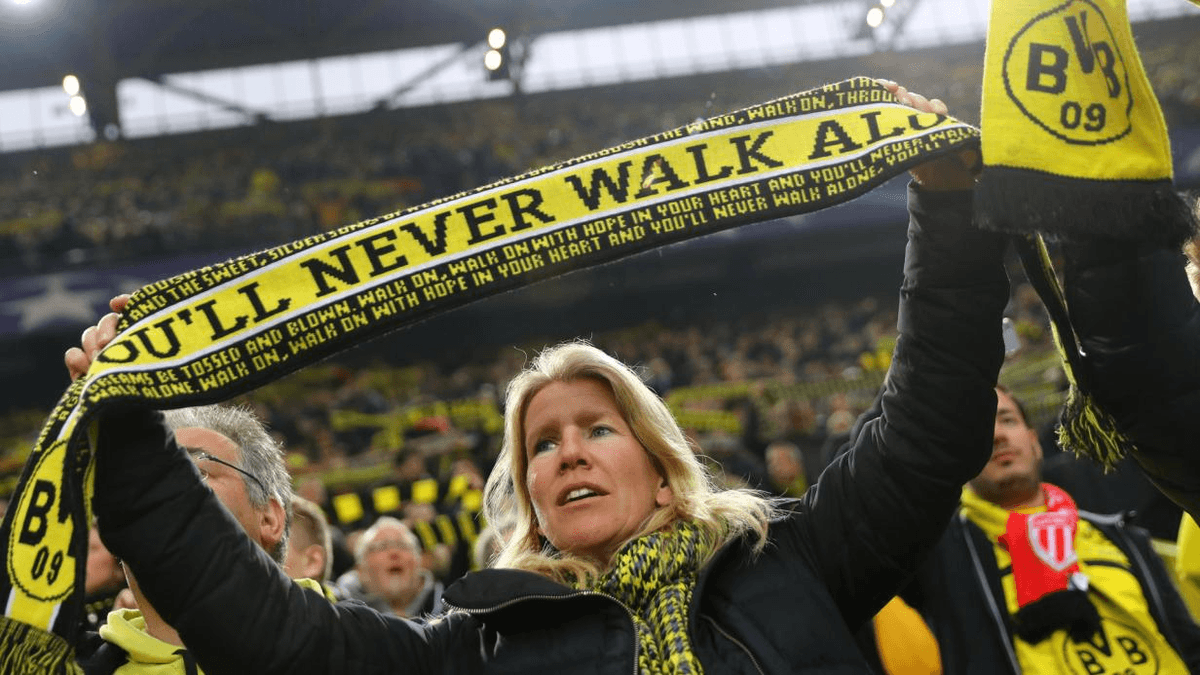
Dortmund’s connection took root in 1996, when local outfit Pur Harmony recorded a cover. Lead singer Matthias Kartner initially hesitated, uneasy about covering a melody so synonymous with Liverpool. Yet when the track was handed to the stadium announcer and played over the Westfalenstadion speakers, the legendary Yellow Wall (Die Gelbe Wand) embraced the hymn wholeheartedly, claiming it as their own.
Why did this song resonate so deeply with these three clubs in particular? The answer lies far beyond coincidence.
Liverpool, Glasgow, and Dortmund share profound roots as proud working-class strongholds.
The dockers of the Mersey, the shipbuilders of the Clyde, and the coal miners and steelworkers of the Ruhr valley. These communities have endured harsh industrial transformations, economic deprivations, and political neglect. For them, survival depended entirely on mutual aid, holding each other up, and refusing to abandon a neighbor.
Thus, the promise to “walk on through the storm with hope in your heart, for you’ll never walk alone” was never a manufactured marketing slogan; it was an existential hymn reflecting the fundamental reality of their lives.
The Day a Beloved Leader Departed: Anfield’s Most Poignant Chorus
In modern football, this spirit of love and communion was never manifested more movingly than on a sunny spring afternoon.
May 19, 2024.
The day Jürgen Klopp—the man who revitalized Liverpool FC and earned the undying affection of every supporter on Merseyside—bid his final farewell to Anfield.
During the post-match farewell ceremony, tens of thousands of supporters gifted him with tears and the most tender, emotionally charged rendition of You’ll Never Walk Alone the old ground had ever witnessed.
As every soul in the stands held their scarf aloft and sang with raw, hoarse devotion, the manager stood alone in the centre circle, hand pressed against his heart, listening in reverent silence.
In that transcendent moment, the singing reaffirmed the club's ultimate aesthetic: that manager, players, and supporters form one indivisible family who shall never walk alone. It was a masterpiece of human drama, forever etched into the folklore of the game.
The Golden Sky Awaiting Beyond the Storm: The Poetry of the Verse
Here, it is worth pausing to reflect on the literary majesty of the lyrics. Every syllable serves as an enduring testament of hope, not only for the football supporter, but for any traveler navigating the trials of existence.
You'll Never Walk Alone
| Original English Verse | The Spirit of the Verse (Fantaholic Reflection) |
|---|---|
| When you walk through a storm | When the tempests of life gather around your steps |
| Hold your head up high | Keep your gaze unbroken and your chin held proud |
| And don't be afraid of the dark | And never let the shadows extinguish your faith |
| At the end of a storm | For beyond the final fury of the gale |
| There's a golden sky | A radiant golden sky awaits to break the clouds |
| And the sweet silver song of a lark | And the pure, silver notes of the lark greet the dawn |
| Walk on through the wind | Press forward through the biting headwind |
| Walk on through the rain | Keep marching through the drenching rain |
| Though your dreams be tossed and blown | Even as your dearest hopes are battered and scattered |
| Walk on, walk on | Walk on, walk on without surrender |
| With hope in your heart | Carrying the embers of hope within your chest |
| And you'll never walk alone | And you shall never have to walk this road alone |
| You'll never walk alone | No, you will never walk alone |
| Walk on, walk on | Walk on, walk on |
| With hope in your heart | With hope alive in your heart |
| And you'll never walk alone | And you'll never walk alone |
| You'll never walk alone | You will never, ever walk alone |
The Pure Melody at the Source
No matter how football evolves into cold tactical diagrams or high-tech algorithms, so long as this anthem rings out before kickoff, the turf remains consecrated by the warm, beating hearts of humanity.
Finally, let us turn our ears back to the gentle recording that first carried this prayer to Anfield.
Gerry Marsden’s crystal-clear vocals sweep away the river fog of the Mersey, rekindling warmth in weary hearts.
The storm will pass, and the golden sky will always return.
And so, carrying hope within their chests, they take another step forward into the world.
Anchored by the unbreakable certainty that they will never walk alone.
Share this story