The Japanese Philosophy Quietly Anchoring Michael Olise’s Genius
The vivid crimson of Bayern Munich.
The regal blue of Les Bleus.
The moment the ball settles beneath his studs out on the right touchline, the air inside the stadium changes entirely.
Michael Olise.
A glide of feathery lightness that renders full-backs helpless.
A mastery of tempo that creates the haunting illusion of time slowing down.
A sorcerer’s left foot that curls passes through impossibly tight trajectories, landing on a teammate's boot like a whisper.
When he nudges the ball on the flank, the ferocious, breathless violence of modern football dissolves; the pitch becomes a silent theater where pure elegance holds court.
Even when the net ripples behind an opposing goalkeeper, he rarely, if ever, lets emotion spill over.
While teammates sprint toward him in ecstasy, Olise merely taps a temple with a single, serene finger, or walks quietly back toward his half as though nothing out of the ordinary has occurred.

That unblinking composure, that near-frigid poker face, has earned him the moniker "Cold" among supporters in England and France—a trait celebrated almost as a mythological aesthetic.
https://www.instagram.com/p/DaOuMS0Ie_3/
At first glance, he appears to be the archetype of the solitary genius: gifted from on high with an extraordinary footballing IQ and innate physical poise.
There is so little strain in his movement that one might easily succumb to the illusion that he dances across the pitch entirely on impulse, untouched by toil.
Yet few are aware that this supreme elegance, this relentless technical refinement, is anchored deep in both body and soul by a philosophical principle from the Far East: Japan.
Two Kanji Carved on a Right Leg: The Silent Vow of “Kaizen”

Born to a Nigerian father and a French-Algerian mother, Olise grew up in the tapestry of modern London.
Walking the elite path of European football from a young age, nothing in his background suggested an obvious, immediate cultural affinity with Japan.

He navigated the ruthless talent factories of Chelsea and Manchester City, flourishing early through sheer individuality. The multicultural bustle of London’s boroughs and the Darwinian pressures of elite English academies formed the furnace of his formative years.
And yet, upon his right leg—the limb that balances him as he crafts geometric through-balls, or snaps through whipping curling strikes into the side netting—lies a deeply deliberate piece of ink.
It is neither an aphorism from a European philosopher nor a proud phrase honoring his African or Maghrebi lineage. Carved there in pitch-black ink are two unmistakably clear kanji characters.
Kaizen (改善).
Born in post-war Japan and exported across the globe as a benchmark of industrial mastery and operational discipline, why would a young prodigy captivating European football choose to brand his flesh with such a stoic Eastern tenet?
The Spirit of the Pilgrim: Standing Apart from Dressing Room Trends
In modern football, especially among the new generation within the French national setup and the Premier League, Japan's cultural resonance has grown noticeably. Casual conversation about Japan in top-tier dressing rooms is hardly out of place.

Ibrahima Konaté speaks openly of his reverence for Dragon Ball and Attack on Titan; Jules Koundé immerses himself in Tokyo’s cutting-edge street style and avant-garde tailoring. Many young Bleus find themselves captivated by Japanese pop culture and modern urban aesthetics.
Olise’s fascination, however, drew from a very different well.
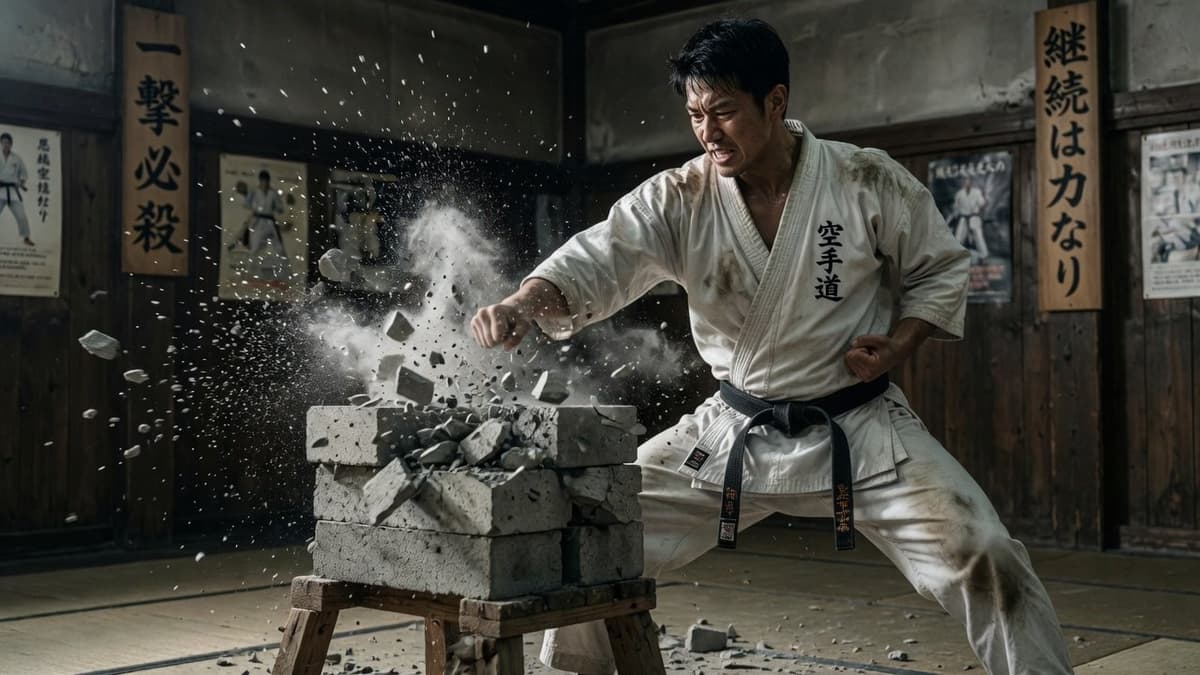
He was not swayed by the vibrant entertainment of global anime phenomena, nor by the high-concept catwalks of Harajuku. What resonated with the innermost fibers of his character was the uncompromising, ascetic spirit that underpins traditional Japanese craftsmanship: monozukuri, the tireless quest of the devotee.
How does a young phenom raised between South London and cosmopolitan academies arrive at a concept typically revered by industrialists and master woodworkers? The answer traces back to his trial by fire in the English top flight with Crystal Palace.
Uncovering the Truth of “Kaizen” Amid the Premier League Din

The Premier League is an unforgiving crucible dominated by sheer athletic power, relentless high-speed duels, and an all-consuming obsession with immediate returns.
Thrust into this Darwinian landscape, Olise blossomed into Crystal Palace’s chief orchestrator, thrusting himself beneath the glaring spotlights of Selhurst Park and beyond.
Yet in his quiet conversations with mentors and staff—not least manager Patrick Vieira—Olise was scrutinizing the perilous limits of relying purely on talent. How far does natural gift truly take a man? What separates those who sparkle briefly from the enduring giants who shape the history of the sport?

Through that rigorous self-examination and conversations introduced through his inner coaching circle, he encountered the Japanese philosophy of Kaizen—the quiet art of perpetual improvement.
“Do not yearn for dramatic leaps or overnight miracles. Accumulate slight, almost imperceptible gains each day, and commit to endless micro-adjustments.”
In a sport clamoring for virality, instant metrics, and bombastic celebrations, this serene Eastern creed struck an immediate chord with Olise’s austere temperament and perfectionist soul.
He understood that the magic witnessed by thousands on matchday was never an accidental flash of lightning; it could only be reproduced reliably through hundreds of hours of minute recalibration. He chose to tattoo Kaizen into the flesh of his right leg as an unbreakable compass for his life as a footballer.
The 1% Margin: The Repetitions That Sustain Genius
https://www.instagram.com/p/DZzRQQYC124/
On the pitch, he drifts past markers with baffling ease, slipping breathtaking through-balls into corridors of space no one else anticipated. Spectators admire his fluid ballet and sigh with awe, calling it pure instinct. It looks so painless that one could easily believe the craft cost him nothing at all.
Yet behind that veneer of effortless beauty lies an obsessive, often painful process of continuous improvement.
On the training ground, Olise is often the last to leave, obsessively calibrating the touch of leather against boot. A delivery that missed its target by mere inches, the first touch placed two centimeters too far forward, the fractional decoy of the eyes when disguising an angle—nothing escapes his self-auditing gaze.
“One percent better today than yesterday.”
Much like a master carpenter in Kyoto obsessing over the translucent wafer-thin shavings of a hand plane, or a swordsmith folding glowing tamahagane steel thousands of times over, Olise works in the corner of the training pitch, sharpening fractions of a millisecond and centimeters of leeway. Beneath that famously ice-cold demeanor burns a fierce, unyielding hunger for that one marginal percent.
The effortless grace we witness on our screens and in the stands is no mere windfall of providence; it is the accumulated mass of countless private hours, an architecture built out of relentless, quiet revisions.
The Endless Path: From Munich to the Summit of World Football

In the summer of 2024, Olise sealed a move to German heavyweights Bayern Munich.
Having shone brightly as the centerpiece of France’s campaign at the Paris Olympics, he has cemented himself as the torchbearer for the future of Les Bleus.
At one of the most demanding institutions in world sport, where silverware is not an ambition but a baseline requirement, the scrutiny is leagues beyond south London. Yet amid the deafening roar of the Allianz Arena, Olise’s posture remains utterly unshakeable.

Because what lies before his eyes is neither the opposition in front of him nor the suffocating weight of expectation; his gauge is always, unerringly, the player he was yesterday.
The two kanji carved on his right leg whisper to him in the quietest moments: whether walking off with a hat-trick ball or frustrated after an afternoon when the ball refused to obey, the work never stops. In the pilgrim path of Kaizen, there is no finish line.
When he rolls up the crimson sleeves of Bayern, plants his right foot deliberately into the turf, and uncoils a brushstroke of wizardry with his left,
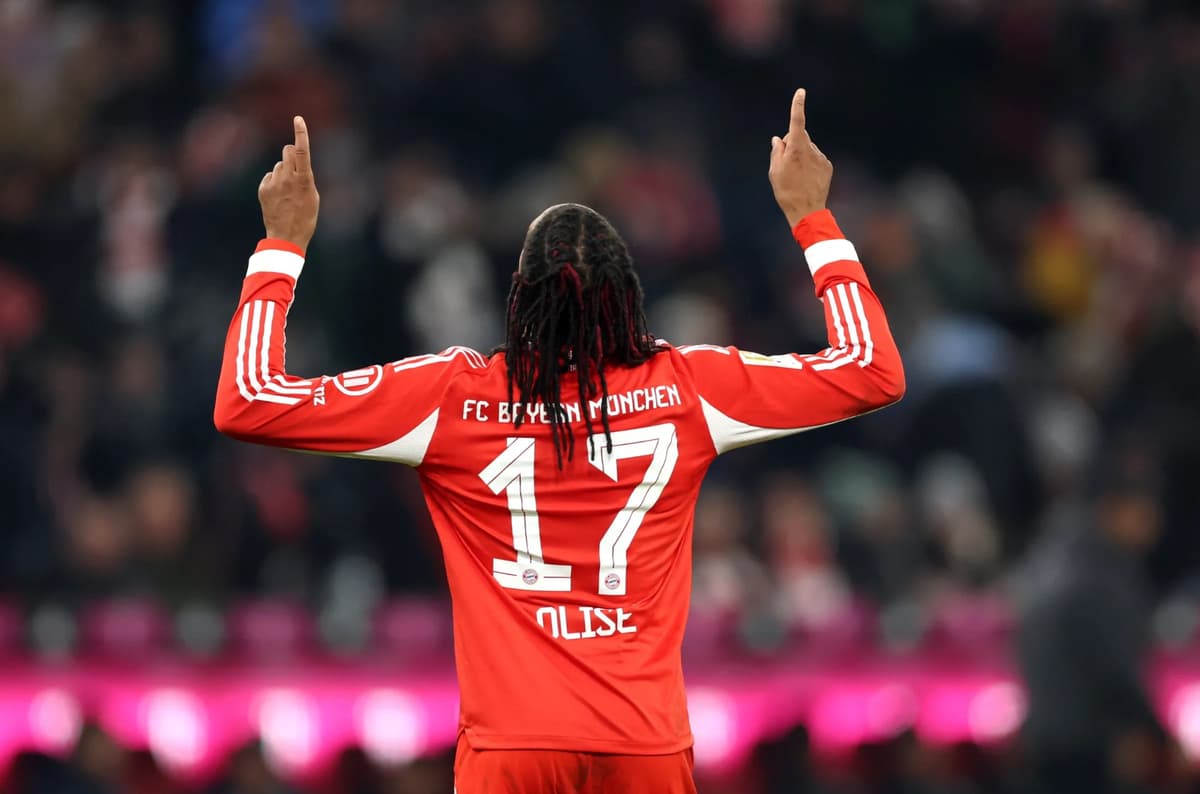
we cannot help but feel the deep rhythm of countless repetitions and the quiet pulse of Japanese philosophy nestled behind that sovereign grace. And dreaming of the player that another one percent will uncover, we find ourselves unable to look away.
Share this story