Were We Truly Within Reach? An Honest Reckoning of Japan vs. Brazil
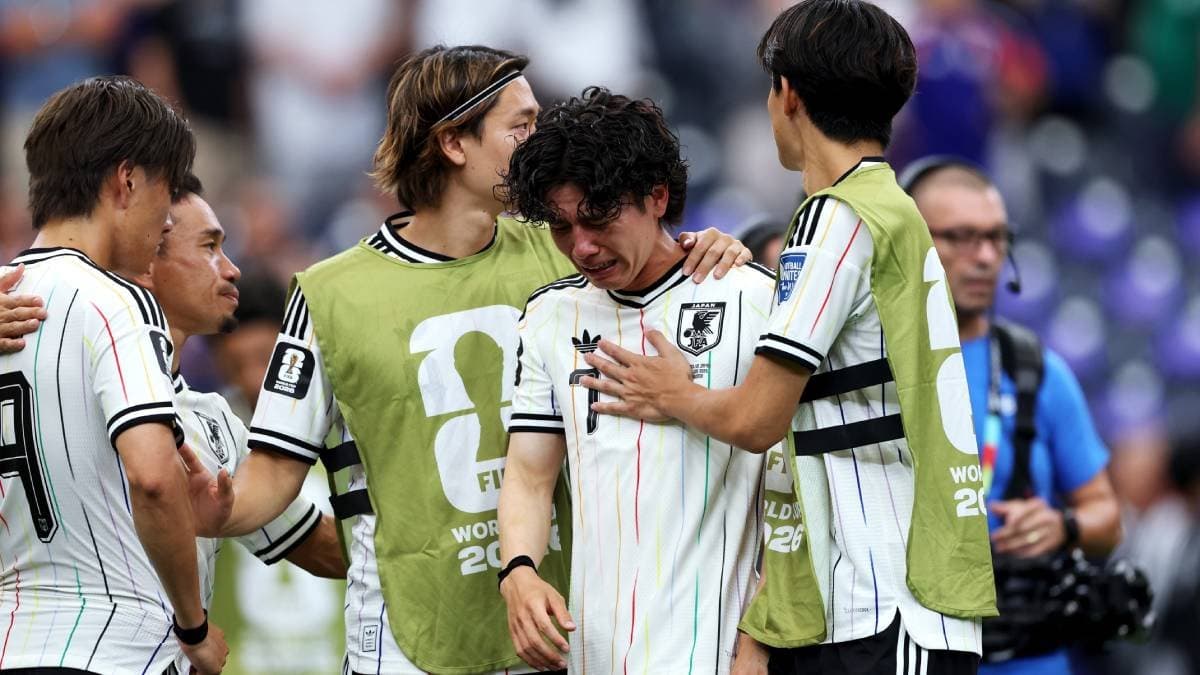
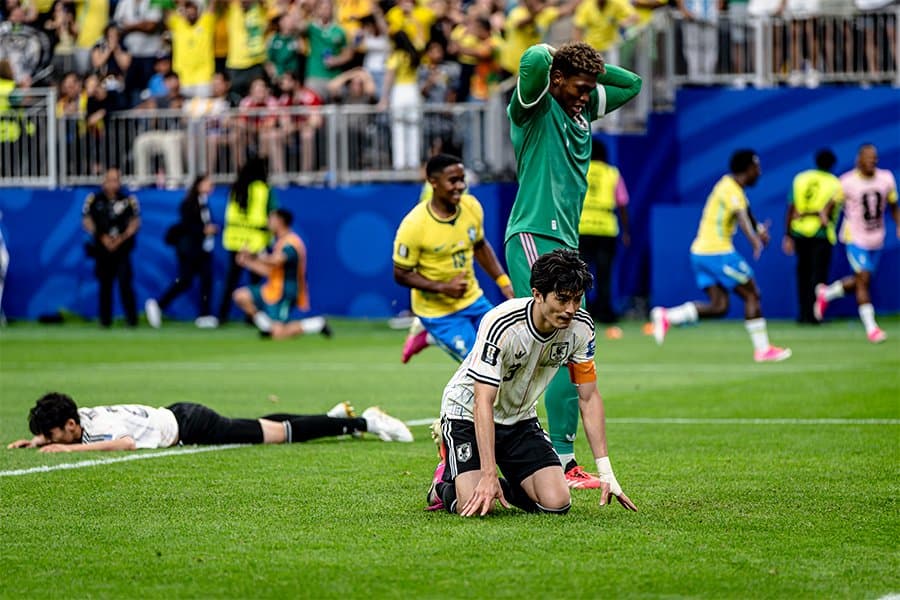
Japan 1–2 Brazil. A lead seized with conviction, only to be surrendered in stoppage time.
In the aftermath, the prevailing narrative took hold across media and supporters: "We were just one step away against Brazil." To score first, to battle until the final breath, and to fall only at the bitter end—the sentiment is thoroughly understandable.
Yet through my eyes, the contest told an entirely different story.
I do not believe we were one step away. Far from a near miss, the second half was forty-five minutes of suffocating siege. Clear the ball, and it came straight back. The moments where we could genuinely turn the tide were virtually nonexistent. The final score was tantalizingly close; the football beneath it was not. That is my honest verdict.
And yet, I harbor no pessimism. If anything, this fixture laid bare with absolute clarity the exact path Japan must walk.
A Flawless First Half: An Assessment Across the Board
The opening forty-five minutes were beyond reproach. It is not merely my own impression; seasoned observers across the game agreed that the first half was exceptional. We can comfortably treat it as our bedrock.
The mechanics of why it worked so well were unmistakable.
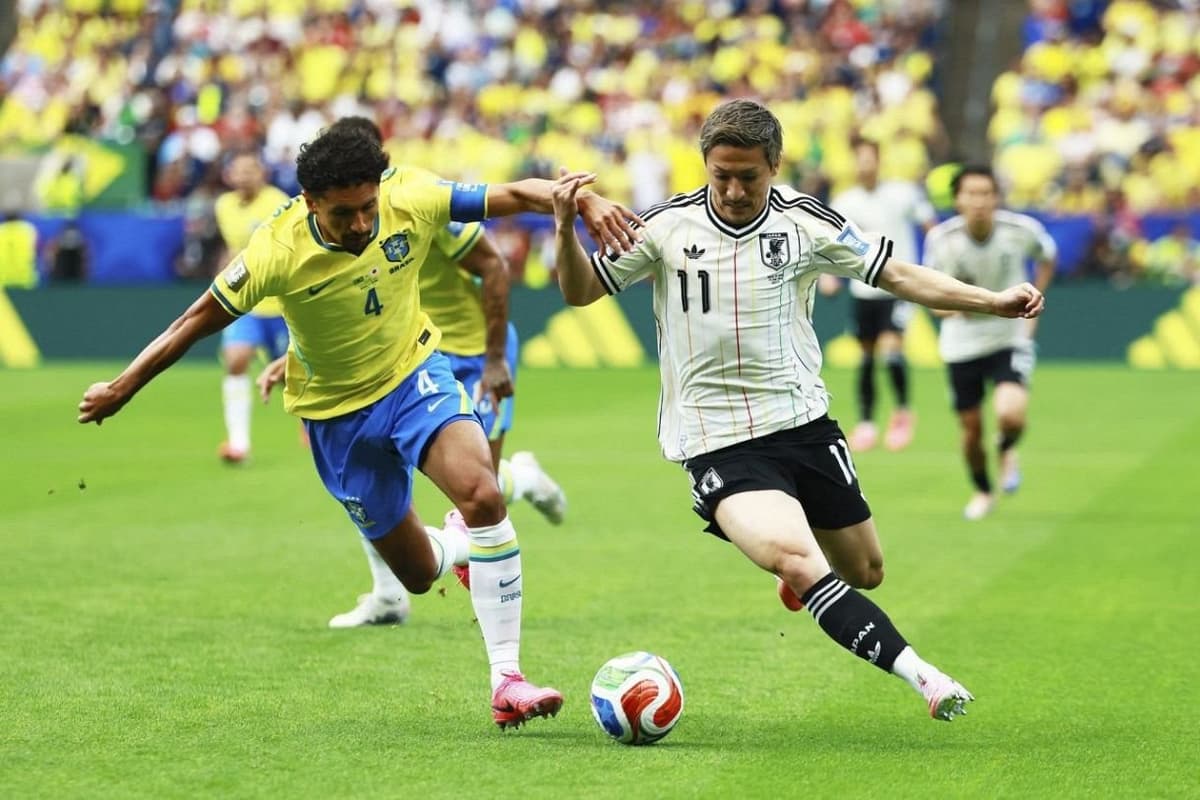
Pressing bodies surged from the front, inducing panic and errors in Brazil’s buildup. Once won, possession flowed directly toward goal with razor precision. Vinícius Júnior was never left to run in isolation; he was immediately swarmed by multiple blue shirts, suffocating his avenues. We may not match them man for man, but as a collective unit, we can neutralize anyone.

This was not unfamiliar territory. In the rematch against Germany following Qatar, Japan sustained that suffocating pressure over the full ninety minutes to claim victory. The clash with England showed similar shades. A squad capable of that standard proved against Brazil that its sharpest identity was still alive.
The Second Half: Brazil Alters the Terms of Engagement
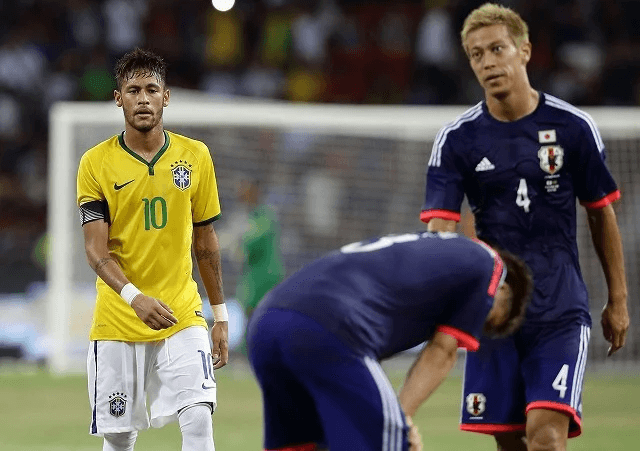
The dilemma arrived with the second half.
Brazil abandoned intricate possession and began playing directly into the final third. Rather than seeking exquisite combinations, they chose brute force, pinning us into our own half through raw physical authority.
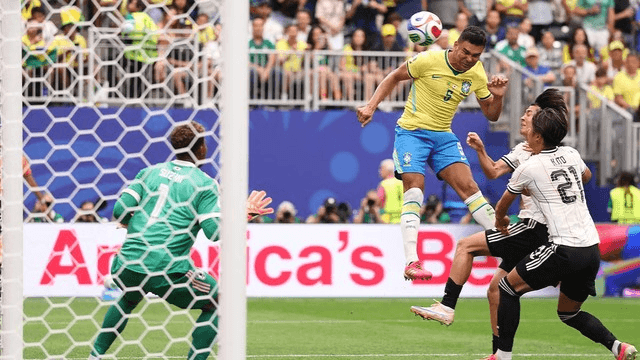
The equalizer sprang straight from this adjustment. Gabriel Magalhães found time to deliver, and Casemiro, towering with aerial ferocity, hammered home the kind of header he has scored a hundred times before. No tactical subtlety, no intricate puzzle—pure, unadulterated power.
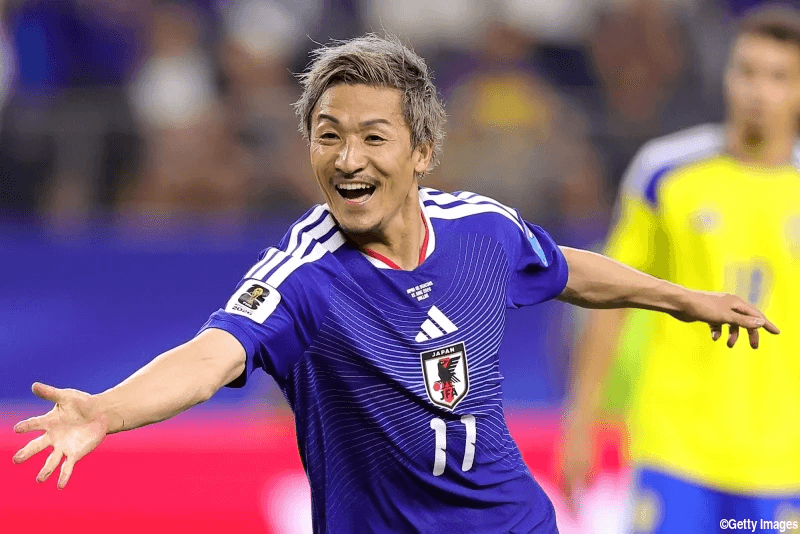
From that moment, Japan’s structure began to fracture.
Spooked by Brazil’s direct threat, our defensive line receded by a few meters compared to the first half. A matter of mere yards, some might think. But those yards dictate entire universes on an elite pitch.
The zone where we recovered loose clearances retreated alongside the backline. As a result, our counter-attacks were launched from entirely too deep to ever reach their target. In the first half, the opposing goal was within touching distance; in the second, it was an unreachable horizon. For Brazil, the terror of being stung on the break vanished. They could assault our box with impunity.
Casemiro’s presence in our penalty area was itself a consequence of this retreat. Had we maintained our forward press from the first half, he would never have had the license to linger so high up the pitch. The concession was less a matter of being overwhelmed by sheer athleticism than it was the natural punishment for conceding territory.
When pinned against a vastly superior opponent for forty-five uninterrupted minutes, a crack will inevitably open. It is the oldest story in football. And regrettably, this iteration of the squad lacked the resources to stem the bleeding.
Depth and Pedigree: The Margins We Could Not Overcome
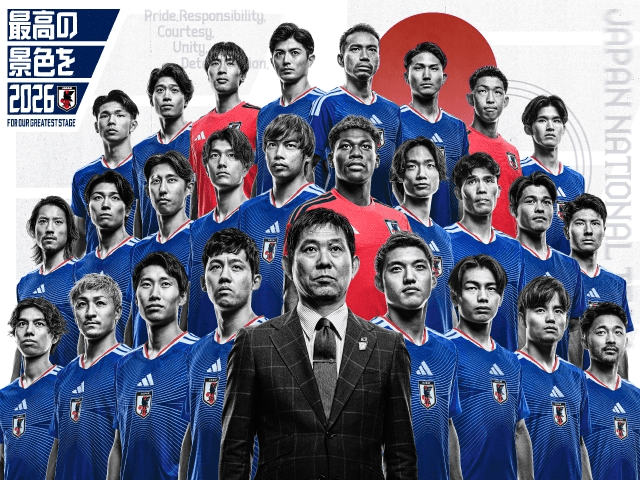
It must be acknowledged: key cornerstones were largely absent. Mitoma, Minamino, Kubo, Dōan. One cannot help wondering whether, with those luminaries on the pitch, we might have sustained that same relentless suffocating pressure through the second act.
Among the personnel available, there was no explosive catalyst capable of tearing open a game through sheer individual pace or brute strength. That is no indictment of Machino, Yūto Suzuki, or Shiogai—they are footballers built to thrive on collaborative interchange. But when your defensive block is pinned to its own 18-yard box, complex combinational counter-attacks are nearly impossible to construct.
Moreover, Daizen Maeda, Junya Itō, and Keito Nakamura had spent their engines since the opening whistle. By the closing stages, the legs required to push Brazil backward simply had no fuel left.
Disparity in individual caliber, disparity in squad depth. This match was the bare reflection of those structural realities. We were not “one step away”; we were ground down by superior pedigree.
The Single Imperative: Can 45 Minutes Become 90?
Following defeats, the digital spheres erupt with customary rhetoric: "We must develop individual strength," or "We must overhaul grassroots training." Valid though those claims may be, their abstraction offers little practical solace.
We already know that the first half was a masterclass. Therefore, only one question truly matters.
How do we sustain that opening forty-five minutes for the full ninety?
Distill our ambition down to this singular focal point, and the problem becomes vastly more tangible.
From that perspective, the principal defect in our second half was an excessive instinct to protect what we held.
Seeking to clamp down on Brazil’s wingers and curb deliveries from their full-backs, our midfield line retreated into our own territory. Unable to step up, our press lost its bite. Without pressure, Brazil stopped committing unforced errors. With unhurried possession, they circulated at will. Eventually, Vinícius received the ball in space, and Gabriel Martinelli was unleashed to probe our vulnerable flanks.
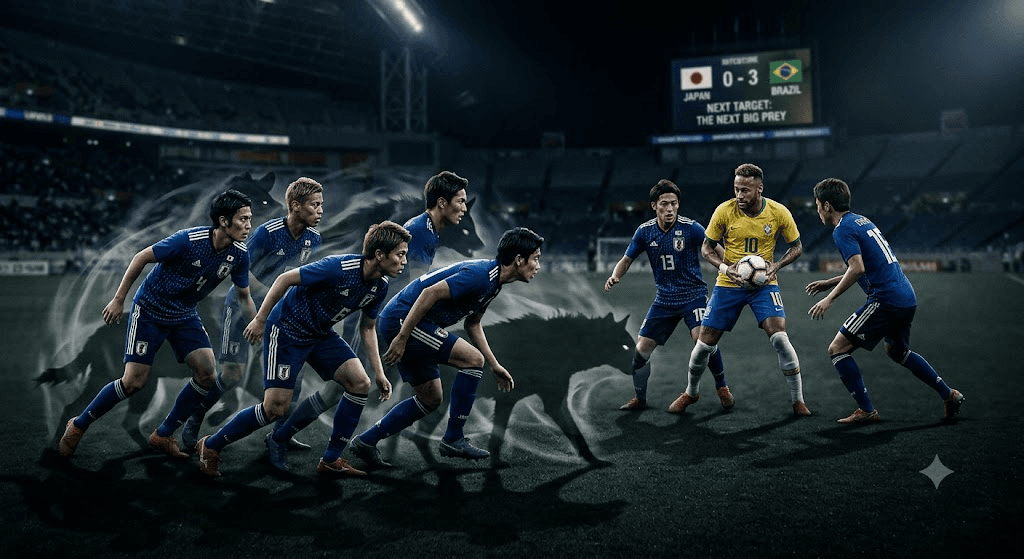
The vicious cycle was set in motion the very moment we chose the defensive mindset.
Not Defending to Survive, but Defending to Win
It brings to mind the historic philosophy of Italy.
Italy is forever branded the nation of catenaccio and ironclad defense. But the truly great Azzurri sides never barricaded themselves merely to withstand bombardment; they defended in order to score.
Their defensive line does not collapse backward. Even when enduring lengthy defensive phases, their shape proactively steps forward. They compress space, ratchet up the pressure, and induce a sense of despair: "Whatever we try will be repelled; there are no avenues left." And precisely at that moment of exasperation, a turnover is forced, and a devastating vertical counter-attack is unleashed.
Japan’s second half operated in reverse: "Survive this wave first, and perhaps we can find an opening later." That mindset inevitably draws the line deeper into its own penalty box.
The paradigm we must internalize is "defending to conquer." Even when adopting a defensive posture, the backline must refuse to concede territory. Intensify the pressure. Absorb, compress, stalk the opposition until they choke in frustration—then pounce and deliver the fatal incision. Both approaches may be labeled "defensive," but their philosophical orientation is polar opposites.
Hunting from the Front: The True Japanese Identity
When people speak of an elite front three in global football, the imagination instantly conjures devastating goal-scorers.
Japan may not possess a lineage of vanity poachers, but we have had Daizen Maeda and Junya Itō—and before them, the relentless spirit of Shinji Okazaki. Relentless hounds who press without vanity from the front, suffocating defenders into mistakes and seizing possession in lethal territory. I am convinced this is where Japanese football discovers its truest virtue.
The first half against Brazil was the definitive manifestation of that craft.

The keystone is relentless speed along the front line. When blistering runners sprint across the shoulders of opposing central defenders, those center-backs lose all composure on the ball. Takuma Asano in past campaigns was the textbook illustration. He did not necessarily win every tackle himself; merely the terror of his oncoming sprint rattled the opposition into rushed, panicked distribution. And behind him, the entire collective waited to feast on the scraps.
That is why, for this team, I would prioritize relentless, blistering pace leading the line above intricate playmakers or static target men.
Mid-Block, Mid-Counter: The Geometry of Japanese Football
Japan’s ideal blueprint is not to hunker down inside our penalty box and launch sixty-yard punts for an isolated demigod like Vinícius—a physical freak of nature who can conquer entire backlines alone. That belongs to Brazil; it does not belong to us.
My vision sits higher up the pitch.
Set up in the mid-block. Keep the defensive line slightly elevated. The instant the opposition stumbles, use that territorial leverage to surge forward as an avalanche. It is not an individual solo run; it is a synchronized human wave pouring through every channel, stranding the opponent on an island.
Vinícius provided the clearest case study. The moment he receives possession, if the surrounding collective is compact, even the premier dribbler on earth is rendered a stranded castaway. Surrounded, enclosed, dispossessed. And the instant the ball is plucked, our assault is already in full flight.
Pushed to its philosophical extreme, possession could be ten percent to ninety. Let them have the ball, force the error, and steal it. Japan only needs the ball for the fatal stroke: connect instantly, strike ruthlessly, and when they reset, hunt it down all over again.
Take it a step further: envision a side where nine out of ten outfielders are tireless ball-hawks in the mold of Wataru Endō or Kaishū Sano, while a solitary number ten glides across the pitch to finish that dark, grinding labor with sublime elegance. If we ever built such a team, it would be magnificent.
When the Shiba Inu Becomes the Hyena
Brazil and Morocco are lions: fierce, majestic creatures, complete in their solitary power.
Japan, by contrast, appears gentle and mild-mannered. Like a faithful Shiba Inu: affectionate, agreeable, striving always to play clean, respectable football.
That Shiba Inu must learn to become a hyena.
A single hyena is modest in stature. But in a coordinated pack, they drive off lions and strip cheetahs of their prey. Cold, calculated, suffocating the opposition for ninety full minutes. Stalking them without pity, forcing mistakes, and finishing them as a pack. That, I believe, is the identity that best suits the spirit of Japan.
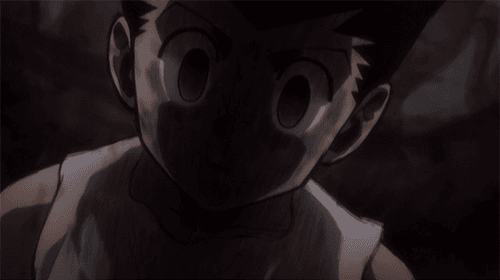
I often reflect: perhaps the profound worldwide reverence for Japanese manga stems from the truth that every beloved protagonist must descend into darkness. From One Piece and Hunter x Hunter to Attack on Titan and My Hero Academia—the shining, bright-eyed hero inevitably endures a phase where their gaze turns hollow and terrifying, consumed by tunnel vision so intense that the world fades away. Without passing through that abyss, one never touches the transcendent domain beyond ordinary humanity.
That, perhaps, is precisely what the current Samurai Blue still lack.
To cast off the docile Shiba Inu yearning to win politely. Nine men who paint the world in absolute black, while the tenth transforms that darkness into sublime art.
To deliver that first-half intensity across all ninety minutes. Only when the Shiba Inu embraces the ferocity of the hyena will the brilliance glimpsed against Brazil become ninety minutes of reality.
Only then will the words "just one step away" cease to be an illusion.
Share this story