
JAPAN
Lovely Events and Ideas from Around the World, for Anyone in J.League
The night of 23 December, in eastern Berlin. No whistle will blow for kick-off, yet more than 28,000 people gather in the stadium. Candles and song sheets in their hands. The stands around the pitch fill with soft light.
At about the same time, in Seville, Spain, soft toys rain from the stands onto the pitch. Spectators who came to watch a match hurl their gifts for children high into the air.
Both are customs born somewhere apart from winning and losing. They are the result of clubs and cities, supporters and society, continuing to search for ways to connect through football. From the stadium cultures of the world, we would like to introduce stories of clubs that walk together with their communities. Hints that clubs in Japan may want to try in their own towns lie sleeping there as well.
A Night of Falling Toys, Betis at Christmas
Real Betis, based in Seville in southern Spain. Supporters say a line like a watchword: roughly, "Long live Betis, even when we lose." A temperament of loving the club beyond winning and losing has taken root in this city.
Since 2018, at Betis, a charity called "Lluvia de peluches" (rain of soft toys) has been held at a home game around Christmas. Supporters bring soft toys and throw them onto the pitch all at once at the sound of the half-time whistle.
The thrown toys are collected by the club and its foundation. Then, through support organisations and facilities, they are delivered to children who would not otherwise receive a gift at Christmas. According to the club's official announcement, the aim is "that no child is left without a present this winter." Because the collection is well organised, the toys are not "rubbish" but real gifts.
Picture the scene in the stands. The instant the whistle blows, colourful soft toys trace arcs and fall onto the green grass. Soft gifts meant for children's hands cover the pitch. The ones who gather them up are people from the club. The match stops for a while, but nobody scolds. Here is a yearly promise shared by club and supporters.
The number thrown has grown with each edition. In the match against Getafe in December 2025, 25,092 toys were recorded, the most since the project began. That year the home ground, the Benito Villamarín, was under renovation, so it was held at La Cartuja. Even away from their familiar home, supporters kept the custom alive with the same heat as ever.
The circle has spread across borders. Feyenoord in the Netherlands held a similar event in 2018, and the toys went to a children's hospital in Rotterdam. In England, AFC Rushden & Diamonds held a "teddy toss" in the manner of Betis. A small idea grows into a new form in another town.
Candlelight Fills the Alte Försterei
Union Berlin, in eastern Berlin, Germany. At their home, the Stadion An der Alten Försterei, a "Weihnachtssingen" (Christmas singing) is held every year on 23 December. There is no match. It is a night when the pitch and stands are prepared only for singing.
The beginning goes back to 2003. A club fan posted on an internet message board, "How about a little singing?" Eighty-nine people who answered climbed over the stadium gate, stood on the terraces and hummed Christmas songs. It was not an authorised event but a modest, almost mischievous attempt.
The following year, 2004, more than 300 people gathered. A newspaper reporter and photographer also appeared. In 2005, the club's fan and members department began to support the running of it, and the present form took shape. The number grew year by year, to about 17,000 in 2012. Now the capacity has reached 28,500, and tickets sell out within hours.
What meets the participants' eyes is tens of thousands of small flames floating in the dark. The stadium glows like one giant candle. The breath of people singing together rises white into the night sky. Here, supporters change from "those who watch" to "those who make."
The evening opens at 7 p.m. with the club anthem "Eisern Union." Spectators light the candles they are handed and sing "Silent Night" and "O Tannenbaum." A brass band and a local school choir join in, and sausages and warm mulled wine soften the cold night air. Those who cannot get into the stadium can follow a broadcast on the club's channel.
Union Berlin has long been known for the closeness between supporters and club. In 2004, when the club's finances fell into crisis, supporters started a campaign of donating blood to raise funds. In 2008, more than two thousand volunteers took part in renovating the home ground with their own hands. A history of sharing hardship and joy at the same eye level supports the warmth of this night.
What makes the night special is that people who love the club gather regardless of victory. Not the players or the manager, but the supporters themselves are the stars. A place for cheering has changed into a place that connects people.
Players Walking Out with Dogs in Their Arms
Ties with the community extend beyond the club. In Romania, a project was reported in which players walk onto the pitch holding rescue dogs, helping to call for adopters. The sight of a player carrying a small life in their arms reaches not only the crowd that fills the stadium but people on the other side of a screen.
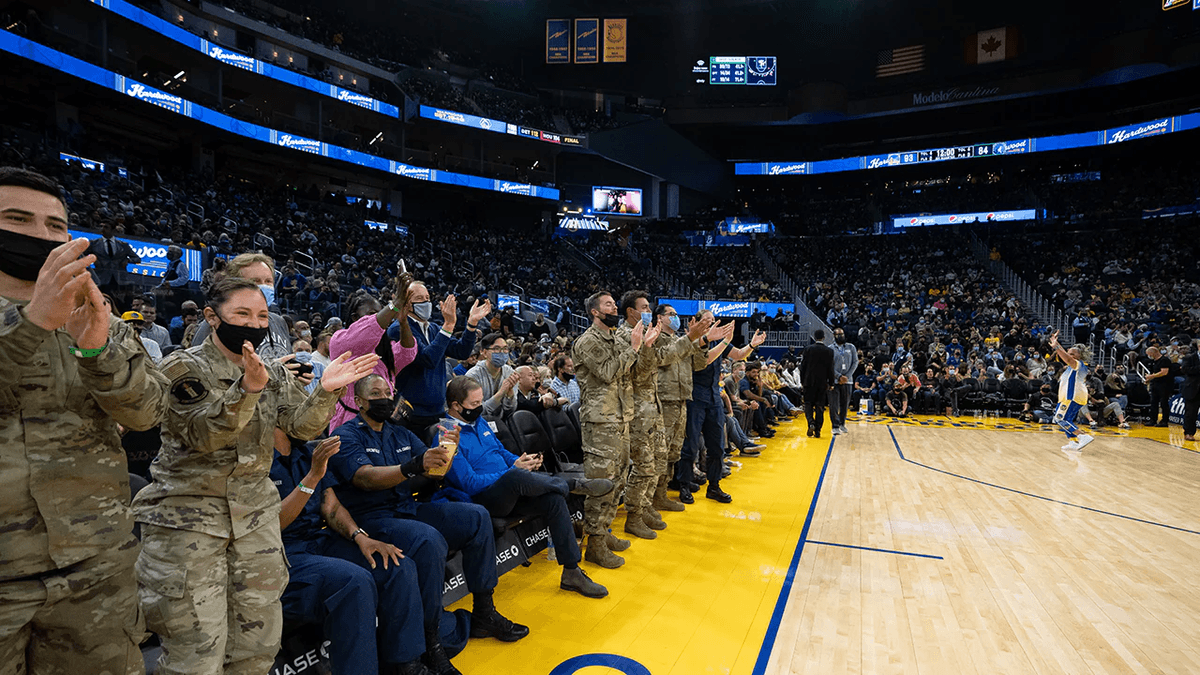
Sports other than football also offer models. At NBA arenas in the United States, too, opportunities are provided to watch games in which service members and their families are invited and thanked.
The slightly anxious look a dog shows in a player's arms. The gaze of the stands watching over it. The modest task of finding homes for rescue dogs reaches many pairs of eyes by borrowing the stage of football. A player's presence is used not for themselves but for a small life. These images show us that such a use exists.
What all these efforts share is that they need neither special facilities nor huge budgets. Soft toys, candles, a single dog, a single invitation. They turn the "power to gather people" that a club holds directly toward society.
Where Could a Japanese Town Begin?
Since the 1990s, the J.League has held up the creation of community-rooted clubs as its ideal. The ties with shopping streets and schools in the home towns compare well with clubs anywhere in the world. That is precisely why overseas examples are useful not to "copy" but to "reshape to fit one's own town."
A relationship between community and club cannot be built overnight. People who go to every home match, people who run shops around the stadium, people who live near the training ground. Each feels the club as part of their own town. The value of a project lies not in its scale but in making such everyday ties visible.
The rain of soft toys becomes cooperation with welfare facilities that fits the season. The candlelit choir becomes a way of spending the night that supporters themselves devise. A player who walks with a rescue dog becomes collaboration with local animal-welfare groups. All are ideas that work because club and supporters know each other's faces.
Projects that make fans smile create a story apart from winning and losing. When football can give people more than the result of that day, the club becomes the memory of a town. The small lights that glow in stadiums around the world will surely suit the towns of Japan as well.
Popular this week
7 DAYS
01選手物語
The Japanese Philosophy Quietly Anchoring Michael Olise’s Genius
02フットボール文化
The Dream Seven Men Chased in a Parisian Alley: How FIFA Became the "Universal Language of the Earth"
03フットボール文化
Fierce Rivals Under One Sacred Roof: The Secrets of San Siro and Milan’s Shared Cathedral
04legend
The Endangered Soul: Football's "One-Club Men" and the Lost Romance of Undying Loyalty
Share this story



CommentsComing soon
As someone who shares the story, we'd love to hear your words.