
[114 Breaches Found Guilty] What Did Manchester City Actually Do?
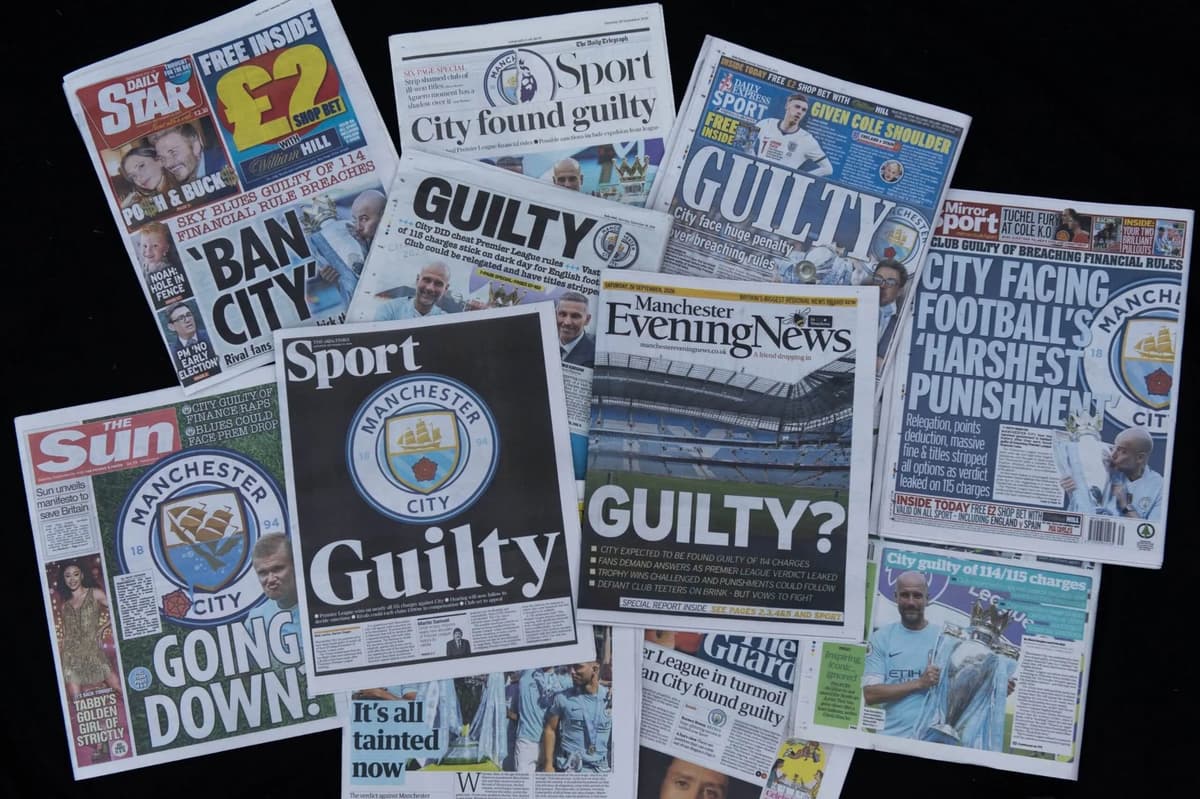
In the sweeping inquiry into Manchester City's financial affairs, an independent regulatory commission has delivered an earth-shattering verdict: the club has been found guilty on 114 out of 115 charges.
Scanning the headlines, countless supporters are left baffled: "What does 114 breaches actually mean?" "What did they do in concrete terms?"
Drawing from my background inside listed corporations, involvement in state-policy projects, and current work advising enterprises on financial and structural governance, I want to unpack what is truly taking place here—stripping away the dense legal terminology to reveal the underlying mechanics and geopolitical currents.
1. In Essence, What Did They Do? (It Boils Down to Three Schemes)
First and foremost, it is crucial to recognize that City did not commit 114 separate and distinct types of wrongdoing.
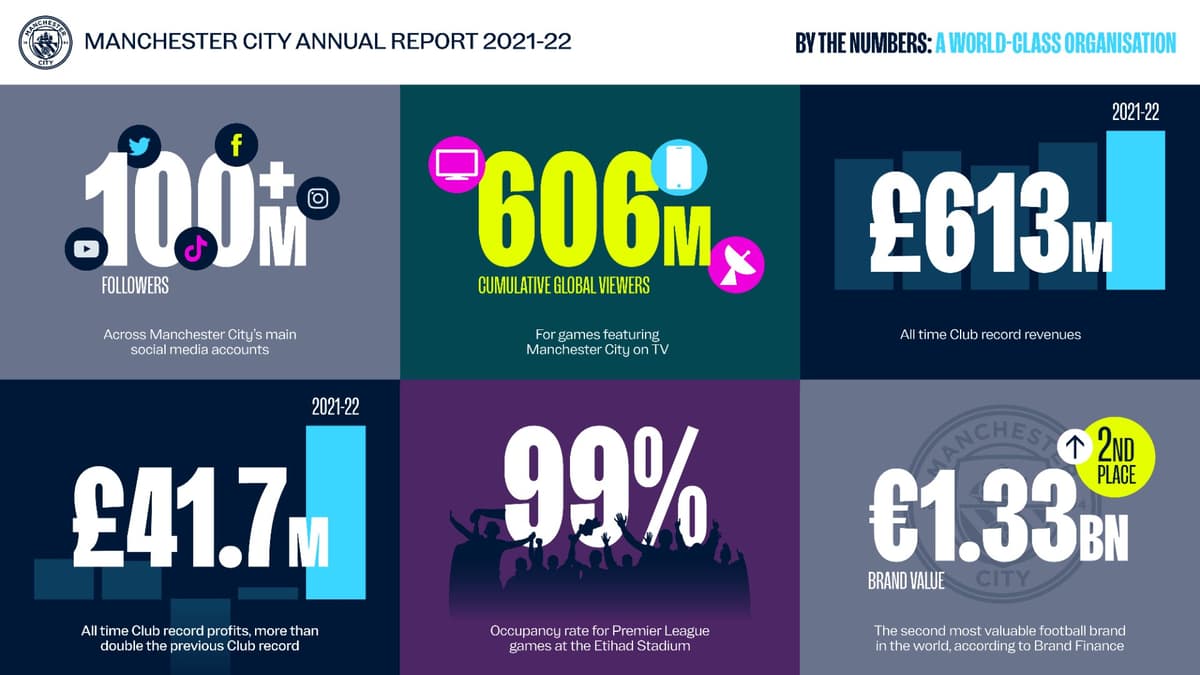
The scope of the case spans nine seasons, between 2009 and 2018. Because the club deployed the identical operational mechanism year after year, multiplying the offences across consecutive seasons inflated the ledger to an extraordinary 114 charges.
Strip away the administrative complexity, and their actions fundamentally boil down to three core methods:
1. Artificially Inflating Commercial Revenue (Accounting Disguise)
Under football's financial sustainability rules, owners are strictly prohibited from pumping in bottomless personal cash to absorb operational deficits. To bypass this barrier, City disguised owner equity injections as legitimate commercial sponsorships from Abu Dhabi state-backed titans (such as Etihad Airways). In reality, the corporate sponsors paid only a minor fraction of the contracted sums; the overwhelming majority was funded covertly from shadow bank accounts tied directly to the ownership.2. Concealing True Labor Costs (Off-the-Books Remuneration)
To artificially deflate declared operating costs on the balance sheet, portions of salaries owed to managers and players were routed outside official payroll accounts. In the case of former manager Roberto Mancini, for example, his declared Premier League salary was kept artificially low while he received supplementary hidden compensation—dwarfing his basic wage—under the guise of "consultancy fees" from an offshore Middle Eastern club.3. Five Years of Obstructing the Investigation (Non-Cooperation)
Following the 2018 Football Leaks disclosures that laid bare these internal machinations, City spent more than five years flatly refusing the Premier League's formal demands for original bank records and unredacted email trails, tying the league up in procedural litigation to run down the clock (this stonewalling alone accounts for 35 charges).
In short: "They falsified revenues, concealed wage obligations, and when uncovered, blocked the release of documents to buy time." In ordinary corporate governance, this is classic financial statement fraud.
2. The Legal Endgame: Why Full Acquittal Is Impossible
To contextualize the current procedural stage, it is analogous to a guilty verdict delivered at district court level, with the defense now lodging an appeal before an appellate court.
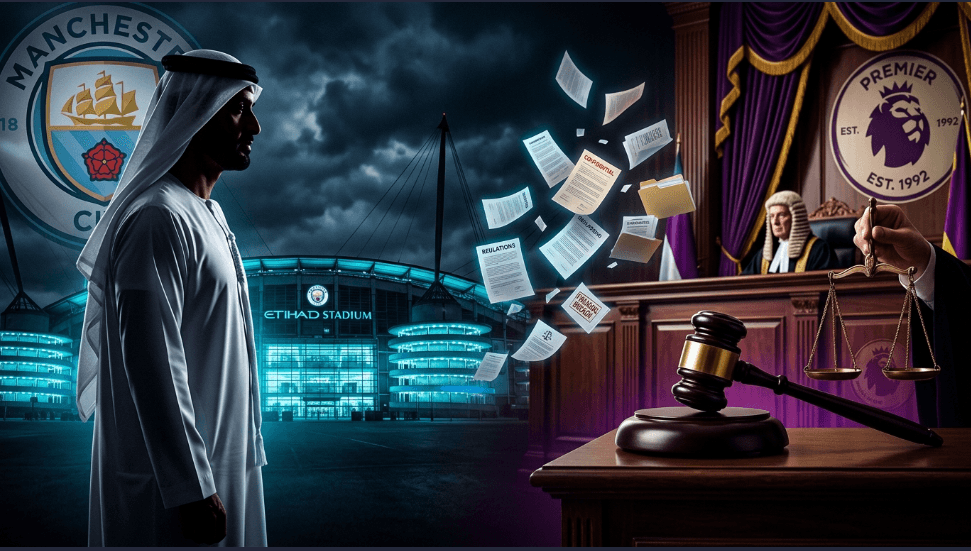
The substantive finding of guilt in the first instance is already established; only formal appellate procedures remain.
While City will contest the findings on appeal, walking away with a clean, total acquittal is virtually impossible.
The documentary evidence—unredacted internal communications, bank transfer records, contractual side-letters—is simply too overwhelming. City’s realistic legal objective is not exoneration, but mitigation: dragging out the calendar to dilute the severity of ultimate sanctions.
Presently, three penalty scenarios are under serious deliberation:
Scenario A: Catastrophic Points Deduction (-50 to -100 points)
A deduction severe enough to guarantee immediate relegation to the Championship. Widely viewed as the most realistic landing zone.Scenario B: Expulsion from the Premier League
The ultimate sporting sanction: revoking top-flight status and casting the club down to the semi-professional or non-league pyramid (National League or lower).Scenario C: Stripping Historic Titles and Massive Civil Damages
Vacating championships won during the non-compliant era (leaving the roll of honor vacant), coupled with unprecedented civil exposure as rival clubs (such as Arsenal and Liverpool), unlawfully deprived of titles and Champions League windfalls, launch joint compensation suits.
3. Why Has It Taken So Long? (Petroleum, State Power, and Diplomacy)
Why did it take years of deadlock following the initial 2018 revelations to reach this juncture? Because this dispute touches directly upon energy security and high-stakes foreign diplomacy between the United Kingdom and the Gulf.
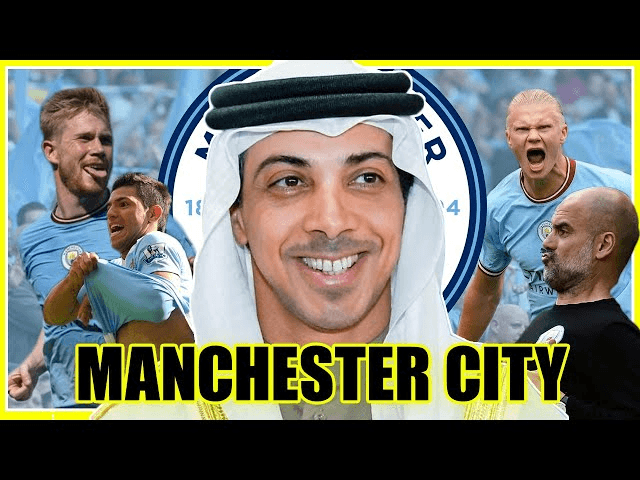
City’s ultimate owner, Sheikh Mansour, is the Vice President and Deputy Prime Minister of the United Arab Emirates—the second most powerful figure in the nation.
A British tribunal openly certifying a verdict of state-directed fraudulent accounting deals a profound blow to the prestige of the Abu Dhabi ruling dynasty.
Any retaliatory shift in UAE oil and gas supply commitments to the UK, or the withdrawal of tens of billions in pledged sovereign wealth investments into British domestic infrastructure, would deal a crippling blow to the UK economy (a sensitivity evidenced by the Foreign Office classifying its internal diplomatic memos on City as state secrets).
Simultaneously, the Premier League faces an existential dilemma: caving in to sovereign capital would surrender football's regulatory sovereignty to Downing Street; yet enforcing ruthless penalties risks triggering international fallout. With nineteen other member clubs demanding uncompromising integrity, the league finds itself trapped in an inescapable vise.
4. How Do Other Clubs Operate? (The Anatomy of Modern Ownership)
One might easily wonder: "Aren't all the other top clubs playing the exact same games in secret?" In reality, the architectures are fundamentally different.
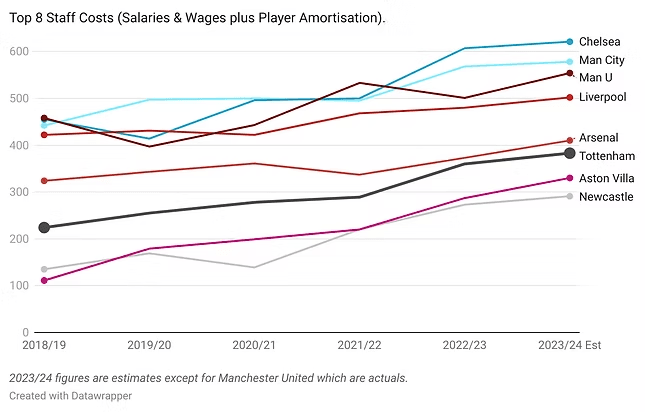
Tottenham's Ultra-Prudent Operating Model:
Investing roughly £1 billion into a bespoke multipurpose stadium that generates revenue 365 days a year—hosting NFL regular-season games, world-class concerts, and entertainment spectacles. A model student in self-sustaining cash generation.Arsenal's Clean Rebuilding Engine:
While investing heavily in the squad, they have powered this by doubling commercial and matchday turnover back toward £500m+ through Champions League restoration. Crucially, they balance sustainability by monetizing academy graduates—whose accounting book value is zero—producing pure accounting profit under financial rules.
The capital powering European football has transformed: Chinese money has withdrawn, Middle Eastern sovereign wealth remains entrenched, and now American private equity firms dominate the terrain (Liverpool, Chelsea, Inter Milan, and beyond).
To these financial institutions, a football club is not primarily an ancestral community treasure; it is an investment asset engineered to deliver yield and be flipped at a premium.
5. The Broader Literacy That Deepens the Beautiful Game
The trampling of regulatory fairness by state wealth.
The commodification of heritage clubs into Wall Street financial instruments.
And the sobering reality where homegrown academy stars, most deeply cherished by the terraces, are ruthlessly sacrificed on the transfer market purely to book "pure profit" on a spreadsheet.
Behind the sweat, passion, and tears shed upon the pitch, men in bespoke suits sit behind closed doors, solving cold arithmetic puzzles on balance sheets.
"Is this truly what football was meant to become?"
To be sure, the emotional roller-coaster of 90 minutes—erupting at a stoppage-time derby winner, holding one's breath during a breathtaking counter-attack, despairing over a cruel deflection—will always remain the soul of the sport.
Yet the moment we introduce the lens of "off-pitch dynamics," the entire landscape reveals its deeper architecture.
"Why was that talisman suddenly sold?"
"Why did the boardroom show the door to a decorated veteran?"
"Why are the academy graduates who represent our identity offloaded without hesitation?"
Behind decisions that seem bewildering or heartbreaking, there is almost always an inexorable, cold logic dictated by economics, corporate governance, and geopolitical equilibrium.
Developing the literacy to decipher these undercurrents does not merely serve as a practical skill in our professional lives; it provides the most evocative spice to our love affair with the beautiful game.
Economics, corporate strategy, and statecraft may seem far removed from the penalty box. But peering behind the curtain to understand the forces shaping modern football is an intellectual journey well worth taking.
Popular this week
7 DAYS
01選手物語
The Japanese Philosophy Quietly Anchoring Michael Olise’s Genius
02フットボール文化
The Dream Seven Men Chased in a Parisian Alley: How FIFA Became the "Universal Language of the Earth"
03フットボール文化
Fierce Rivals Under One Sacred Roof: The Secrets of San Siro and Milan’s Shared Cathedral
04legend
The Endangered Soul: Football's "One-Club Men" and the Lost Romance of Undying Loyalty
Share this story


CommentsComing soon
As someone who shares the story, we'd love to hear your words.