
Football as a Living History: The Anatomy of Obsession in England vs Argentina
The 2026 World Cup quarter-finals. The precise second the matchup was finalized, the tournament’s atmosphere shifted—faintly, yet undeniably.
England versus Argentina.
Surrounded by an extraordinary ring of security orchestrated by FIFA, this fixture hums with a heavy, taut tension that cannot be explained away by tactical blueprints or individual brilliance alone.
Among the myriad clashes between international heavyweights, why is it that this encounter in particular burns with such incandescent ferocity?
Memories of Scandal Etched into the Grass
To grasp the true essence of this fervor, one must first rewind through the memories etched where they collided on the pitch.
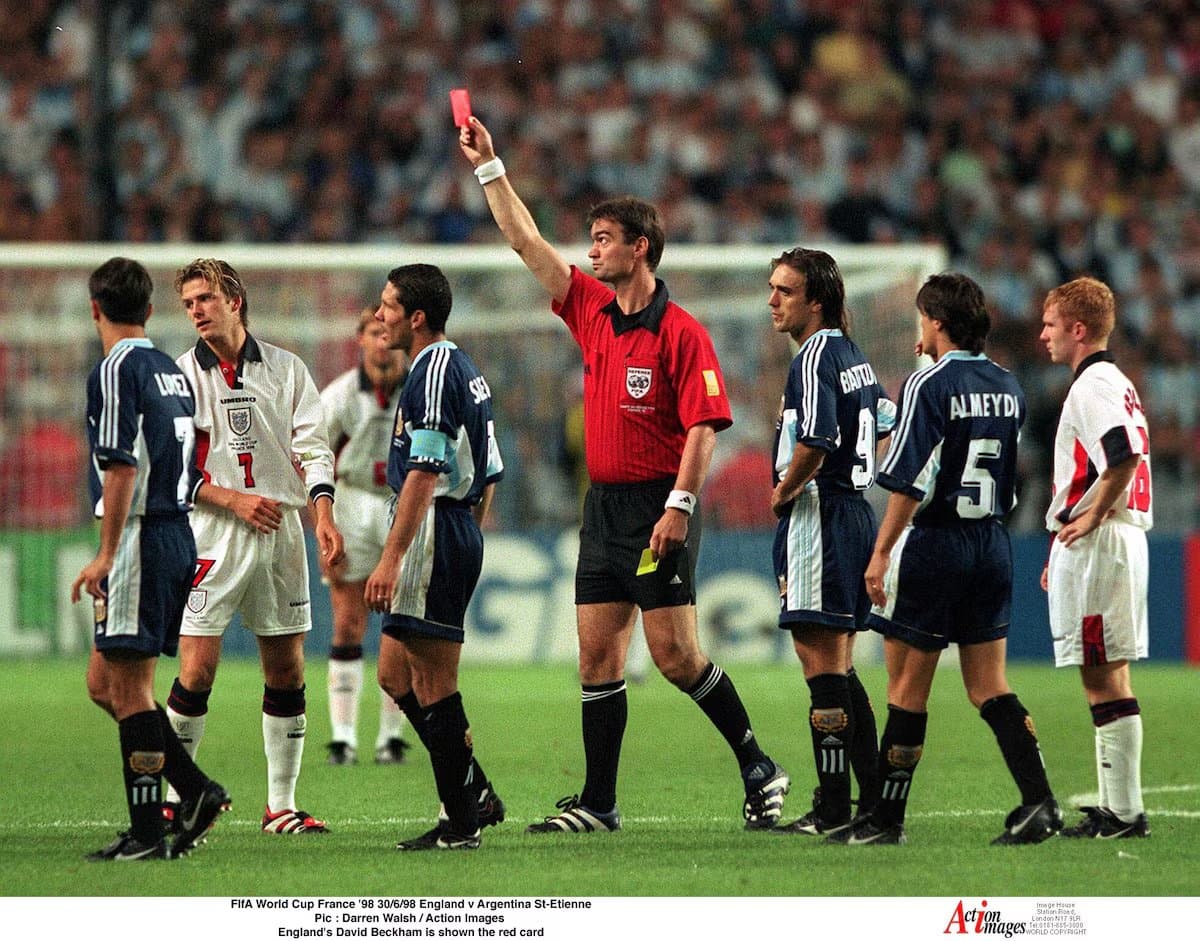
Turn the clock back to France in the summer of 1998. What surfaces instantly is the dismissal of a young David Beckham, set against the sly theatricality of Diego Simeone. Beckham’s petulant flick of the boot, Simeone’s exaggerated tumble, and the merciless flash of red from Kim Milton Nielsen’s pocket. In a single fleeting sequence, that night spun far beyond the boundaries of a simple foul, engulfing two nations in a tempest of hysteria.
Travel even further back into the archives, and you arrive at the most mythic folklore in World Cup history: Diego Armando Maradona’s “Hand of God” and the “Goal of the Century.” That unforgettable afternoon in 1986—an indelible scar or eternal triumph depending on which side of the equator you stood—unfolded on no other stage than against England.
A single goal, a single red card—they transcend the ledger of wins and losses to become generational vendettas passed down through the decades. Why is it that whenever these two nations face one another, football invariably ruptures the confines of sport and metastasizes into a global geopolitical theater?
The True Ghost Beneath the Grass

The real explanation cannot be found on tactic boards or inside stadium concourses. Beneath the turf sleeps the memory of blood spilled in frigid southern seas.
In 1982, across a desolate archipelago in the South Atlantic, both nations engaged in real warfare. The conflict over the強化 Falkland Islands—known in Argentina as Las Malvinas—claimed hundreds of young lives and carved a deep, bitter chasm between the two countries.

Even after weapons were lowered and the winds over the ocean regained their quiet, the grief and nationalistic fervour etched into the hearts of their people refused to subside. Denied an outlet, that raw emotion inevitably drifted toward the green rectangle of the pitch.
Football became a surrogate battleground for national pride. What the players inadvertently carry onto their shoulders is far more than the opposing eleven; it is the collective, unhealed memory of a nation. This is why a solitary tackle or stray word can become the spark that ignites a conflagration surpassing sport itself.
Redemption and the Romance of Consequence
Yet it is precisely because of this heavy ballast of tragedy and grudge that football can produce stories of breathtaking grace.
Consider David Beckham, who in the aftermath of Saint-Étienne in 1998 was cast out as the country’s prime villain, hung in effigy and subjected to relentless public vitriol.
His agonizing journey out of the abyss, clawing his way back to becoming a national icon, cannot be unpicked from that original Argentine trauma.
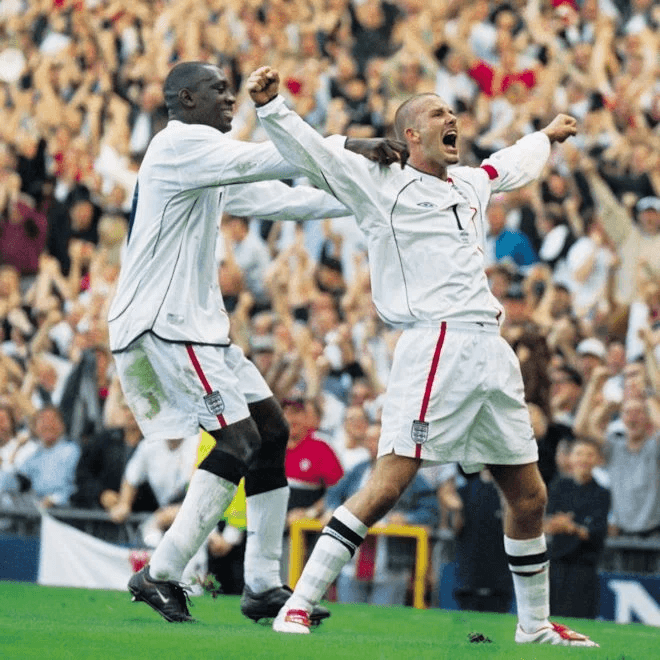
Three years after that fateful red card, in October 2001, England stood on the precipice of missing out on the World Cup entirely against Greece. Trailing in stoppage time, Beckham stepped up to a free kick and painted a flawless, bending arc with his right boot into the top corner.
The silence that fell over Old Trafford before erupting into delirium shone with an extraordinary luster, precisely because it was Beckham—the man who had borne that heavy cross from the Argentina match—who struck it. Past tragedy and bitter grudge served as the poignant seasoning for dramatic redemption, carrying the narrative forward into folklore.
Read also:
「The Solitude and Pain Behind the Glitz: Why You Must Watch 'Beckham'」
Football as a History Book
Behind the electric fever sweeping the terraces and the theatrical clashes on the pitch, the pulse of a deep, complicated historical bloodstream is almost always beating.
Rather than memorizing dry calendar dates in a hollow classroom, unraveling the human 'why' lurking behind a singular free-kick or a red card illuminates our world with far sharper clarity.
To perceive world history through the prism of football—there are far worse ways to look upon the beautiful game.
In 2026, as the opening whistle sounds amid stringent security for England versus Argentina, we will once again witness the opening of football’s most compelling history book.
Share this story