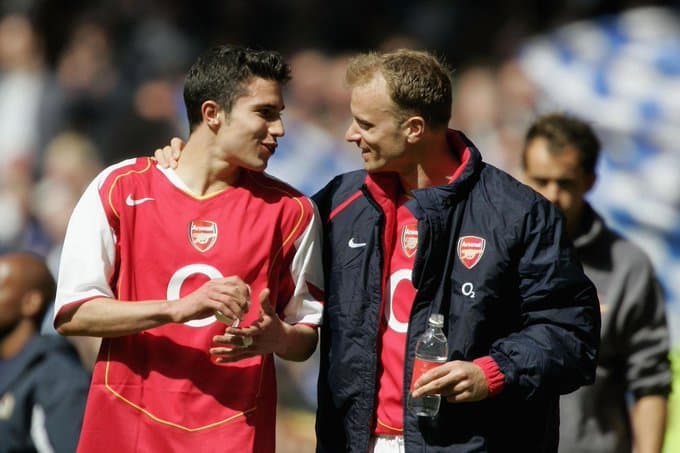
One quiet afternoon at Arsenal’s London Colney training ground in north London, a young, prodigiously gifted striker bore witness to a sight that would recalibrate the coordinates of his entire career.
At the time, he was already blessed with extraordinary technique, widely heralded as a crown prince of Dutch football. Yet between his undoubted promise and the dizzying summit of world-class greatness lay an invisible, daunting barrier.
The catalyst that shattered that barrier was a solitary, forty-five-minute training routine performed by a club legend working his way back from injury: Dennis Bergkamp.
Here is an exploration of how one genius inherited the absolute zenith of professionalism merely by watching the silhouette of another, told through the reflections of Robin van Persie himself.
1. An Unforgettable 45 Minutes: Watching a God from the Jacuzzi
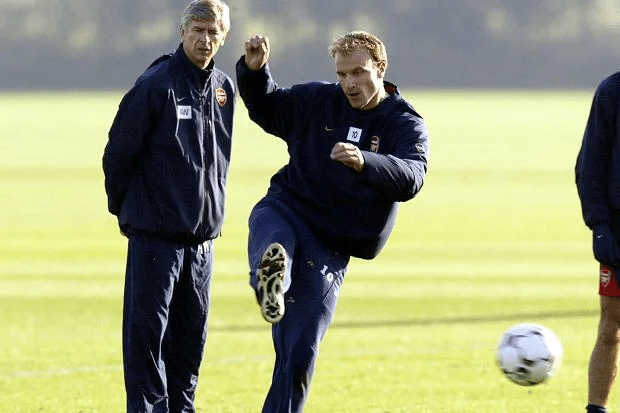
Having wrapped up his training session, Van Persie was soaking in the warmth of the Arsenal training ground jacuzzi, resting his muscles. Looking out through the glass doors onto the practice pitch, a solitary figure caught his eye.
It was Dennis Bergkamp, undergoing rehabilitation following an injury layoff. Accompanied by a fitness coach and a reserve player, he was working through an intricate series of passing drills that culminated in finishes on goal.
The young Van Persie found himself inventing a silent, insolent wager in his head:
"The second Bergkamp makes a single mistake, I get out, get dressed, and go home." It was an impromptu test of his idol’s legendary infallibility.
2. The Metamorphosis into Art: The Standard of Flawless Execution

The session lasted forty-five minutes. Van Persie stayed in the hot water until his fingertips were wrinkled like prunes, waiting and watching for a stray touch or a misplaced ball. That mistake never arrived.
What Bergkamp displayed was a commitment to executing every single action at one hundred percent intensity. Lethal finishes, velvet first touches, crisp one-touch passes of laser-guided precision. What was supposed to be a standard rehabilitation drill felt suffused with staggering perfection.
Not a single pass Bergkamp played was anything less than perfect.
I just sat there waiting for an error, but an error never came.
To me, that was no longer football—it was art.
Those words illustrate that Bergkamp's mastery was far more than technical coordination; it was an expression of the soul. On a deserted training pitch, he summoned the electric tension of a cup final, entering a realm that stirred awe in whoever watched.
3. The Focus That Divides the Good from the Truly Great
Van Persie had arrived in London quietly confident in his own pedigree: he possessed exquisite technique, saw the game well, and considered himself an accomplished player. Yet Bergkamp’s single-minded intensity tore down the foundations of what he had believed "elite" to mean.
The distinction had nothing to do with whether one possessed good skills. It lay in whether one possessed the relentless drive and microscopic concentration to turn artistic perfection into an everyday, unshakeable routine. Imposing that standard upon oneself as normal: that was the chasm separating the very good from the all-time greats.
This man was executing that 'art' as his daily routine, with an unbelievable drive and flawless concentration.
In that moment, something clicked inside my brain: 'Wait a second. I thought I was doing well, but between where I am and Bergkamp’s level, there is still a colossal mountain to climb.'
I realized right there: if I truly want to reach the world-class summit, that mindset is the only answer.
This revelation transcended tactical instruction; it was an existential awakening. Practice was not mere preparation for the match—it was the sacred ritual that guaranteed match execution. Bergkamp’s back spoke louder than any coaching lecture ever could.
4. A Total Metamorphosis: Every Touch at 100 Percent
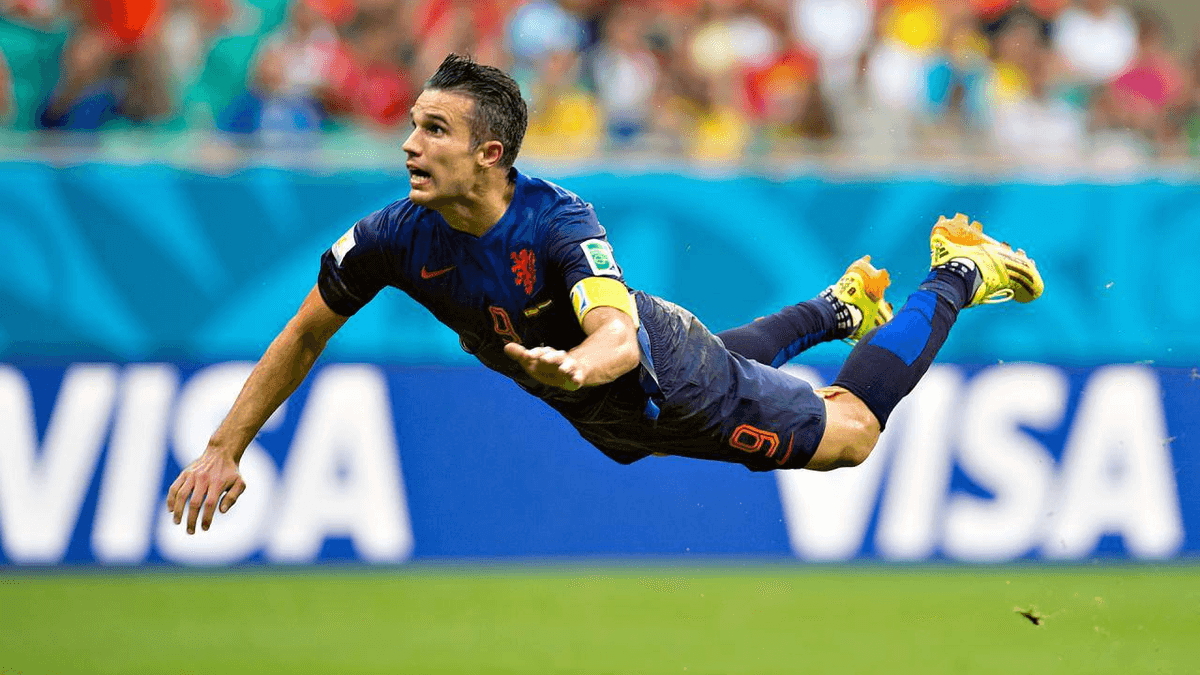
From the afternoon he recognized that chasm, Van Persie’s approach to daily training underwent a complete revolution. The easy complacency of feeling "good enough" vanished, replaced by the relentless perfectionism Bergkamp embodied.
Whether performing a routine five-yard passing exercise or a shooting drill, he demanded absolute precision from his left foot. If a pass was slightly off, he allowed no self-forgiveness, seething with anger at his own imperfection.
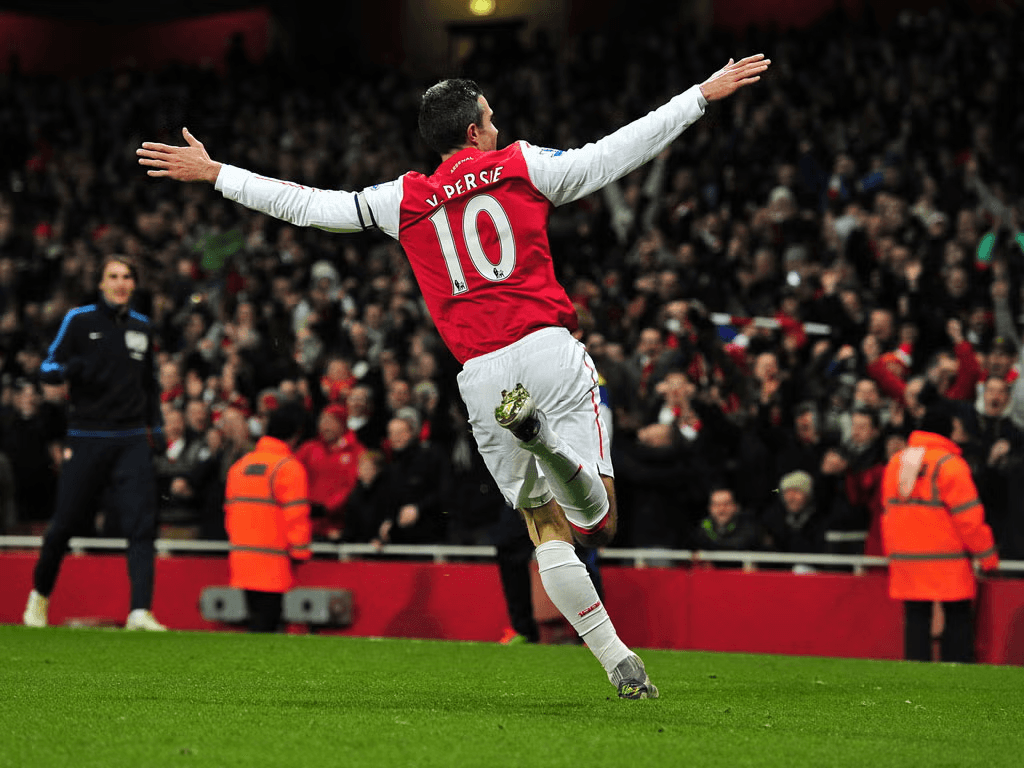
What changed him was not chalkboard diagrams, but the sheer standard of conduct demonstrated by a master. Having seen the true shape of the summit with his own eyes, the very quality of his daily labor was elevated.
From that day forward, my attitude to training flipped completely.
Whether it was a simple passing drill or shooting practice, I executed everything at 100 percent precision. Refusing to allow a single error.
Because deep down, I wanted to become Dennis Bergkamp.
That burning desire—to become that standard—was the engine that propelled Van Persie from an erratic talent into a lethal world-class predator. To internalize idolized perfection into one's daily habits, eliminating compromise: that was the ultimate bequest Bergkamp passed on.
5. The Bergkamp Ethos: How Perfectionism Built an Icon
Dennis Bergkamp is frequently romanticized for God-given wizardry and sublime spatial awareness. Yet his genius was only ever the outward flowering of a profound, unforgiving perfectionism.
His immaculate first touch was never an accident of nature. In training, the angle of his body before the ball arrived, the trajectory upon cushioning it, the immediate subsequent action—everything was calculated to adhere to an ideal arc.
He was not merely a goalscorer; he was the architect who drafted the geometry of Arsenal's attack, bearing a solemn responsibility that the blueprint contain zero flaws. Those forty-five minutes Van Persie spied on were a window into the Dutchman's unyielding pride: even during solitary rehab, the architect would never permit a crooked line.
The harmonious union of technique, mental composure, and ethical rigor defined Bergkamp’s majesty—and provided Van Persie with the blueprint of world-class greatness.
Epilogue: The Solitary Soliloquy That Changed Everything

Robin van Persie went on to claim the Premier League Golden Boot and lead both Arsenal and Manchester United to iconic moments. His left-footed volleys and laser passes were hailed as footballing poetry.
That legendary career was built not merely on innate gift, but on having absorbed the obsession with perfection demonstrated by his master.
That forty-five-minute soliloquy on the training pitch was the true genesis of everything that turned me into a world-class player.
In sport, an inspirational speech or tactical lesson can spark change. But what Bergkamp gave Van Persie went far beyond spoken language: it was a silent, uncompromising philosophy etched into a master's back.
A great champion's quiet, solitary discipline remains the most eloquent sermon ever delivered to those who dare to seek the summit.