The Solitary Figure of Grace: Amidst an Argentina That Turned Away, One Man Showed True Dignity
The 2026 FIFA World Cup final.
After an agonizing, blood-and-thunder battle stretching deep into extra time, Spain defeated Argentina to ascend to the summit of world football.
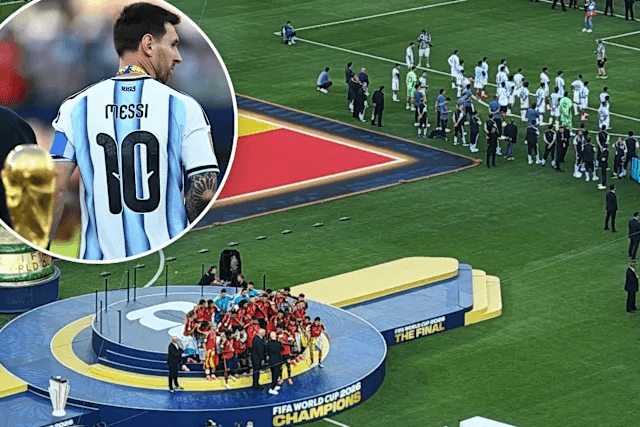
As the stadium echoed with rapturous applause and celebration for the champions, an unsettling, disquieting scene unfolded across the pitch—one deeply unfitting for the greatest festival of the beautiful game.
High on the presentation podium, the Spanish players hoisted the golden trophy toward the night sky.
Yet before that radiant spectacle, almost every Argentine player and staff member turned their backs, averting their eyes.
That brazen display—stripping the victors of their due respect—was beamed instantly across every screen on earth, igniting fierce debate.
Debts to Spain and the Grudgery of Bad Losers
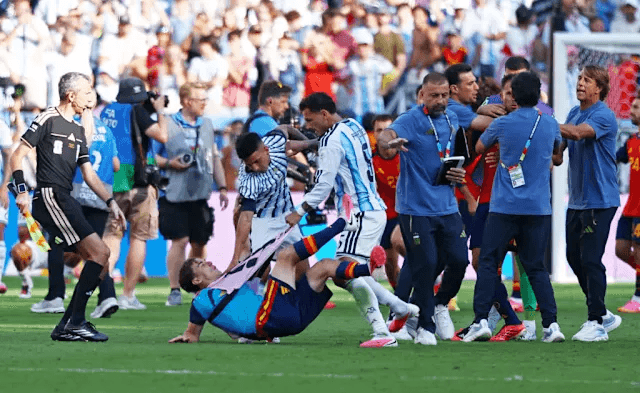
In the unforgiving arena of elite sport, the pain of defeat is unfathomable. On a stage as ultimate as a World Cup final, the sense of despair is overwhelming. Yet despair is never an excuse to surrender basic decency.

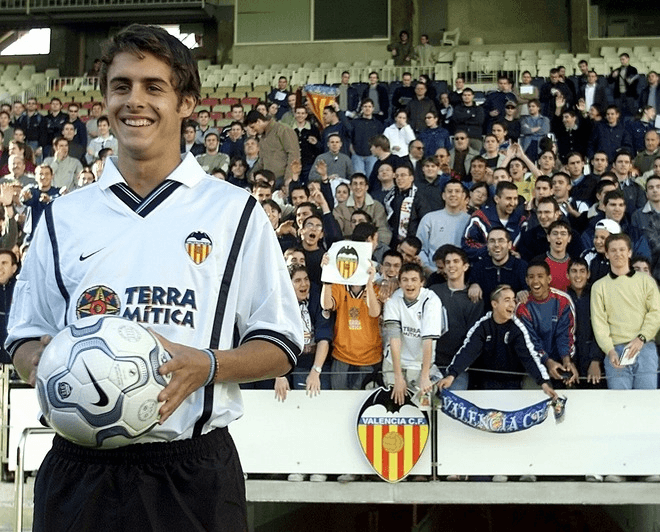
Manager Lionel Scaloni and his coaching staff—figures like Roberto Ayala and Pablo Aimar, revered icons of Valencia—are men whose lives and careers were immeasurably shaped and enriched by Spanish football culture. Among the playing squad, too, numerous stars owe their development and livelihood to La Liga.
And yet, in unison, they chose to turn their backs. It was not merely the raw agony of heartbreak; it was a deliberate, undeniable act of disrespect.
A ferocious unity forged around the singular, celestial gravity of Lionel Messi can sometimes foster the inward-looking insularity of an unbending praetorian guard.
When ordered to turn right, all turn right without hesitation.
A suffocating peer pressure, bordering on mania, reduced the entire collective into bitter, graceless bad losers.
Standing Against the Herd: The Solitary Number 21
https://x.com/joaofrreire/status/2079232519522669002?s=20
Yet in that bizarre, poisoned atmosphere where everyone averted their gaze, there stood one man who faced straight ahead.
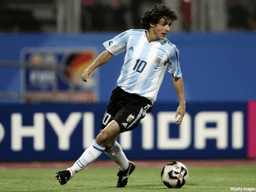
It was squad newcomer number 21: Flaco López (José Manuel López).

With his hands clasped behind his back, he watched Spain's coronation quietly, respectfully, and without flinching.
Defying the unwritten consensus of the locker room might well have carried career risks for a newly minted international. Yet rather than scanning the eyes of the veterans for approval, he chose to do what was right—not only as a footballer, but as a human being.
His "beautiful solitude" was a singular beam of light cutting through the collective gloom.
"To Be a Winner Is an Attitude" — The Creed of Palmeiras

Why was he alone able to preserve this sense of grace?
The answer lies in his hard-fought trajectory and his formative daily life at Brazilian powerhouse Palmeiras.
Having clawed his way up from a humble Argentine province through sheer grit, López flourished under Palmeiras' fiery tactician, Abel Ferreira. Ferreira has long instilled a cardinal philosophy into his squad:
"Being a winner is not merely about winning. It is an attitude."
(Ser ganhador não é só ganhar, é uma atitude)
Never forfeit respect for the opponent, value honest effort until the final whistle, and preserve uncompromising professionalism under any circumstance. Immersed in this culture for years, López had internalized that creed into his very marrow.
His stance at the award ceremony was no passing accident; it was the inevitable manifestation of deeply rooted conviction.
A True Champion's Stature: Setting an Example for the Next Generation

Football is a game cherished by millions of children around the world, and the conduct of its elite players permanently shapes their aspirations and moral compass.
After the match, Spain's Dani Olmo and Aymeric Laporte voiced their disappointment at Argentina's behavior: "We must be role models for the children watching."
True to those words, Spain—who fought cleanly on the pitch and conducted themselves with noble poise after the final whistle—proved themselves champions in both name and spirit.
If It's Not Beautiful, It's Not Football
Every player walks onto the pitch bearing the honor of their nation and their club.
Those privileged to wear the colors must carry themselves with grace, whatever the scoreline may bring.
In elite sport, the cruelty of a final scoreline is unavoidable.
Yet what endures in human memory is not merely the outcome, but the process behind it—and the attitude of the player.
To Flaco López, who alone amidst the hysteria did not look away from defeat, but stood facing the champions: he deserves our deepest, most heartfelt applause.
And for that very reason, I will continue to cheer for him and the colors he wears.
Share this story