
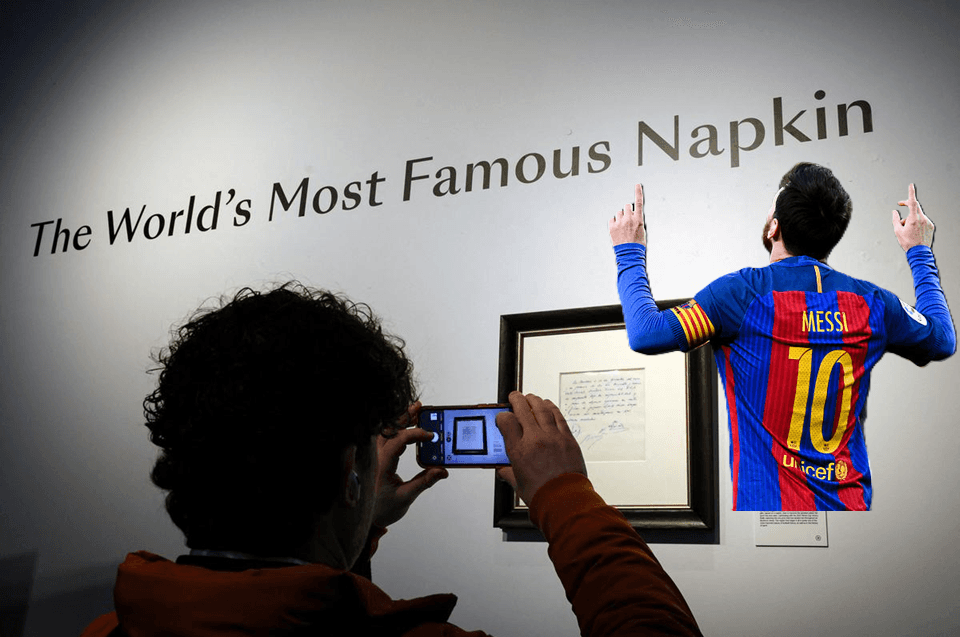
OFF-PITCH
“Lionel Messi”: How the Greatest Contract in Football History Was Written on a Paper Napkin
Prologue: Blue Ink on a Paper Napkin That Altered the World
When you envision a contract that redefined sporting history, what picture comes to mind?
Heavy, luxurious parchment, stamped seals, and serried rows of legalese signed before corporate cameras.

He suffered from a growth hormone deficiency, and for Barcelona, assuming the cost of his costly medical treatments represented a serious institutional gamble.
Carles Rexach, Barcelona’s technical director, needed only two minutes on the touchline to recognise the truth:
“This boy is from another galaxy.”
Yet within the club’s boardroom, the atmosphere was icy and hesitant.
Directors questioned the cost-benefit analysis.
He was too fragile, too young.
Too risky.
Above all, a formal binding contract demanded bureaucratic clearance that dragged on endlessly.
Rexach was consumed by acute anxiety.
He knew that if Barcelona delayed another week, they would surrender a once-in-a-century diamond—and that burning intuition drove him to take fate into his own hands.
Chapter 2: “No Legal Paper? Then We Swear upon a Napkin”
December 14, 2000.
At the cafeteria of the Club de Tennis Pompeia in Barcelona.
Rexach, agent Josep Maria Minguella, Messi’s father Jorge, and advisor Horacio Gaggioli
sat around a table charged with palpable tension.
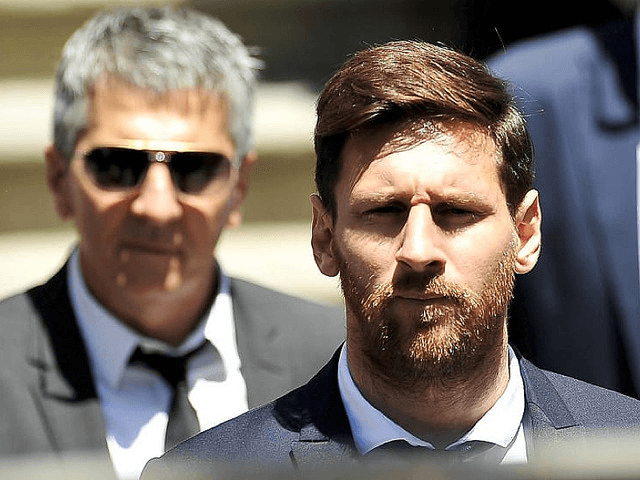
The club’s hierarchy remained paralyzed by indecision.
The Messi family, exhausted and on the brink of despair, had packed their bags.
If no guarantee was given that day, they would board a flight back to Argentina,
and Europe’s wealthiest rivals were already circling.
It was at that exact crossroads that Rexach rose, grabbed a ballpoint pen, and declared:
“We don’t need official letterhead. A napkin will do. We seal the pact right here and now.”
Everyone at the table nodded in stunned silence.
A plain white paper napkin was pulled from the dispenser and laid flat upon the table.
Chapter 3: The Most Sacred Covenant in Sporting Lore
Scrawled in urgent blue ink, the handwritten commitment comprised merely four sentences:
“In Barcelona, on 14 December 2000,
in the presence of Messrs Minguella and Horacio, Carles Rexach,
technical director of FC Barcelona, hereby agrees, under his responsibility
and despite any dissenting opinions, to sign the player Lionel Messi provided that the agreed amounts are kept to.”
Affixed with signatures and the date, that fragile scrap was not an official notarized document.
Yet it carried the irrevocable weight of human honour and personal liability.
Reading those words, Jorge Messi nodded softly and murmured:
“Thank you. Now we can believe.”
A promise inked on a paper napkin—that was the sacred origin of the myth that would marry Lionel Messi to Barcelona.
Chapter 4: The Destiny Born Beyond the Napkin
The subsequent history belongs to global memory.
Seventeen seasons in the Blaugrana shirt, thirty-five major trophies.
Eight Ballons d'Or, the club’s all-time scoring sovereign.
A footballer who single-handedly redefined the aesthetic boundaries of human movement.
Yet none of this was predetermined.
It was the direct consequence of one scout daring to act upon absolute faith.
What if Rexach had hesitated, waiting for boardroom bureaucracy?
What if Jorge Messi had boarded that plane back to Rosario?
That single alternate reality would have extinguished every celestial masterpiece we had the privilege to witness over the past twenty years.
Chapter 5: A Fragile Fragment of a Dream Preserved in Glass
Auctioned for hundreds of thousands of pounds and preserved as a sacred relic,
that tiny scrap of paper remains creased, the blue ballpoint ink faintly faded with age.
Yet universally, it is revered as the single most valuable covenant in the history of the sport.
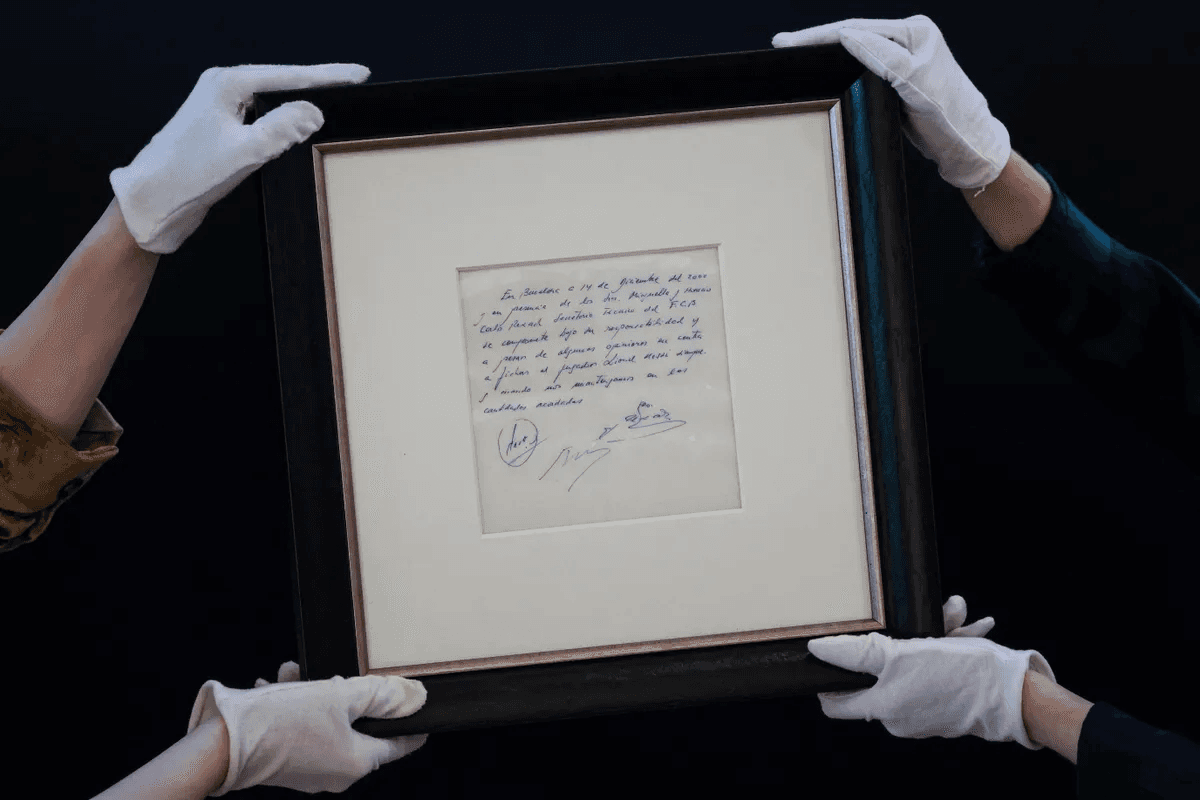
It is the physical fossil of men who dared to trust the future, the ground zero of the Messi mythology,
and the ultimate symbol of the narrative majesty that makes football worth loving.
The Smallest Shoulders Became the Broadest Back in Football History
A contract is never merely a legal instrument.
Within its ink resides the primordial human instinct to believe.

That informal pledge struck upon a paper napkin in a quiet corner of Barcelona
did not merely rescue a club; it redirected the destiny of the world's game.
A fragile prodigy nearly discarded.
A tiny back that frightened risk-averse suits.
Yet a single scout whispered: “I believe in this child.”
And that frail child grew to become the eternal North Star for every boy and girl on earth,
the definitive icon of the sport itself.
──Those small, fragile shoulders became the broadest back in the entire history of football.
That is the enduring fable of a paper napkin, and the men who chose to believe.

The Messi Era - Official Movie
Watching this footage stirs an emotion so overwhelming that words inevitably fail.
Popular this week
7 DAYS
01選手物語
The Japanese Philosophy Quietly Anchoring Michael Olise’s Genius
02フットボール文化
The Dream Seven Men Chased in a Parisian Alley: How FIFA Became the "Universal Language of the Earth"
03フットボール文化
Fierce Rivals Under One Sacred Roof: The Secrets of San Siro and Milan’s Shared Cathedral
04legend
The Endangered Soul: Football's "One-Club Men" and the Lost Romance of Undying Loyalty
Share this story



CommentsComing soon
As someone who shares the story, we'd love to hear your words.