
STRUCTURE
2025 Edition: The World's Top 10 Highest-Paid Athletes, a Map of Money and the Future of Sport
Outside the roar of the stadium, another contest goes on. Who earns, from where, and how much. An athlete's income reflects not only the popularity of a sport, but the flow of capital in a country or region.
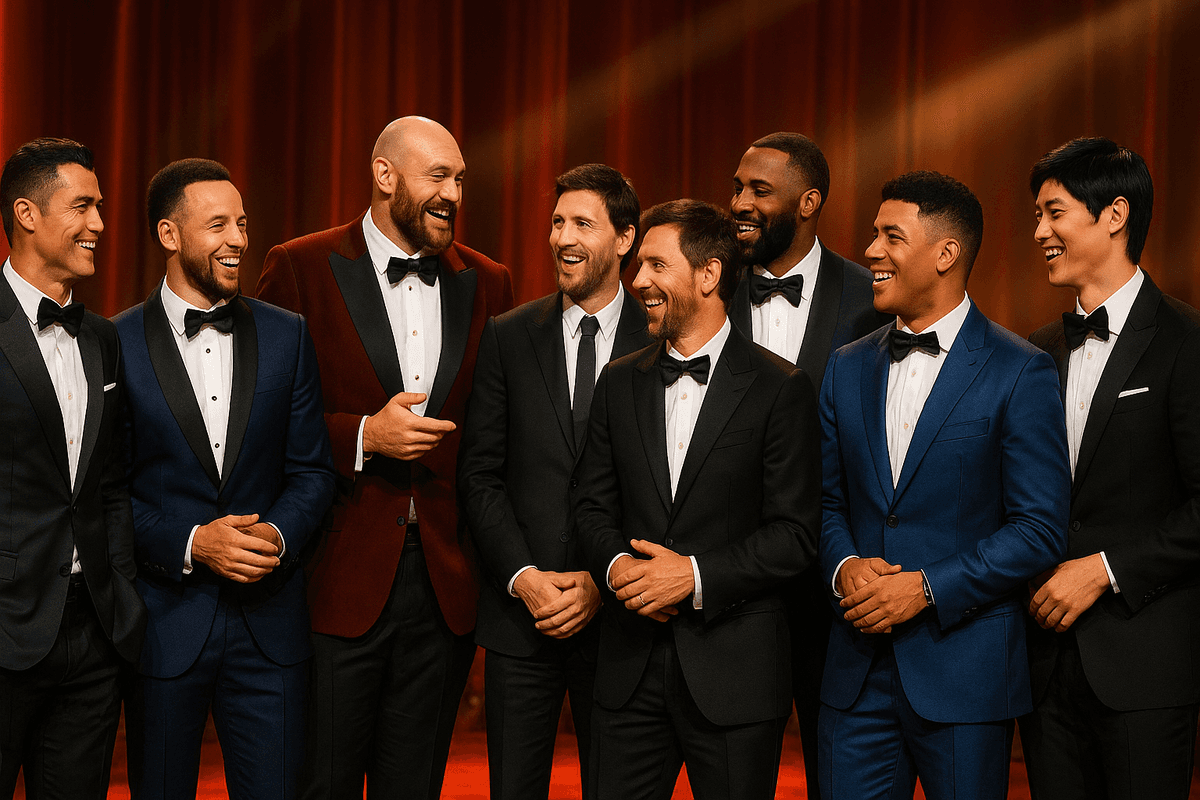
The top ten of the "World's Highest-Paid Athletes" list published by the US business magazine Forbes in 2025 took home roughly $1.4 billion in total. Scanning the faces, there are some surprises. Boxer Tyson Fury is third, and baseball's Juan Soto is seventh. Three footballers sit in the top ten.
Behind the numbers lie two enormous flows of money. One is oil wealth poured in from Middle Eastern producers. The other is the huge market built by America's broadcast-rights business. Here we compare those structures and read how football differs from other sports.
What the Ten Faces Tell Us
Forbes' 2025 edition covers roughly the previous twelve months and combines income from competition with income from outside it. First place is Cristiano Ronaldo at $275 million. Stephen Curry is second at $156 million, followed by Fury in third at $146 million.

From fourth place: NFL's Dak Prescott at $137 million, Lionel Messi at $135 million, LeBron James at $133.8 million. Then Soto at $114 million, Karim Benzema at $104 million, Shohei Ohtani at $102.5 million and Kevin Durant at $101.4 million.
Three footballers: Ronaldo, Messi and Benzema. Three basketball players: Curry, LeBron and Durant. Two baseball players, Soto and Ohtani, with the rest from the NFL and boxing. A sport's popularity and its income do not connect in a straight line. Rather, the faces speak eloquently about the difference in where income comes from.
What we can read here is that football holds a special place in the world income rankings. The three footballers are all top-class players with long careers and worldwide recognition. The strength of a sport whose popularity crosses borders is that it can have several sources of income.
Desert Money Pushes Salaries Up
Of Ronaldo's $275 million, about $225 million came from competition. The remaining $50 million or so is off-field income such as advertising. His club, Al-Nassr, is a Saudi Arabian club. The bulk of his salary is supported not by football's gate revenue but by state funds.

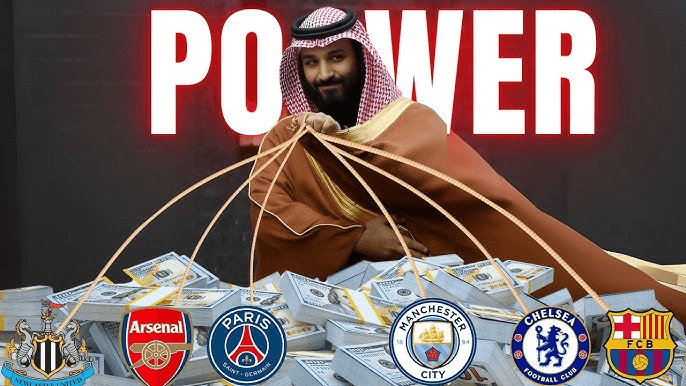
Behind this is Saudi Arabia's sovereign wealth fund, the PIF (Public Investment Fund). In 2023 the PIF took large stakes in the country's leading clubs and set out on a path of strengthening football as national policy. The drive to sign stars from around the world is also part of an economic reform aimed at breaking free of oil dependence.
Benzema's $104 million follows the same pattern, and only about $4 million of it is off-field. The great majority is salary paid by the team. Boxing's Fury reaching third likewise stems from big events held in the Middle East that lifted his earnings.
Let us organise the features of oil money a little more concretely. First, because the source of funds is a state, it is not bound by short-term profitability. Second, one country can invest in several sports: football, boxing, golf, F1. Every sport is folded into a country's public-image strategy. Third, signing players and attracting events also become a means of raising international standing.
What matters here is that this money moves on a logic apart from "market demand." Even if the outlook for attendance or broadcast revenue is poor, funds are put in as national strategy. A salary is closer to an expression of a nation's will than to the result of a business.
Broadcast Rights Build America's Giant Foundation
American sport, on the other hand, runs on an entirely different mechanism. Its pillar is the broadcast-rights fees paid by broadcasters and streaming operators. The NBA is reported to have signed deals worth some $76 billion over eleven years from the 2025-26 season with Disney (ESPN), NBCUniversal and Amazon. NBC would pay about $2.5 billion a year on average, Amazon about $1.8 billion and Disney about $2.6 billion.
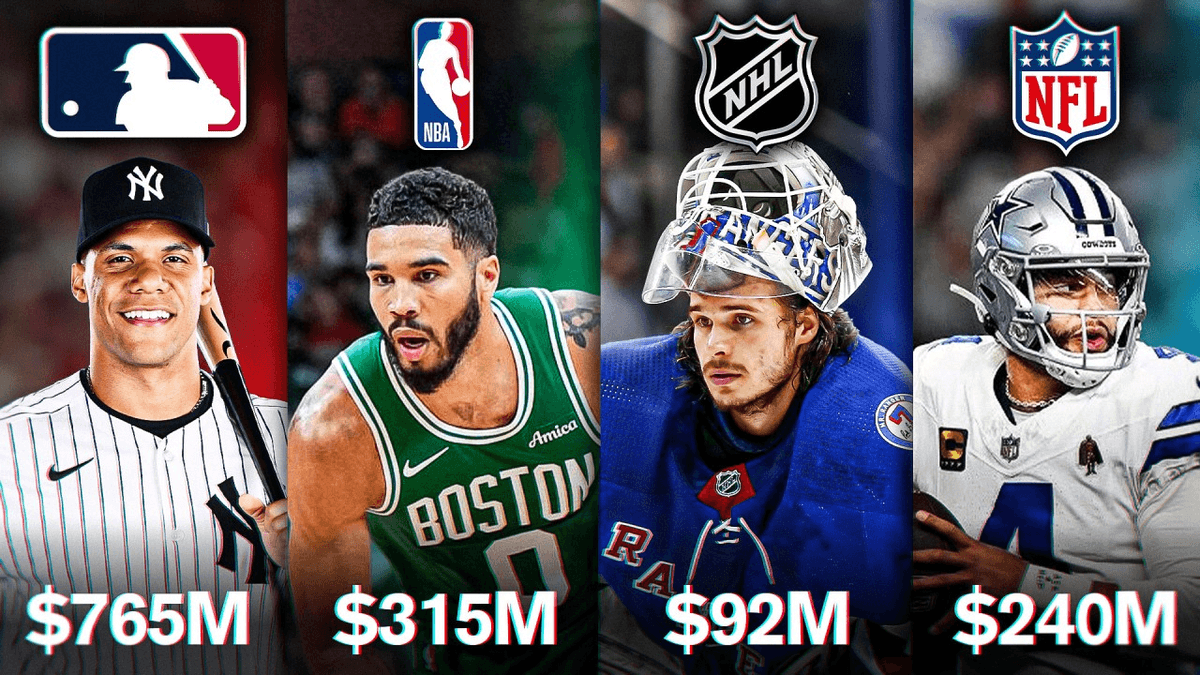
The NFL likewise runs its league on broadcast contracts exceeding $100 billion. Rights fees are distributed across the whole league, become each team's income and flow on to players' salaries. Soto's 15-year, $765 million contract with the New York Mets, and Prescott's four-year, $240 million deal, are figures that assume this huge market.
The sheer size of the rights fees lowers the degree to which a league depends on ticket prices and merchandise sales. Even if few people attend a match, revenue holds up so long as viewers across the country are sitting in front of the television or a stream. American sport is designed as something to "go and see" and, at the same time, as a "product bought in front of a screen."
American leagues are also closed markets with a salary cap (a ceiling on total payroll) and a system of revenue sharing. Rather than only strong teams gathering unlimited funds, the design raises the value of the whole league. That is why a rise in rights fees tends to translate directly into a rise in players' incomes.
Why Does Football Earn in a Different Way?
Football's income structure is somewhat different. In Europe's major leagues, broadcast rights are split by country and by club, and do not form a single market unified worldwide. A club's revenue is spread across matchday gate money, sponsors, broadcasting rights and the transfer market.
Messi's income shows that character. Of his $135 million, about $60 million comes from competition and about $75 million from off the pitch. Income from advertising, contracts and ties to brands exceeds his salary. Ronaldo, too, has about $50 million off the pitch. For football's elite, personal fame spreads worldwide, so the share of off-field income grows.
This contrasts with the structure in which American players are paid from the "giant purse of the league." Stars in Europe and the Middle East have two sources: state funds and their own names. It is not unrelated to this structure that stars of F1 and golf are nowhere to be seen in the top ten. Where income comes from depends on each sport's economic blueprint.
Japan's Past Light, and Its Position Today
The only Japanese among the top ten is Shohei Ohtani in ninth. His ten-year, $700 million contract with the Dodgers takes a special form in which most of the salary is deferred, and much of his income is thought to come from off-field sponsorship deals and advertising appearances.
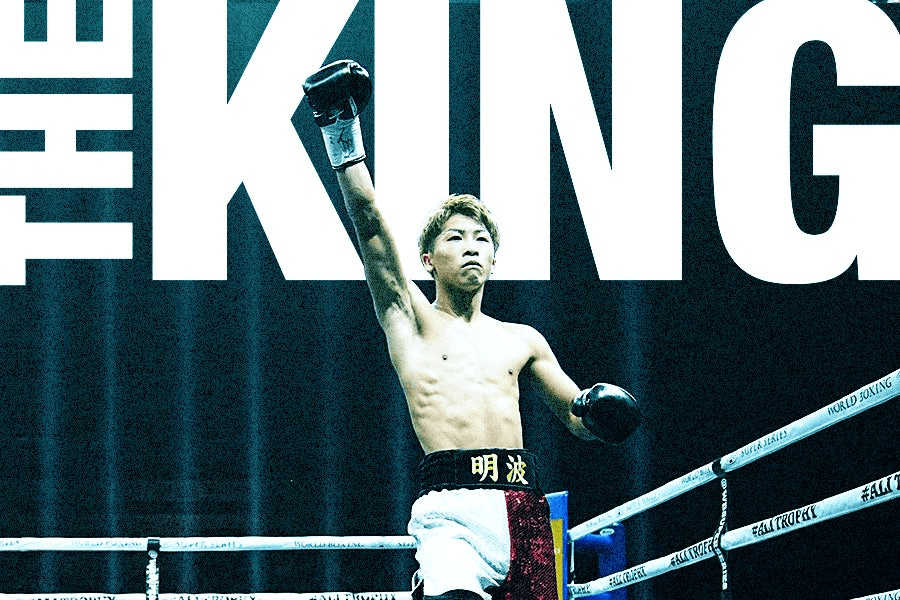
Boxer Naoya Inoue, widely called the best in the world, is not in the top ten. The gap between ability and income can be traced to the size of Japan's market and the mechanisms of international broadcast rights.
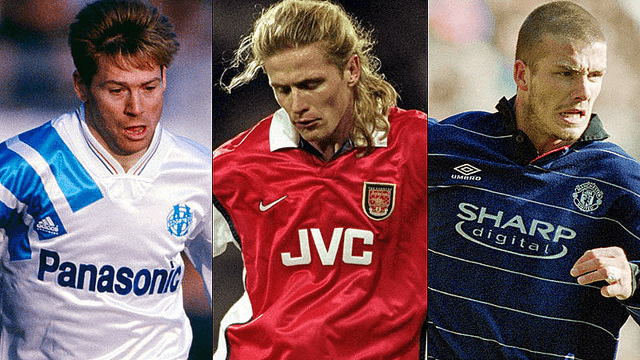
It was once different. From the 1980s into the 90s, the shirts of Europe's great clubs carried the logos of Japanese companies. JVC on Arsenal, Sharp on Manchester United, Panasonic on Marseille. The football stage was held up in part by the financial strength of Japanese firms.
That role has now moved to the capital of oil producers and America's broadcast-rights business. An athlete earnings ranking is not a popularity vote for sports but a map of the world's capital.
Where money moves, stages arise and stars gather. Saudi oil, American broadcast rights, or some new money yet to appear. Following the numbers is also a way of looking at the future of football. For the full ranking, see the Forbes feature page.
Popular this week
7 DAYS
01選手物語
The Japanese Philosophy Quietly Anchoring Michael Olise’s Genius
02フットボール文化
The Dream Seven Men Chased in a Parisian Alley: How FIFA Became the "Universal Language of the Earth"
03フットボール文化
Fierce Rivals Under One Sacred Roof: The Secrets of San Siro and Milan’s Shared Cathedral
04legend
The Endangered Soul: Football's "One-Club Men" and the Lost Romance of Undying Loyalty
Share this story


CommentsComing soon
As someone who shares the story, we'd love to hear your words.