The Epicenter of the Fantasista: Why Italy Breathes Life into Football's Sacred Artists
Roberto Baggio.
Alessandro Del Piero.
Francesco Totti.
Why did Italy give birth to players of such heartbreaking, incandescent beauty?
Why did their every touch capture the collective soul of a generation?
It was never merely a matter of refined technique.
The fantasista was never just a position on a team sheet.
It was an authentic artistic expression—a cry from the deepest chamber of the human soul.
This essay explores the cultural, historical, and aesthetic soil that nurtured the phenomenon of the Italian fantasista.
Chapter 1: The Blood of the Renaissance—A Culture That Revering Individual Artistry

Italy is the mother of the Renaissance.
Gothic art, once painted exclusively to glorify God,
gradually transformed into a celebration of human grace and beauty.
The Renaissance was an awakening of art, casting brilliant light upon the inner spark of the individual.
Just as Leonardo da Vinci and Michelangelo stood apart,
Italy has always possessed fertile ground that honors the incomparable individual.
To stand out amidst the collective, to be singular, to dazzle—that is the highest virtue in this land.
And that same ethos governs the modern theater of Calcio.
The moment a master cushions the ball, the pulse of the stadium freezes, electric with the premonition that something miraculous is about to occur.
The fantasista is an artwork materialized upon the grass, defying systems and escaping calculation.
It is the Renaissance re-enacted: a revolution of pure beauty, liberating human sensibility.
Chapter 2: Tragedy and Beauty—The DNA of Italian Romanticism
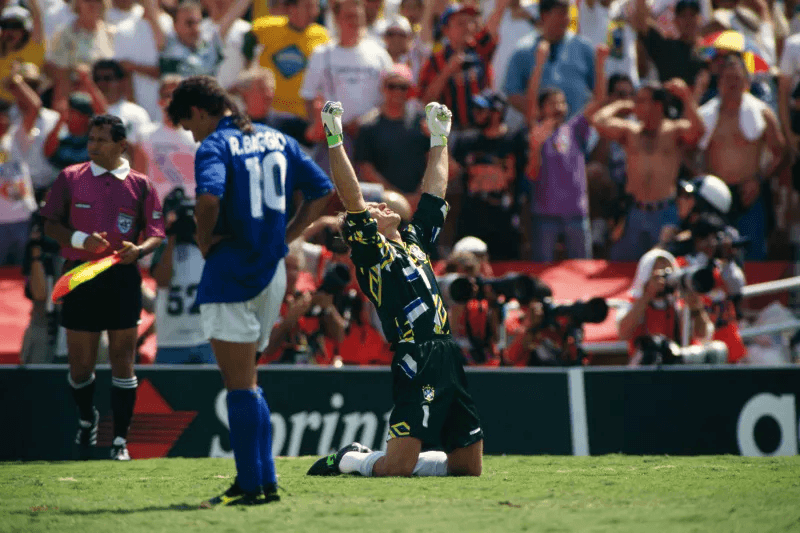
Anyone who loved the football of that era carries the scar.
Pasadena, 1994: Baggio’s missed penalty against Brazil—that unbearable silence, that bowed head, those tears.
Why is it that people remember and immortalize the fallen Baggio far more beautifully than the victorious Brazilians?
Because deep within the Italian soul lies an eternal aesthetic: tragedy equals beauty.

Opera, cinema, Catholic liturgy—Italy overflows with art forms that enshrine emotional vulnerability in tragic grace.
Thus, people are captivated not by clinical perfection, but by the celestial spark shining through human fragility.
The fantasista was never an avatar of mechanical victory; he was the artist who plucked the most delicate strings of the human heart.
Chapter 3: The Balcony Culture—How Confinement Cultivated the Magical Touch
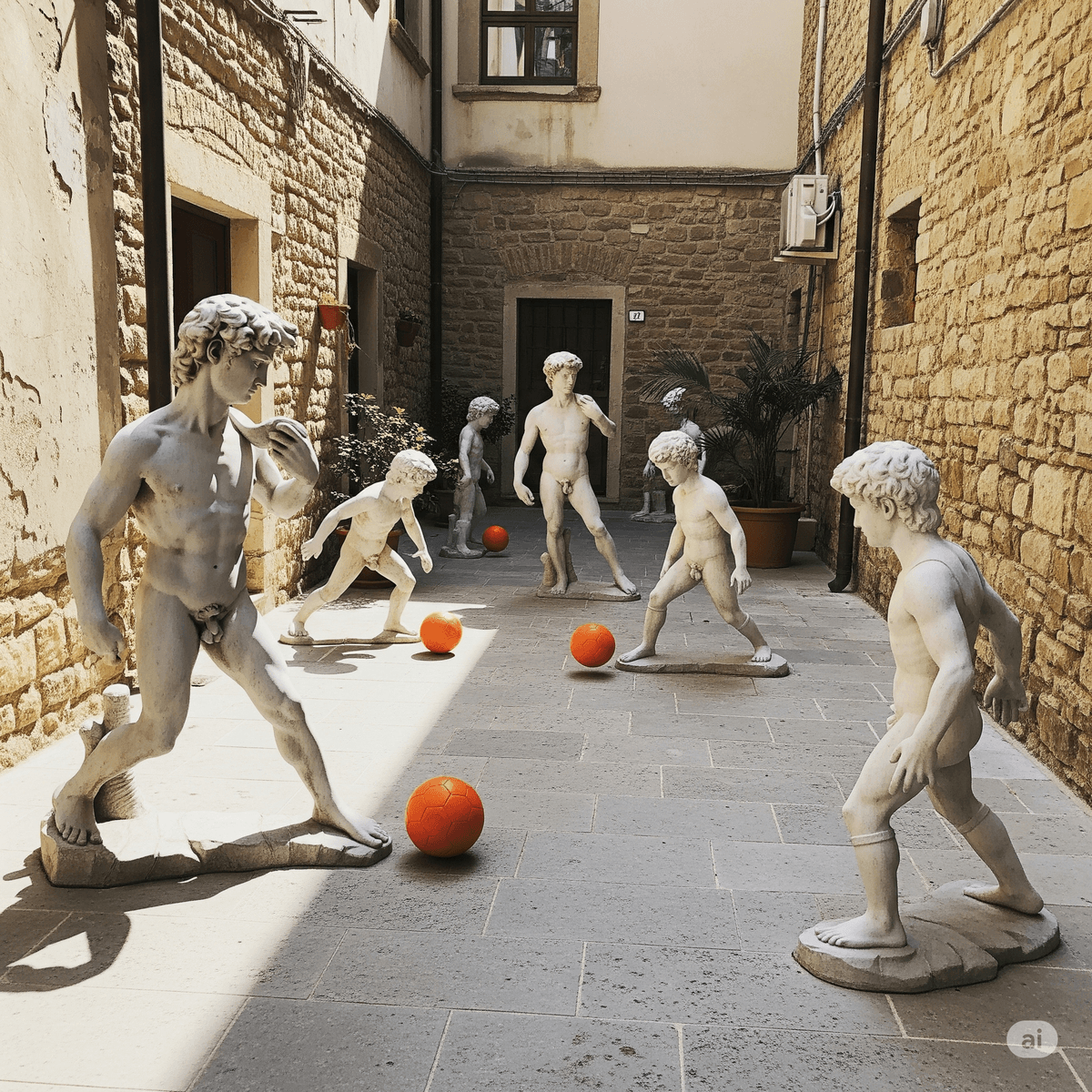
While the French banlieues birthed modern street football across sprawling concrete, Italian development was shaped by inner courtyards and balconies.
In dense, ancient Italian towns, children handled the ball not in open parks, but in tight domestic spaces beneath their mothers' balconies. As a consequence, a distinct culture developed: cultivating velvet first touches and panoramic spatial intuition within phone-booth margins.
This was the cradle of the trequartista—the maestro who conjures poetry in congested pockets where ordinary mortals can barely breathe.
Chapter 4: Rebellion Against Catenaccio—The Fantasista as the Emblem of Freedom
Italy is a land of structural discipline and defensive architecture. Its history is painted in the iron chains of Catenaccio—the locked door of tactical pragmatism.
Yet it was precisely within that oppressive order that the fantasista shone with incandescent brilliance.
Baggio, Del Piero, Totti, Cassano—they continuously embodied the meaning of human liberty upon the grass.
Their genius was a "beautiful betrayal," slipping effortlessly through the strict web of tactical dogma.
The Italian Fantasisti
- Gianfranco Zola
- Roberto Baggio
- Alessandro Del Piero
- Francesco Totti
- Antonio Cassano
The Fantasista as Imagination Blooming in Reality
The fantasista was never a mechanical instrument designed for victory.
He was ephemeral, sublime art blooming in the fertile gap between imagination and reality.
The triune Italian heritage of beauty, emotional melodrama, and aesthetic rebellion elevated a simple footballer into something transcendent: a fantasista.
Even if their plays do not always register on statistical charts, they remain forever indelible in the human heart.
That was the living shape of liberty born under the Italian sky—the timeless aesthetic of the fantasista.
-----Share this story