
PHILOSOPHY
Fantasista vs Bandiera: Inspiration or Loyalty, Which Moves the Heart?
Some players change the air just by stepping onto the pitch. Their glow comes in two kinds. One is the "fantasista," who captures a crowd with flashes of inspiration and technique. The other is the "bandiera," who becomes a symbol for team and supporters through loyalty and soul.
Fantasista is Italian for dreamer or artist; bandiera means flag. The first enchants in an instant of surprise, the second takes root in hearts through years piled upon years. There is no answer to which is greater. Looking back through football history, though, it becomes clear that people kept filling stadiums because both kinds of light coexisted.
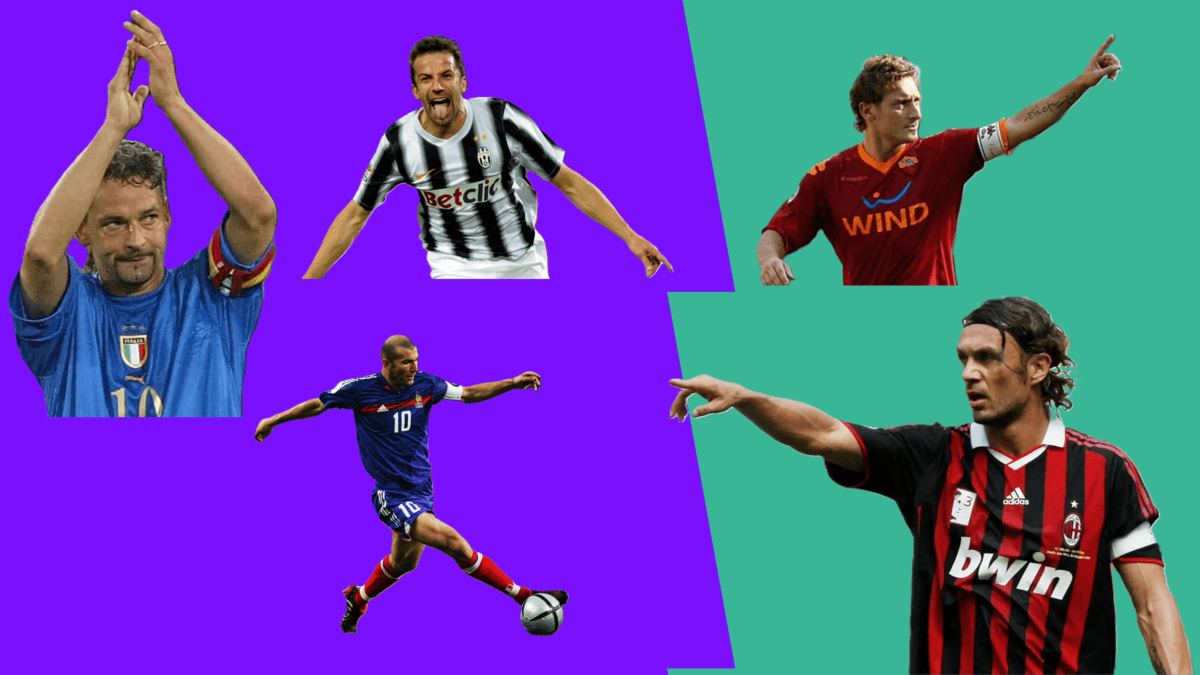
Following Baggio, Del Piero, Totti and others, this piece looks at how the two charismatic types came to be, where they cross, and why they move people.
The Lone Magician Bound by Nothing: The Fantasista
The fantasista exists beyond team tactics. Even when asked to contribute defensively, their value lies elsewhere: a pass nobody predicted, a dribble that leaves defenders behind, a pause in front of goal. The crowd gasps because the move has gone beyond calculation.
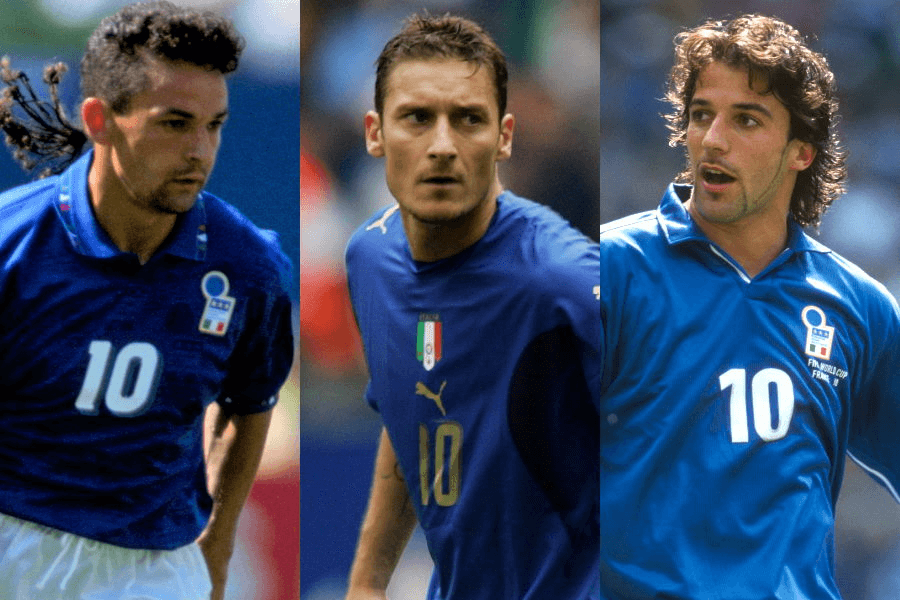
The symbol is Roberto Baggio. Nicknamed the "Divine Ponytail," he won the Ballon d'Or in 1993. When he moved from Fiorentina to Juventus in 1990, fans reportedly took to the streets in anger. Such anger is born only of love. The penalty he missed in the 1994 World Cup final shootout against Brazil is still remembered alongside his name. A great talent carrying a shadow into the heaviest moment: that is the fantasista's solitude.
Alessandro Del Piero cut in from the left and curled in goals with his right foot, silencing and then lifting entire stadiums. Zinedine Zidane's roulette made time seem to stop and left defenders helpless. Portugal's Ricardo Quaresma used the "trivela," the outside-of-the-foot curl, to create goals on impossible trajectories.
What a fantasista awakens in the crowd is amazement and admiration. For that one moment people return to the stadium again and again.
There is another fate attached. Expectations are so large that any slump invites harsh criticism. Asked about defensive work, some lose their place in the modern, organised game. Yet when they take the ball, the crowd leans forward. The fantasista has a pull that cannot be explained by logic.
Del Piero's curler, Zidane's roulette and Quaresma's outside-foot passes were all built on thousands of repetitions in training. Behind an apparently accidental flash lies discipline that ordinary people can hardly imagine. The crowd sees a moment of magic; behind it lies a mass of accumulated hours.
The Symbol Who Gives His Soul to the City: The Bandiera
Bandiera is Italian for flag. The club raises it as its emblem and the supporters look up to it with pride. Talent alone is not the condition. One must give long years to a single club and stand in the same place through victories and hard seasons alike.

Francesco Totti was a child of the city of Rome. From his first-team debut in 1993 until his retirement in 2017, he spent roughly a quarter of a century with Roma alone. Even when clubs of the stature of Real Madrid came calling, he did not nod. Measured only by trophies, he might have built a more glittering career. Yet he stayed because something mattered more than winning and losing. At his farewell in 2017, the supporters who filled the stadium waved their flags in tears.
Paolo Maldini gave nearly a quarter of a century to Milan. Javier Zanetti pulled on Inter's black and blue for more than 800 appearances and completed the treble in 2010. In an age of flashy transfer headlines, the meaning of staying in one place weighs more with each passing year.
What fans feel toward a bandiera is not surprise but respect and empathy. They love the player not only for talent but because he lived the same time as they did.
A bandiera's value cannot be measured by records. In the lean years, in the years of relegation fear, they pull on the same shirt. Children in the stands grow up watching that back, become adults and tell their own children the same name. The story passed across generations is the true substance of a bandiera.
The loss felt by a club that loses its symbol cannot be put in numbers. The spectators crying on a farewell night are not saying goodbye to one player. They are quietly closing a chapter of their own lives. When a bandiera leaves, the club ends an era.
Where the Two Lights Overlap
The fantasista and the bandiera are not opposing ideas. Del Piero was a rare player in whom both overlapped. He fought for Juventus for 19 years and stayed when the club was relegated to Serie B after the 2006 Calciopoli scandal. The curling goal was proof of the fantasista; the decision to stay with a relegated club was proof of the bandiera.
Totti was likewise the flag of Rome and a fantasista who dazzled with technique. In later years he also shone as a false nine under Luciano Spalletti. Inspiration and loyalty can live in one player. When they do, he is no longer merely a star but the history of the club itself.
Has modern football grown less able to produce fantasistas and bandieras? With transfer markets driven by huge sums and contracts growing shorter, players who give a lifetime to one club have certainly dwindled. Turn that around, and it means the value of the bandiera has become more precious than before. Because they are rare, people gather beneath their flag.
Some fantasistas, like Baggio, passed through many clubs. They were loved for freedom, not loyalty. The question is not which is better but what kind of time each gave the crowd. The fantasista gives an unforgettable instant. The bandiera gives the years spent together. Instant and years: both are irreplaceable gifts football offers people.
Which Moves Your Heart
| Aspect | Fantasista | Bandiera |
|---|---|---|
| Meaning | Dreamer, artist | Flag, symbol |
| Source of appeal | Technique and inspiration | Loyalty and leadership |
| Place in the team | Solitary presence | Emblem and pillar |
| Fans' feeling | Amazement, admiration | Respect, empathy |
| Examples | Baggio, Del Piero, Zidane | Totti, Maldini, Zanetti |
An instant of genius or an accumulation of symbolism. Football touches hearts because the two lights coexist.
Was it the fantasista who ruled the pitch that moved you, or the bandiera who carried the soul of a club? The answer may lie in whose matches you stayed with longest: the night the hairs rose on your arms in a stadium, the moment you cried out at the screen. The player at the centre of that memory is your flag, and your magician.
Popular this week
7 DAYS
01選手物語
The Japanese Philosophy Quietly Anchoring Michael Olise’s Genius
02フットボール文化
The Dream Seven Men Chased in a Parisian Alley: How FIFA Became the "Universal Language of the Earth"
03フットボール文化
Fierce Rivals Under One Sacred Roof: The Secrets of San Siro and Milan’s Shared Cathedral
04legend
The Endangered Soul: Football's "One-Club Men" and the Lost Romance of Undying Loyalty
Share this story


CommentsComing soon
As someone who shares the story, we'd love to hear your words.