
Is defending fun? Those who have loved football for a long time have never agreed on the answer. Compared with dazzling dribbles, goal rushes and flowing passing moves, defending is called dull and plain.
But is that view really right? Catenaccio, the Italian word for a door bolt, has long been misunderstood as a tactic of simply standing in front of the door. Yet once you learn the work of the man who polished its original form, an entirely different landscape appears. This is the story of Helenio Herrera and the art of defence he built. In Milan in the 1960s there was an age when the defending side was the fastest, the smartest and the freest on the pitch.
Before the Bolt: What the Chain and Lock Meant
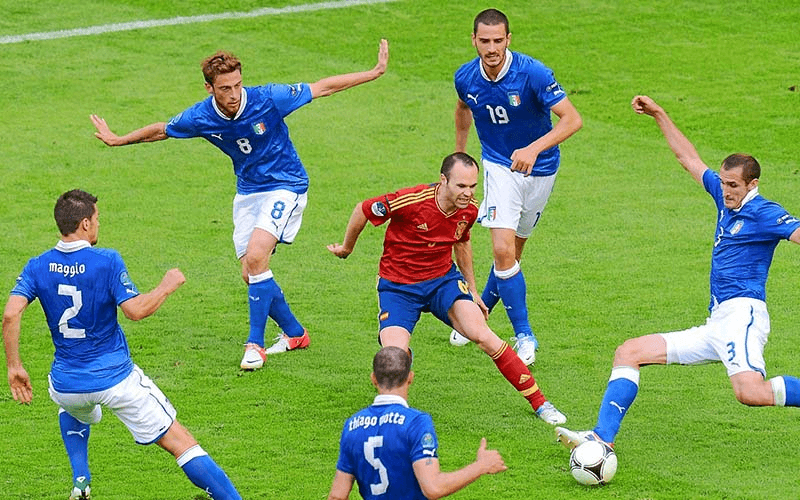
The source of catenaccio goes back to 1930s Switzerland. The "verrou" devised by coach Karl Rappan placed a spare defender behind the back line to stop an opponent's breakthrough. It crossed into Italy and evolved in its own way in the hands of coaches such as Gipo Viani and Nereo Rocco.
At this stage, however, defending was still defending for its own sake. Drop the line, leave a man spare, protect a single goal to the end. Utility took priority over beauty.
The word itself carries weight. Catena means chain, and catenaccio is the thick bolt fastened across a door. Once shut, it cannot be forced open from outside. Italian defence boasted exactly the solidity its name promised. The flip side is that a bolt shuts the opponent out and can also tie one's own feet.

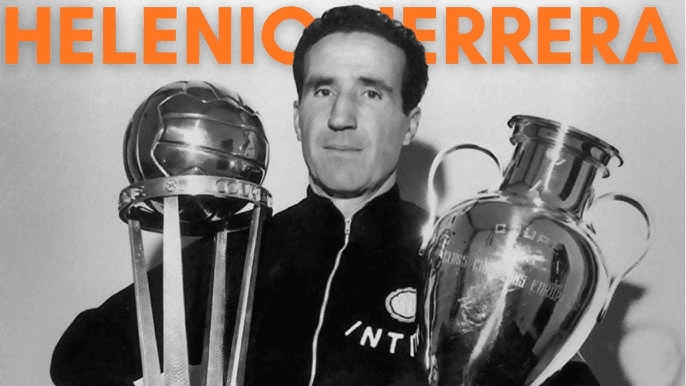
It was a man from a different dimension who brought something else to it: Helenio Herrera, born in Argentina, raised in Morocco and a player in France. His year of birth is given as 1910, though some sources say 1916, and it has not been settled. After winning domestic titles with Atlético Madrid and Barcelona, he took charge of Inter in 1960. The team in blue and black began from that point to rewrite history.
The Magician's Way: A Commander Who Played With Minds
Herrera was called "Il Mago," the Magician. The substance of that magic lay beyond the pitch.
He reached into his players' diet, sleep and private lives, and managed training scientifically. Slogans were pinned to the dressing-room wall, and before matches he gathered the squad in a circle to bind their wills into one. "Taca la bala" ("go at the ball," in Milanese dialect) is known as the rallying cry he drilled into his players. He transformed the image of the manager in an age dominated by passion and willpower.
His pay was also ahead of its time. He was known as the highest-paid coach in Italy then, and in exchange he shouldered responsibility for results. What he asked of players was not obedience but awareness that each was part of the team. The short words exchanged in the dressing room took the shape of defensive coordination on the pitch.
His eye for talent was also sound. In 1961 he signed Luis Suarez, the playmaker of Barcelona, for what was then the highest transfer fee in the world. He did not gather players merely to defend. He prioritised those who could play the "first pass" at the moment of switching from defence to attack. Win it at the back, distribute through midfield, run up front. At the centre of that blueprint was Suarez's long left foot.
His psychological attention was not directed only at his own players. Before a tightly closed defence, an opponent who has lost his way forward grows impatient and plays more forced vertical passes. Wait for that flaw, and the instant the ball is won, run. Defending was not a passive act but an active weapon that steered the opponent's judgement.
Grande Inter: A Counterattack of Ferocious Speed Starting From Defence
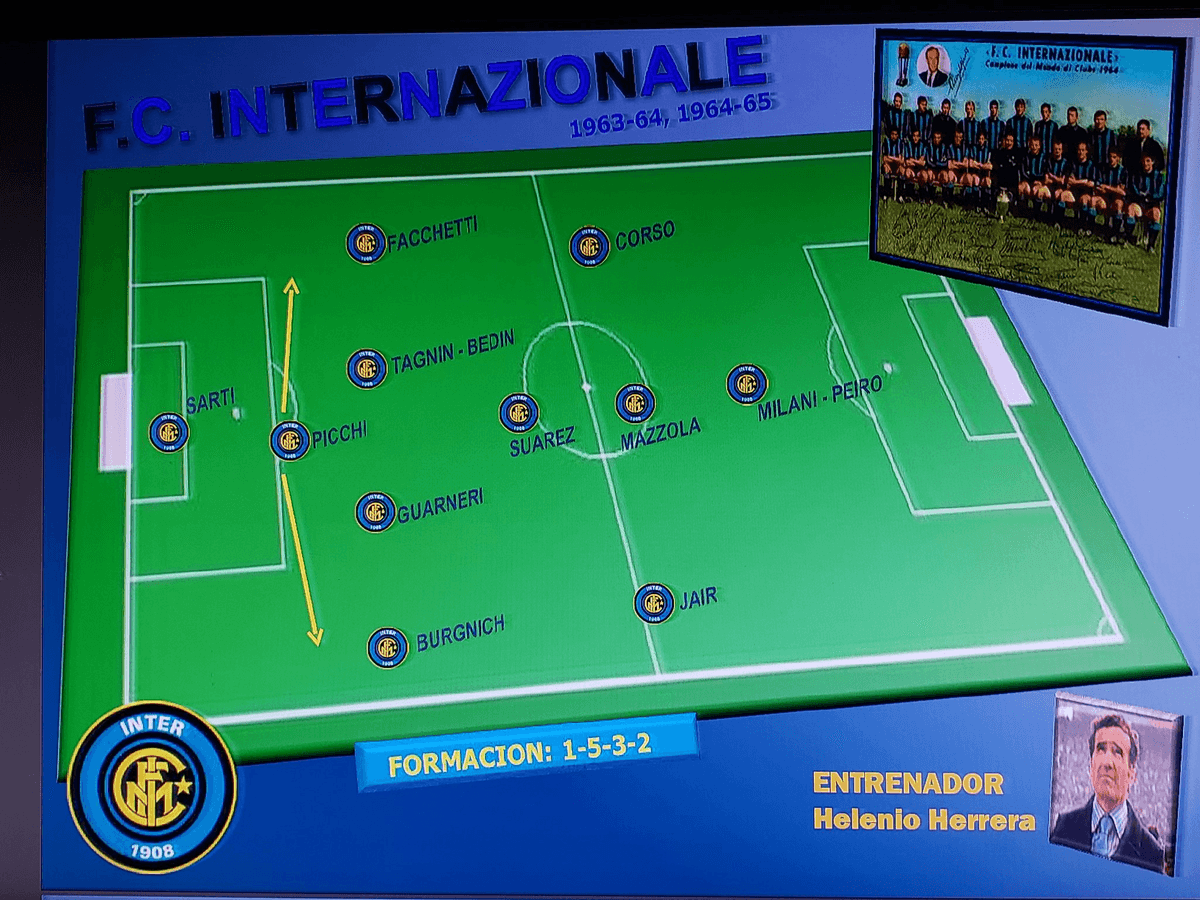
In the 1960s Herrera's Inter, called "Grande Inter" (the Great Inter), conquered Europe. Armando Picchi stood behind the line as the libero, and the defence was secured by a strict man-marking system.
But the essence of this team lay in what came after winning the ball. Luis Suarez delivered with one long pass, Mario Corso's left foot drew its arc, and Sandro Mazzola and Jair swept through the front line. The time from defence to attack was astonishingly short. Moreover, left-back Facchetti ran out of the back line and, in 1965-66, scored ten goals as a defender.
In the 1963-64 European Cup final, Inter beat Real Madrid 3-1 in Vienna, and in 1964-65 they defeated Benfica 1-0 at the San Siro to win back-to-back titles. A structured defence and a vertically fast counterattack. When the two came together, defending was no longer a technique for cutting off the flow of a match but a technique for steering it.
It is said that rain fell on the San Siro on the night of the Benfica match. The pitch was a bog and the ball would not roll as it should. Even in those conditions Inter's defence did not break. They protected to the end the single goal scored in the first half. What the spectators saw was not a team simply hiding, but a hardened collective in which everyone faced the same direction and breathed together.
So why did catenaccio come to carry the image of "tedious defending, retreating deep"? Because after Herrera, many teams copied only the shape of the bolt, leaving behind the crucial speed and disciplined attack. A defence left with only its shape gradually dishonoured its own name.
Even a golden season comes to an end. In the 1967 European Cup final Inter lost 2-1 to Celtic. Every Celtic player was born around Glasgow, and they would later be called the "Lisbon Lions." The giant of defence yielded before a young team that kept attacking. Still, what Herrera built in those few years is firmly etched in football history.
Poets of Defence: The Line That Leads to Maldini
Herrera's philosophy seeped into Italian defenders far beyond the boundaries of any one club. Armando Picchi, Giacinto Facchetti, Gaetano Scirea, Franco Baresi and then Paolo Maldini. Though they came from different eras and different clubs, they faced the same question: not how to stop, but how to leave the opponent with nothing to try. Across the rivalry between Milan and Inter, Italian defenders handed down their craft while stealing from one another.
The Milan of the 1990s, with Baresi and Maldini side by side, kept the back line high and conquered Europe with a defence that gave opponents no freedom. Rather than bolting the door, they pushed up to where the door itself was shut. The methods differed, but the root, "defence is will," ran on from Herrera's age.
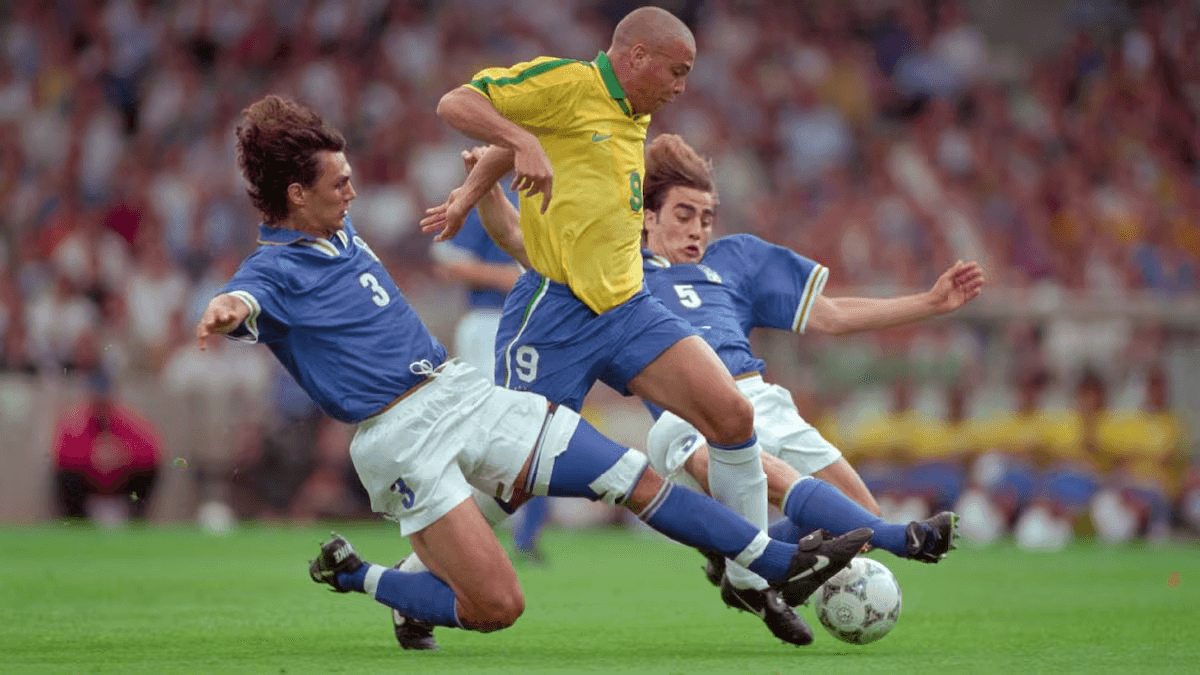
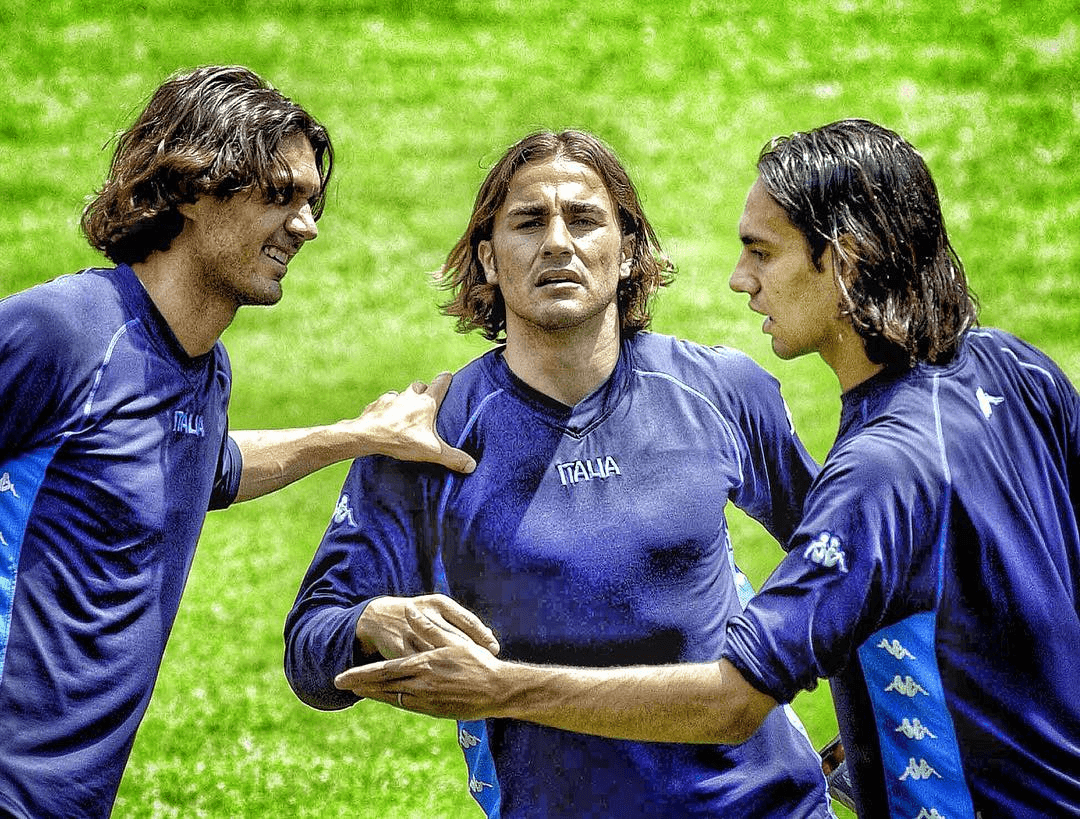
Maldini is said to have left a remark to the effect that "if you make a tackle, it is proof of failure." His defending was not about colliding with bodies but about reading space and stealing time. At the 2006 World Cup, with Fabio Cannavaro as captain, Italy conceded only two goals in seven matches, one an own goal by a teammate and the other a penalty.
Interestingly, this "country of defence" is also the country that has produced the most fantasisti in the world: Zola, Baggio, Del Piero, Totti, Cassano. Precisely because defence guaranteed the structure, there was room to place one free spirit on the pitch.
Catenaccio and the fantasista. Two concepts that seem opposed were two sides of the same coin. Because ten men hold the defence, one man can play with the ball. If that one man does a decisive thing, the defence is "rewarded." The defender and the creator were not rivals but needed each other.
Back to 2006, and of course it’s Alessandro Del Piero busting a gut to finish a stunning Italian counter-attack with aplomb. pic.twitter.com/3OX7R2HVTd
— These Football Times (@thesefootytimes) November 16, 2022
Defence makes freedom shine. Discipline makes creation leap.
As time advances and tactics change, the balance does not: defend in order to win, attack in order to enchant. The bolt Herrera fastened still echoes quietly somewhere in the world.
Catenaccio does not die. Because it is "conviction."
The sports manga "Catenaccio" is a book in which the aesthetics of defence can be savoured as a story.



CommentsComing soon
As someone who shares the story, we'd love to hear your words.