Why Football Conquered the Earth: The Working-Class Genesis of a Universal Passion
“Why has football become the most beloved game on the face of the earth?”
The question arrived softly in my mind.
It requires neither expensive equipment nor manicured private estates.
Merely a single ball and companions gathered together.
From that alone, pure euphoria is born.
That is how it crossed borders, shattered class barriers, and evolved into humanity’s universal language—let us trace that sacred history.
Why Does Football Captivate the Entire Planet?
Commanding the largest collective audience on earth, football’s power does not spring from aristocratic privilege. Its roots lie deep in the soil of working-class recreation.
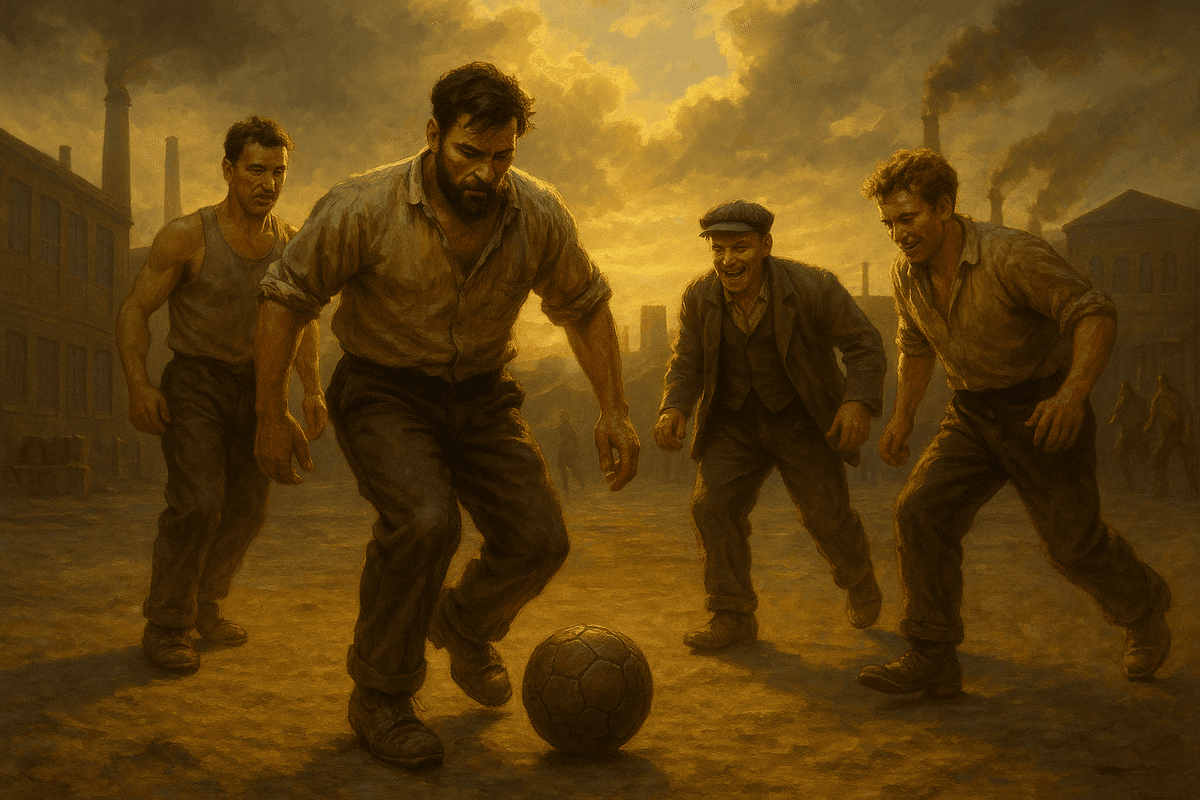
In the industrial twilight when factory whistles fell silent, men kicked a scuffed ball down cobblestone alleyways. That humble pastime would eventually overflow great stadiums and bind continents together as one.
The Early 19th Century (1820s–1840s): The Gilded Age of Aristocratic Pastimes
In early Victorian Europe, "sport" was the exclusive leisure reserve of the gentry and upper classes.
Lawn tennis demanded manicured grass courts; cricket and golf required sprawling country estates. Participation was fiercely gated.
For the common populace, life was defined by punishing 14-hour factory shifts with scarce room for leisure.
The prevailing social consensus was rigid: "Sport is an aristocratic virtue."
The Late 19th Century (1850s–1860s): The Working Class Claims the Ball
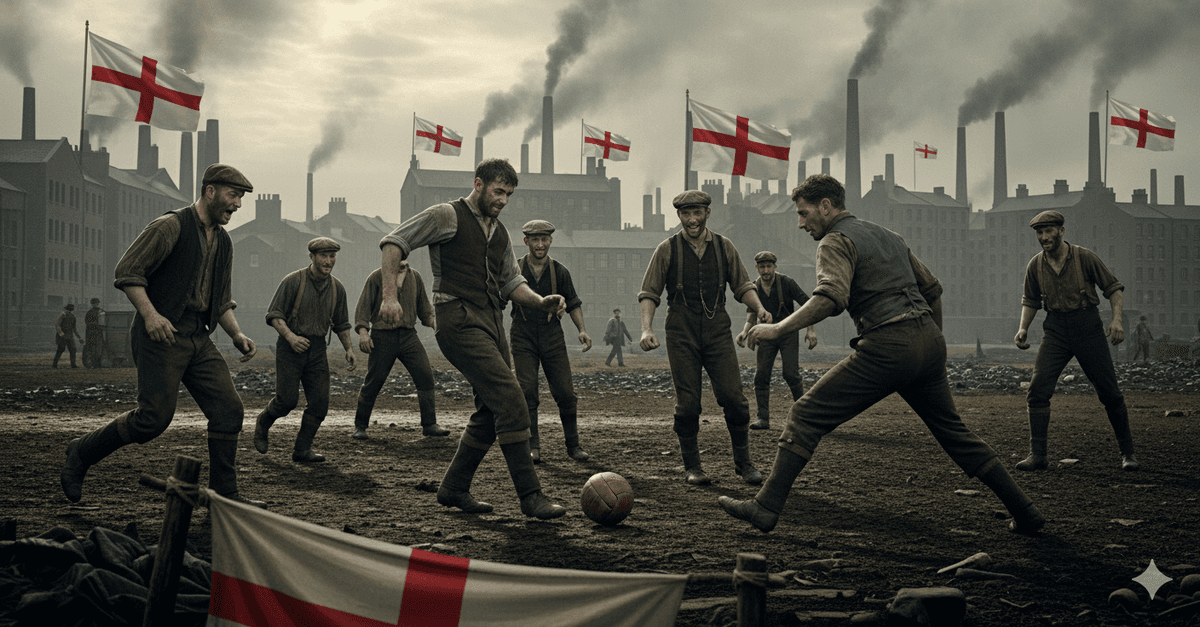
The Industrial Revolution filled cities with smoke and multiplied the urban proletariat.
What these men needed was an inexpensive, unencumbered game that could begin the moment two coats were dropped on the ground as goalposts.
They embraced the irreducible human act: kicking a ball.
Disparate regional folk pastimes coalesced into a unified culture. In 1863, the Football Association (FA) was founded in London to codify the rules.
During this schism, those who favored handling the ball broke away toward rugby, leaving association football to conquer the world using only the feet.
1870s–1900s: Railways, Leagues, and the Birth of the Stadium
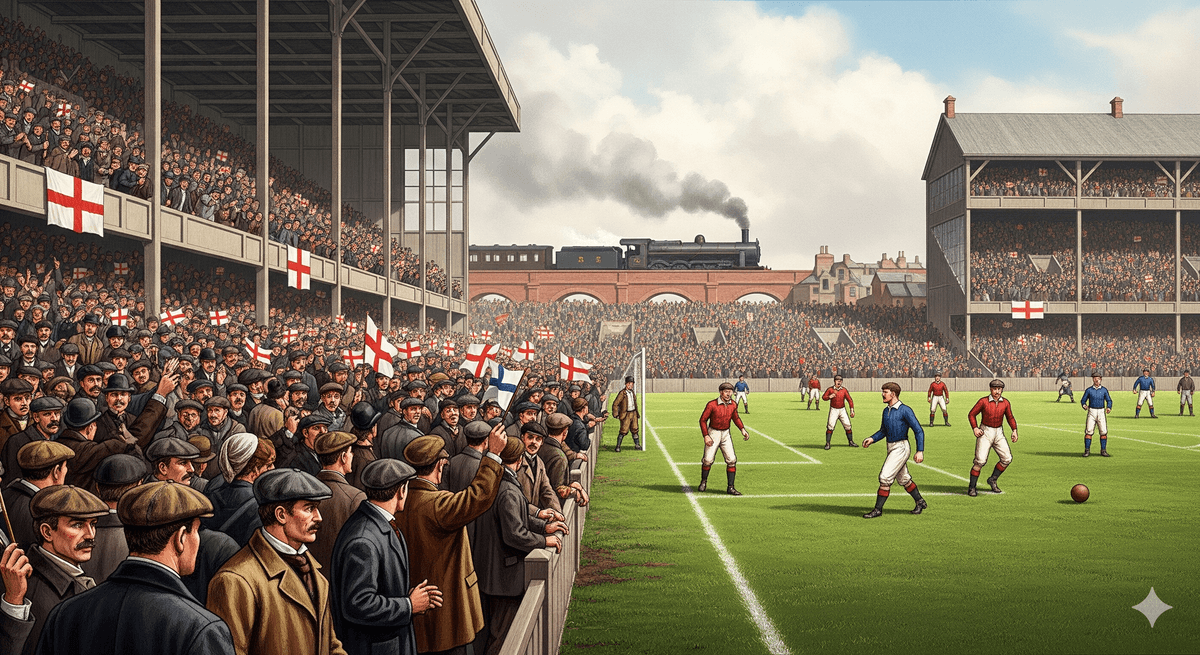
The expansion of the railway network linked industrial towns, transforming away fixtures into a cultural staple.
Clubs founded in factories, docks, and church parishes sprouted across the land, establishing Saturday afternoon football as the secular ritual of the British worker.
In 1888, the English Football League was created—the first professional league in history.
An ongoing narrative began. Tens of thousands packed the terrace stands, collective chants were born, and football deepened into civic pride and communal identity.
The Early 20th Century: From Docklands to the World, and the Birth of the World Cup
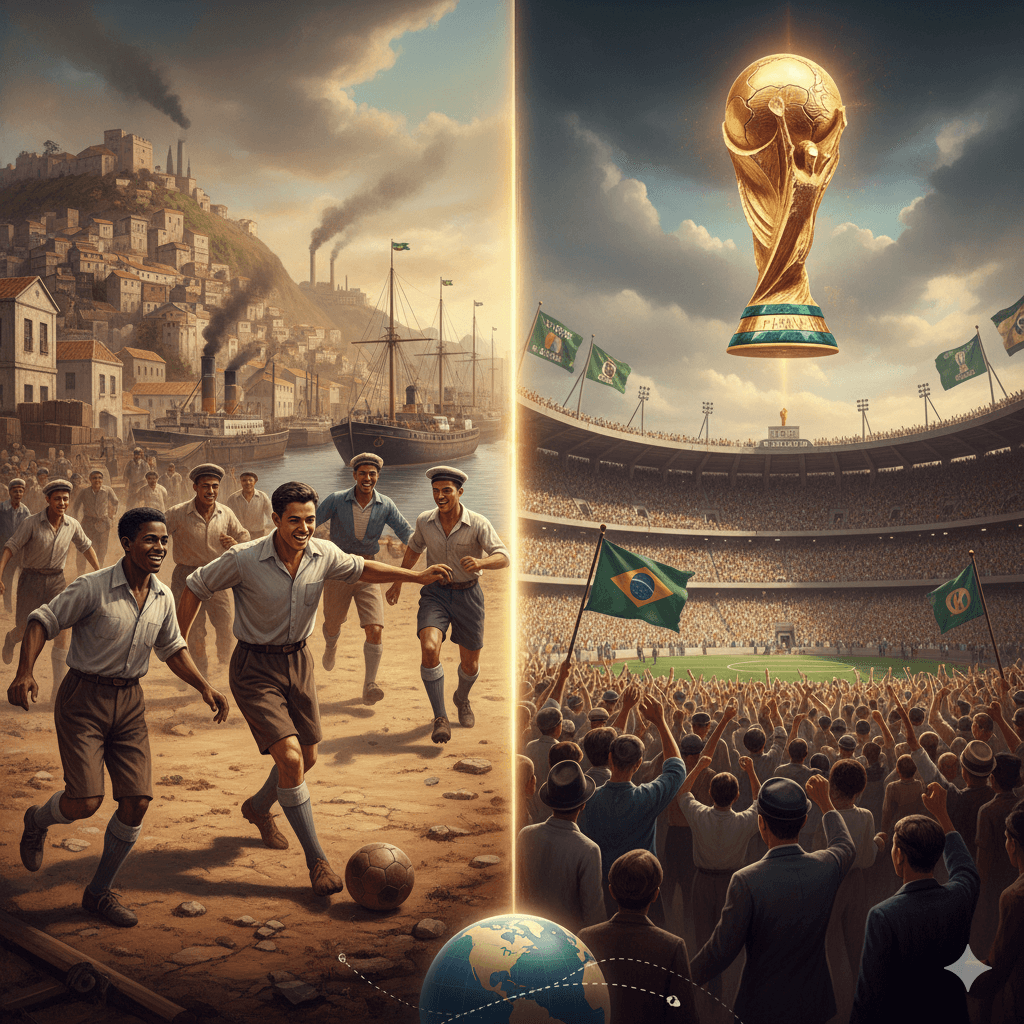
Sailors, rail engineers, and migrants carried leather balls across the Atlantic, planting the game in port cities worldwide.
In 1894, Charles Miller brought two footballs to Brazil.
The game swept like wildfire through the factories and ports of São Paulo and Rio de Janeiro, setting the soul of the people ablaze.
In 1930, Uruguay hosted the inaugural FIFA World Cup.
With this planetary arena, the working-class pastime graduated into an immortal global festival.
The Late 20th Century: The Kingdom of Pelé and the Broadcast Era

At the 1958 World Cup in Sweden, Brazil lifted its maiden trophy.
The emergence of Pelé elevated football into high art, cementing Brazil as the spiritual kingdom of the sport.
Across the 1960s and 1970s, television sets arrived in living rooms, beaming the magicians of the pitch into homes worldwide. Clubs became city banners; national teams became sovereign flags. Football expanded its dominion as the supreme theatre of human identity.
The 21st Century: Hyper-Commercialization and Its Shadow

Global broadcast rights and astronomical sponsorships exploded, transforming the Premier League and the Champions League into financial empires.
Yet concurrently, match tickets and shirts soared in price, steadily pricing out the very working-class faithful who built the game.
Modern football has become sleeker and safer, but it risks losing that foundational sanctuary where citizens from every walk of life stood shoulder to shoulder.
A Lament for the Corporate Era—and the Stubborn Light of Hope

And yet, across asphalt back-alleys, dusty schoolyards, and wet tide-lines by the sea, children continue to kick balls today.
Titles and net worth mean nothing there. They run to the same rhythm, pursue the same bouncing leather, and share the same uncomplicated joy.
Football remains the universal tongue that fulfills the promise of "anyone, anywhere, with anyone." That its origins belong to the laboring poor remains an eternal lighthouse guiding its soul into the future.
The Soul in the Alleys, the Light on the Pitch

Football was born at dusk, when the factory whistles fell silent.
The scent of sweat, heavy work boots, ragged breath.
What lived in that twilight was not simply winning or losing; it was the raw sensation of being alive.
Though corporate tides swell around the game, so long as that primordial pulse survives, football will remain the most beloved game in human history.
Give them a single ball, and the world will link arms once more—that is the eternal story of this game.
Share this story